 Skip to content
Mastering Microfiber Systems: Color-Coding, Laundering, and Cross-Contamination Control
For anyone researching how professional cleaning teams ensure safe, high-quality results in homes and businesses, microfiber systems have become the industry gold standard. In this guide, you’ll learn how experts use microfiber systems: color-coding, laundering, and cross-contamination control to protect your health, maintain hygiene, and achieve sparkling spaces—without confusion or uncertainty. We’ll break down the what, why, and how behind these best practices, with actionable frameworks and specific checklists used by modern professionals.
The Science Behind Microfiber: How It Transforms Cleaning Outcomes
Before diving into systems and protocols, it’s key to understand why microfiber has become the backbone of residential and commercial cleaning. Microfiber is a synthetic material engineered with super-fine fibers (often less than 1/100th the diameter of a human hair). This unique structure gives microfiber unparalleled ability to:
- Trap dust, dirt, and microbes — instead of pushing them around
- Pick up particles mechanically, reducing the need for harsh chemicals
- Absorb up to 8 times its weight in water
- Minimize residue, streaks, and damage to delicate surfaces
Research published on cleaning industry platforms confirms that frequent microfiber use can significantly reduce surface bacteria and allergens. This makes it a cornerstone of effective, health-oriented cleaning services in schools, offices, and homes.
Decoding Color-Coding: The Key to Safe Microfiber Usage
Color-coding goes far beyond aesthetics: it’s a risk-reducing strategy to prevent cross-contamination between different areas or tasks. A properly designed color-coding system assigns one color per area or purpose so equipment isn’t swapped across zones (for example, toilets vs. kitchens).
Why Color-Coding Matters
- Prevents spread of germs and allergens between high-touch zones
- Improves staff accountability and training consistency
- Simplifies compliance for health inspections and audits
- Makes onboarding new cleaners faster and less error-prone
Common Color-Coding Schemes and Decision Points
Professional cleaning companies like CHI Cleaning Services may adopt standards from public health guidance and industry best practices. The most common color assignments include:
| Color | Area or Task |
|---|---|
| Red | Sanitary facilities (toilets, urinals, washrooms) |
| Yellow | Clinical areas or bathroom sinks/surfaces |
| Blue | General low-risk areas (offices, hallways, waiting rooms) |
| Green | Food service and kitchen areas |
Some facilities may add custom colors for sensitive zones like laboratories or for specialized equipment. The essential principle is never allow a cleaning item’s color to be used in multiple unrelated areas.
Designing and Implementing a Microfiber Color-Coding System
Adopting an effective color-code framework means more than buying different colored cloths and mops. Here’s what a thorough implementation entails:
- Define Areas: Identify distinct zones with different hygiene risks.
- Assign Colors: Permanently assign an exclusive color per area (avoid overlaps).
- Inventory Management: Store color-coded microfiber products separately, clearly labeled.
- Staff Training: Deliver onboarding and refresher education for all cleaning staff, including visual guides.
- Routine Checks: Supervisors spot-check correct color use during and after cleaning.
Step-by-Step Checklist for Microfiber Color-Coding Success
- Review public health guidelines and building-specific needs.
- Create clear signage and visual aids for your team.
- Label storage shelves and supply carts to enforce separation.
- Train all team members before deployment.
- Regularly audit color compliance and update protocols as needed.
Preventing Cross-Contamination: Microfiber in Action
Preventing cross-contamination is essential for safety and public trust, especially in high-traffic or multi-use spaces. The superior trapping action of microfiber is only effective when tools themselves are kept clean and used according to protocol.
High-Risk Cross-Contamination Scenarios
- Using the same mop head in bathrooms and kitchens
- Cleaning food preparation surfaces with cloths previously used on restroom fixtures
- Sharing vacuum attachments between apartments or offices without disinfection
CHI Cleaning Services rigorously maintains separate microfiber supplies for each color-coded zone—and routinely monitors compliance—to prevent these errors.
Laundering Microfiber: Professional Standards for Hygiene and Longevity
Proper laundering of microfiber is just as important as its use protocol. Failure here can reintroduce contaminants and degrade microfiber’s unique properties.
Laundering Essentials
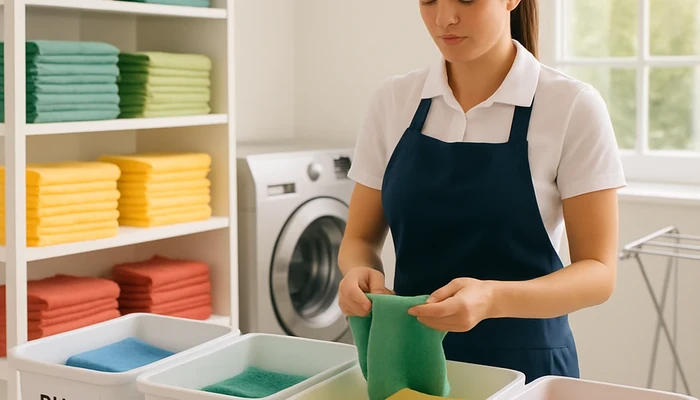
- Wash microfiber cloths and mops only with others of the same color/task—never mix with general laundry.
- Use gentle, non-bleach, and non-fabric softener detergents (these can coat fibers and reduce absorption).
- Wash at 140–160℉ (60–71℃) to remove organic soils and microorganisms.
- Dry microfiber on low or medium heat—or air dry—never on high heat as this can melt fibers.
- Inspect microfiber regularly for wear; discard when torn, matted, or non-absorbent.
Sample Laundering Protocol for Residential vs. Commercial Spaces
| Step | Residential | Commercial |
|---|---|---|
| Linen Separation | Basket by color | Labeled bins for each area |
| Detergent Use | Free of bleach, softeners | Commercial non-residue detergent |
| Load Size | Small (4–8 cloths) | Batch (15+ items) |
| Temperature Setting | 140℉ (60℃) | 160℉ (71℃) |
| Inspection Frequency | Weekly | After each service cycle |
Critical Decision Framework: Selecting the Right Microfiber Tools
Not all microfiber is created equal. Professionals assess a range of properties to match surfaces, soil levels, and infection control needs:
- Weave Density: Higher GSM (grams per square meter) for heavy soil; lower for glass/mirrors.
- Edge Finish: Stitched vs. ultrasonic cut (stitching is more durable for rough use).
- Size/Shape: Small cloths for spot cleaning; larger mops for floors.
- Pocket vs. Flat Mop Head: Pockets for higher water retention; flat for controlled moisture in sensitive zones.
- Antimicrobial Treatments: Some microfiber products are treated for added germ resistance; check manufacturer claims.
The Role of Microfiber in Hazardous Dust and Allergen Control
Professional cleaners, especially in Chicago’s diverse housing and facility environments, often face hazardous dust (such as silica or lead). According to Nilfisk’s hazardous dust resources, microfiber systems combined with HEPA filtration help reduce airborne spread and surface deposits. Microfiber cloths, used in color-coded workflows, limit dust and allergen transfer and play a role in compliance for schools, healthcare, and food service.
Integrating Microfiber Color-Coding into Cleaning Checklists
Efficient, high-quality cleaning relies on integrated checklists that align with color-coding systems. Below is a sample framework:
- Entry/Foyer: Blue cloth for dusting horizontal surfaces, blue mop for non-food contact floors
- Kitchen: Green cloth for countertops and appliances; green mop for floors
- Restrooms: Red cloths for sinks/toilets/urinals; separate yellow cloth for mirrors and taps
- Living/Office Spaces: Blue cloth for desks, shelves, electronics, and low-touch surfaces
Checklist-driven color-coding ensures nothing is missed during cleaning—crucial for property managers and facility supervisors seeking reliable outcomes.
Staff Training & Accountability: Building a Culture of Microfiber Safety
Even the best equipment is only as reliable as the people using it. All CHI Cleaning Services team members undergo:
- Instruction on color-coding and contamination risks
- Routine hands-on demonstrations and scenario-based drills
- Visual reminders and signage at storage locations
- Real-time supervision and random spot checks
- Feedback loops for continuous improvement
This systematic approach embeds best practices so clients can trust the process and its results.
Facility-Specific Adaptations: Customizing Microfiber Workflows
Not all spaces require the same rigor or color-card assignment. For example, rental properties, daycares, and restaurants present unique contamination risks and regulations. At CHI Cleaning Services, protocols are tailored to each client to reflect their space type, foot traffic, and public health requirements. For further knowledge on how cleaning product selection impacts safety and hygiene, see this guide.
Technology and Tracking: Digital Solutions to Support Microfiber Programs
Increasingly, professional teams rely on software and digital logs to document cleaning activity, track microfiber inventory, and verify compliance with color-coding. Barcode systems or app-based tracking help ensure cloths and mops are used in the proper rooms and laundered at appropriate intervals. This transparency supports audits and communication with property owners or managers.
Decision Points for Property Managers: Questions to Ask Your Cleaning Provider
- What color-coding system do you use, and how do you train your team on it?
- How often are microfiber supplies laundered, and with what protocols?
- Do you document separate use and storage by area?
- How do you prevent supplies from being transferred between units/floors/rooms?
- Are your processes reviewed or updated for new health guidance?
Asking these targeted questions ensures your chosen cleaning company practices rigorous hygiene, not “just surface cleaning.”
Soft CTA: Schedule Service with Specialized Microfiber Protocols
Want assurance your cleaning partner prioritizes health and hygiene with advanced microfiber safety? Book house cleaning or office cleaning service with teams trained in color-coding and contamination control protocols.
FAQ: Microfiber Systems, Color-Coding, and Cross-Contamination Control
- What is the main benefit of using microfiber systems in professional cleaning?
- Microfiber traps more dirt, dust, and bacteria compared to cotton, improving cleanliness without heavy chemical use, and is key to infection control, especially with proper laundering and color-coding.
- How does color-coding microfiber prevent cross-contamination?
- Assigning one color for each area (like kitchens, bathrooms, public spaces) prevents the spread of germs and ensures consistent, safe cleaning.
- How often should microfiber cloths and mops be laundered?
- Microfiber tools should be laundered after each use and after every change of area or task to prevent contamination.
- Are there regulations on microfiber color-coding?
- While not always mandated by law, many organizations and health departments recommend or require color-coded cleaning protocols in sensitive environments (daycares, medical offices, food service, etc.).
- Can I use bleach or fabric softener when washing microfiber?
- No. Bleach can damage fibers, and fabric softener reduces their absorbency and effectiveness.
- Do color-coding and microfiber apply only to large facilities?
- No. These best practices also benefit homes, apartments, and Airbnbs where health, guest safety, and reputation matter.
- How do professional cleaners ensure compliance with microfiber protocols?
- Through staff training, supervisory checks, clear signage, and sometimes digital inventory tracking.
- Are colored microfibers more expensive or hard to find?
- They are widely available and offer long-term savings by reducing chemical purchases and premature replacement from damage.
- What should I look for in a cleaning company’s microfiber procedures?
- Ask about their specific color assignments, laundering details, and proof of routine staff training and checks.
- Where can I learn more about safe cleaning solutions?
- Visit public resources like the EPA’s Indoor Air Quality site for guidance relevant to homes and facilities.
Summary and Next Steps: Building Trust Through Microfiber Protocols
Microfiber systems, when paired with color-coding, consistent laundering, and vigilant cross-contamination control, deliver far more than a “clean look”—they protect the health of every person in your building, reduce risk, and satisfy regulatory requirements. Whether you’re a homeowner, property manager, or business leader, choosing a cleaning partner with transparent, well-executed microfiber protocols is an investment in long-term safety and peace of mind.
About CHI Cleaning Services
CHI Cleaning Services helps households and businesses in Chicago, Illinois and nearby areas keep their spaces clean and healthy. Our team specializes in recurring house cleaning, deep cleaning, move out cleaning, office cleaning, and facility maintenance. With rigorously trained staff, strict safety processes, and industry-standard equipment, we’re committed to delivering sparkling, hygienic results and transparent client communication every step of the way.
cleaning services, maid service, cheap maid service Service Chicago, maid services Alsip, best maid service in Glendale Heights, maid clean service Countryside, maid service Round Lake IL, maid clean service in Rosemont, professional maid service Moline IL, cheap maid service Lansing IL
