
Addressing Window and High Surface Cleaning in Restaurants: What Restaurant Leaders Need to Know
When it comes to maintaining an inviting, compliant, and safe restaurant, it’s easy to focus on floors or food prep zones—yet windows and high surfaces are often overlooked. Addressing window and high surface cleaning in restaurants goes well beyond aesthetics; it impacts hygiene, safety, operational efficiency, and customer impression. This guide offers a step-by-step breakdown, tailored checklists, safety protocols, and actionable insights for restaurant managers, owners, and cleaning teams in Chicago and beyond. By following the methods outlined here, you’ll understand what’s required for thorough, compliant cleaning and learn how professional cleaning companies such as CHI Cleaning Services approach these crucial but often neglected areas.
Spotlight on Overlooked Zones: Why Windows and High Surfaces Matter in Restaurants
Smudged windows, dusty structural beams, and grimy ceiling fans send a silent message to diners about cleanliness standards. More critically, these areas gather dust, pollen, and grease that can spread allergens and contaminate food environments. High surfaces—like ceiling vents, light fixtures, exposed ductwork, and shelving—collect debris that drifts down over time. Neglecting these not only risks first impressions but also violates health codes and encourages pest activity.
- Dining room windows and glass partitions showcase your brand’s attention to detail.
- High surfaces are often above food prep or seating areas, affecting air quality and sanitation.
- Regulators increasingly check for dust accumulation in hard-to-reach zones.
Defining ‘High Surfaces’ in Restaurant Environments
Before building a cleaning plan, it’s crucial to define which surfaces fall into the ‘high’ category. In restaurant settings, these typically include:
- Ceiling fans, beams, and light fixtures
- Exposed ductwork and HVAC vents
- Tops of walk-in coolers, shelves, and cabinets
- Awnings, window frames, and upper panes
- Signage and architectural ledges both inside and out
Effective cleaning addresses not only the visible surfaces, but also hidden ledges and fixtures that gather grime over time.
Proven Framework: Step-by-Step Window and High Surface Cleaning Process
Professional cleaning companies like CHI Cleaning Services follow a repeatable, safety-first process for addressing window and high surface cleaning in restaurants. Below is a typical workflow:
- Pre-inspection: Identify soiled areas and assess surfaces for material compatibility.
- Preparation: Move furniture and cover food service areas.
- Dust Removal: Use extension dusters, microfiber tools, or vacuums with HEPA filters.
- Detergent Application: Apply surface-appropriate cleaning agents safely (always follow product labels).
- Scrubbing/Agitation: Dislodge adhered debris without damaging finishes.
- Rinse and Squeegee: For windows, use squeegees to avoid streaks and prevent over-wetting.
- Detailing: Use lint-free towels on corners, frames, and touch points.
- Final Inspection: Ensure no residue or streaks and replace moved items.
Consistent attention to these steps improves outcomes and reduces the need for corrective deep cleans.
Health and Safety Risks Associated with Inadequate Cleaning
Improperly cleaned high surfaces and windows pose several risks—ranging from health code violations to guest and staff safety issues.
- Fire hazards: Grease on high surfaces and vents can fuel fires.
- Allergen accumulation: Dust mites, pollen, and mold spores impact indoor air quality.
- Slip/fall hazards: Moisture dripping from unsafely cleaned windows or unstable ladders.
- Pest attraction: Dust and food residue above eye level can draw insects and rodents.
- Health code consequences: Repeat infractions in these areas can result in citations or closures (see guidance from the EPA’s cleaning standards for commercial spaces).
Frequency Guidelines for Window and High Surface Cleaning
Many restaurant managers are uncertain how often these specialized tasks should be addressed. The right frequency depends on:
- Type of cuisine (more grease means higher frequency)
- Ventilation patterns and HVAC usage
- Foot traffic and location (windows facing busy streets may soil faster)
- Local regulations and inspection schedules
Here’s a simple scheduling matrix for reference:
| Area | Recommended Frequency | Notes |
|---|---|---|
| Dining Room Windows | Weekly | Increase for high-traffic or large window spans |
| High Touch/Low Windows | Daily or After Each Shift | Focus on fingerprints and smudges |
| Ceiling Fans & Light Fixtures | Monthly | Wipe before dust accumulates; more often if visibly soiled |
| HVAC Vents, Ducts, and Ledges | Quarterly | Check with HVAC service visits |
| Exterior Window Frames & Awnings | Seasonally | After adverse weather or construction nearby |
Essential Equipment and Safe Chemical Practices
Using the right tools makes the difference between adequate and exceptional results—especially when cleaning windows and high restaurant surfaces safely. Professionals rely on:
- Extension poles and commercial-grade squeegees
- Microfiber cloths (reduce lint and static)
- HEPA-filtered vacuums for overhead dust
- Ladder stabilizers and personal protective equipment (PPE)
- EPA-registered cleaning agents for food-safe environments
Always follow manufacturer instructions and reference OSHA safety standards for cleaning crews working at height. Assign only trained staff to ladder work and use ‘wet floor’ signage to prevent slips.
Pre-Cleaning Preparation Checklist for Restaurant Teams
Preparation streamlines cleaning, minimizes risks, and keeps food contact zones safe. Some steps to take ahead of a professional or in-house cleaning session:
- Inform kitchen and serving staff of the cleaning schedule
- Cover food and drink stations, or close them off temporarily
- Inspect cleaning tools for defects (worn squeegees, loose ladders, etc.)
- Plan route to minimize disruption to guests
- Lock or isolate electrical fixtures before cleaning light fittings
- Log all incidents and corrective actions
Use printed checklists (both in English and worker-preferred languages) to support quality and safety consistency.
Professional Standards for High Level Cleaning: What Sets Experts Apart
Experienced restaurant cleaning companies don’t just “clean higher”—they bring specialized knowledge, protocols, and quality assurance. For example, teams from CHI Cleaning Services:
- Conduct detailed surface materials assessments (e.g., glass, stainless, anodized metal)
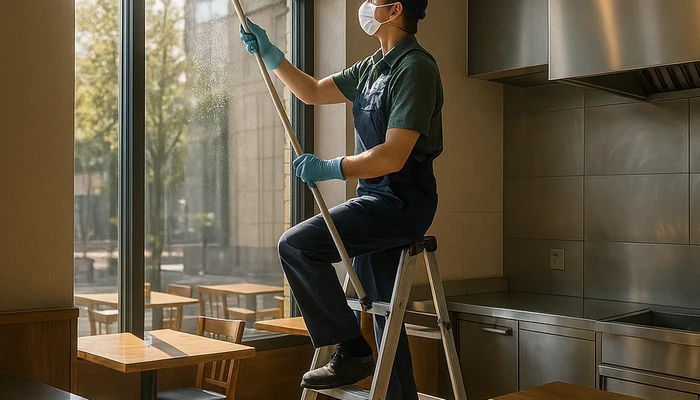
- Utilize safe, ladder-free reach methods when possible (e.g., extension poles, modular scaffolding)
- Follow a double-inspection policy (work checked by supervisor)
- Only use food-safe agents where cross-contamination is possible
- Provide after-cleaning reports for managers to review
For complex settings, professionals can adjust workflows during business hours to avoid downtime—key for urban restaurants in busy neighborhoods like Chicago’s downtown core.
Window Cleaning Inside Versus Outside: Key Considerations
Restaurant windows demand different tactics depending on side and access:
- Interior panes: Require streak-free results due to close guest proximity; guard against drips and chemical odors.
- Exterior panes and frames: Addressed with more robust detergents, and tasks often scheduled early to avoid patron disruption.
- Frosted or decorative glass: Needs gentler agents and microfiber cloths to avoid scratches.
- Operational windows: Must be checked for mold/mildew, especially in humid kitchens (EPA guidelines).
Professional cleaning teams check window conditions first, taking care to use methods that won’t void manufacturer warranties.
The Role of Staff Versus Outsourced Cleaning: Who Should Handle What?
Balancing in-house staff duties with outsourced professional cleaning is important:
- Staff responsibilities: Spot-cleaning low windows, routine dusting of accessible ledges, inspecting for spills/smudges between service periods.
- Professional tasks: Cleaning at height, addressing exterior glass, periodic deep cleaning, and maintenance of hard-to-reach or specialized surfaces.
Having clear boundaries reduces accidents and ensures cleaning meets regulatory standards. Assigning high-level cleaning to trained specialists also supports insurance and liability compliance.
Special Situations: Addressing High Surfaces in Kitchens, Bars, and Event Spaces
Each restaurant zone presents unique demands:
- Kitchens: High shelves and vent hoods are hotspots for grease and require degreasing before dusting.
- Bar areas: Glass racks and overhead bottle storage accumulate sticky residue needing specialized cleaning.
- Event spaces: Often feature lighting trusses and architectural features that double as dust magnets; may require lift equipment to reach safely.
Tailor cleaning products and frequencies depending on usage, building size, and time of year.
Inspection Protocol: Checking Quality After High Surface and Window Cleaning
Post-cleaning inspections ensure work meets expectations. Checklist examples:
- No visible streaks on glass or polished metal
- Zero dust/debris on ledges, vent covers, fan blades
- Signature/date of inspector recorded in cleaning logs
- No water or cleaning agent drips left on dining areas or flooring
Documenting inspection outcomes helps with future staff training and health department reviews.
Decision Framework: How to Evaluate and Select a Cleaning Partner for High Surface and Window Needs
When outsourcing, consider the following before hiring a restaurant cleaning company:
- Experience with similar-size restaurants and venue types
- Use of safe, eco-friendly, and food-safe cleaning solutions
- Staff training in OSHA ladder and height-safety regulations
- Ability to provide references or quality assurance samples
- Willingness to adapt schedules for minimal operational disruption
Request tailored quotes that include detailed cleaning plans for windows and high surfaces—not just a generic checklist. Consider engaging the CHI Cleaning Services team for a custom assessment and recommendations for your restaurant’s unique needs.
Integrating Window and High Surface Cleaning into Overall Restaurant Hygiene Protocol
Incorporate these tasks as part of a systematic hygiene program—not standalone efforts. Key integration points:
- Add window and high-surface items to weekly walk-through checklists
- Coordinate high cleaning before floor and table cleaning to capture any fallen debris
- Rotate staff or team assignments to keep standards fresh
- Refer to in-depth guidance from detailed restaurant cleaning best practices
To support staff, ensure ongoing training and access to clear instructions (see internal resource: how to maintain an impeccable environment).
Consequences of Neglect: Health Code, Reputation, and Operational Impact
The repercussions of inconsistent window and high-surface cleaning include:
- Written warnings and repeat inspections from city health officers
- Negative online reviews citing visible dust or dirt
- Reduced guest comfort, especially among allergy-sensitive diners
- Downtime or rush cleaning during busy shifts to recover standards
For actionable tips on avoiding common lapses, see restaurant cleaning mistakes to avoid.
Integrating High Surface and Window Cleaning with Other Facility Needs
Address these specialized tasks alongside regular kitchen, restroom, and public area cleaning. For example, coordinate window cleaning with monthly deep cleaning or restocking cycles. For thorough program planning, refer to resources on restaurant cleaning task scheduling.
For a more detailed look at how these routines fit into deep cleans, visit deep restaurant cleaning essentials.
Frequently Asked Questions: Window & High Surface Cleaning in Restaurants
- How often should restaurant windows be professionally cleaned?
Windows should be cleaned at least weekly, with daily spot checks on high-touch areas. Frequency increases for exterior windows in high-traffic or pollution-heavy locations. - What are ‘high surfaces’ most commonly missed during cleaning?
Ceiling vents, upper window frames, light fixtures, the tops of shelving or cabinets, and HVAC ductwork are often overlooked in restaurants. - Can kitchen staff handle all high surface cleaning safely?
Routine dusting may be assigned to in-house staff, but ladder work, exterior, or high-reach areas should be handled by trained professionals who follow OSHA standards. - What cleaning products are safe for use near food prep areas?
Always use food-safe and EPA-registered cleaning agents. Check product labels to avoid contamination and review regulatory requirements for commercial kitchens. - Are exterior restaurant windows cleaned less frequently than interiors?
Exterior panes often require more frequent attention due to weather, city grit, bird droppings, and pollution—typically every one to two weeks, especially for window-heavy venues. - What health code issues arise from neglected high surfaces?
Health code violations include dust/debris on vents or ledges, grease near ducts, and evidence of pests due to accumulated food particles in hard-to-reach zones. - How can high-surface cleaning be integrated with other hygiene protocols?
Include these tasks in inspection checklists, schedule post-service reviews, and rotate responsibilities among trained staff for ongoing standards. - What safety equipment is essential for cleaning at height?
Ladder stabilizers, PPE (gloves, goggles), extension tools, and proper warning signage are mandatory. OSHA provides valuable resources for safe practices. - Can professional cleaning teams work outside business hours?
Yes. Experienced providers like CHI Cleaning Services can tailor schedules to limit disruption and support health code and operational requirements. - Is window cleaning included in regular cleaning contracts?
This varies by provider. Always clarify expectations and frequencies in your cleaning contract. For customized plans, consult a professional team directly.
Conclusion: Setting Reliable Standards for Window and High Surface Cleanliness
Restaurant success hinges on more than just tasty dishes: sparkling windows and regularly cleaned high surfaces are essential for hygiene, compliance, and guest satisfaction. By establishing efficient frameworks, arming teams with the right tools, and leveraging professional partners like CHI Cleaning Services, you safeguard both your brand and your diners.
Consider formalizing your protocols and explore further with our deep cleaning and facility integration guides. When you’re ready for expert support, request a high cleaning at a restaurant today.
About CHI Cleaning Services
CHI Cleaning Services helps households and businesses in Chicago, Illinois and nearby areas keep their spaces clean and healthy. With a focus on recurring house cleaning, deep cleaning, move out cleaning, office cleaning, and specialized facility cleaning, our team is trained in consistent checklists, product safety, and modern techniques. Our mission is to provide flexible, high-standard services for homes, offices, restaurants, and retail environments—always with attention to detail and transparent communication. To find out more about our expertise or to request an assessment, visit CHI Cleaning Services.
cleaning services chicago, Expert restaurant cleaners, bar and restaurant cleaning chicago, restaurant cleaning Moline, restaurant service cleaning Harvey IL, bar and restaurant cleaning Riverside, restaurant cleaning Montgomery IL, restaurant cleaning Lincoln Park, restaurant kitchen cleaning North Riverside, restaurant cleaning River North IL