Strategies For Maintaining Cleanliness In Fitness Facilities During Peak Hours: An In-Depth Guide
As a fitness facility manager or owner, maintaining a rigorous level of cleanliness during peak hours is not just about creating a positive impression—it’s essential for health, safety, and client confidence. High-traffic periods bring complex challenges, from sweat and germ buildup to equipment turnover and limited staff time. In this guide, you’ll find actionable strategies for maintaining cleanliness in fitness facilities during peak hours, including specific staff workflows, technology innovations, checklists, and frameworks designed for the Chicago fitness community. Drawing from the expertise of CHI Cleaning Services and industry best practices, this resource will help you create robust systems that keep both clients and staff safe and comfortable, even at your busiest times.
Understanding the Unique Hygiene Challenges During Peak Hours
Peak hours in fitness facilities generally coincide with mornings before work, lunchtime, and evenings after the typical workday. During these windows, high equipment usage, increased traffic in locker rooms, and tight cleaning windows introduce unique difficulties:
- Rapid accumulation of sweat, dirt, and debris on equipment and flooring
- Shared high-touch surfaces with heightened risk of germ transmission
- Limited time for deep cleaning between user transitions
- Bottle-necks in locker rooms and showers increasing contamination risk
- Increased demand on staff and supplies
Recognizing these stress points is the first step to designing effective strategies for maintaining cleanliness in fitness facilities during peak hours. HealthyChildren.org outlines the importance of regular disinfection, especially when facilities are crowded, as a critical preventive measure.
Building a Dynamic Cleaning Team for High-Traffic Periods
To respond to intensified cleaning needs, staffing models should adapt for peak times. Consider:
- Staggered shift scheduling so new staff begin just before peak influx
- Rapid response teams to manage urgent cleanups in locker rooms and entryways
- Utilizing flexible floaters who can be deployed to bottleneck areas as needed
Rigorous training, with a focus on high-touch surface disinfection and safe chemical use, prepares staff for these demands. Ongoing communication ensures nothing falls through the cracks as pressure rises.
Designing an Hourly Cleaning Rotation Checklist
Peak hours demand precise, visible routines. An hourly cleaning rotation checklist helps:
- Assign cleaning responsibilities and time blocks for each priority zone
- Define frequency for cleaning different touchpoints—equipment, doors, benches, lockers
- Track completions with logs, digital checklists, or physical sign-off sheets
Here’s a sample rotation during peak hours:
| Area | Touchpoints | Frequency | Assigned Staff |
|---|---|---|---|
| Cardio Zone | Treadmill handles, screens | Every 30 min | Team A |
| Strength Area | Benches, weight grips | Every 40 min | Team B |
| Locker Rooms | Lockers, sinks, handles | Hourly | Team C |
| Reception & Entry | Counters, entry door, pens | Every 20 min | Team D |
Integrated Use of Advanced Cleaning Technologies
Technology enables faster and more thorough cleaning without disrupting member flow. Effective tools include:
- Electrostatic sprayers for rapid disinfectant application on large surfaces
- HEPA-filtered vacuums to trap fine particulates, improving air quality
- Touchless sanitization stations for both staff and members at entry and throughout the gym
These technologies, when integrated into your hourly routines, cut down on cleaning time while maintaining high sanitation standards. Explore more on the latest cleaning guidelines for best practice insights.
Member Engagement Strategies for Shared Cleanliness
Encouraging members to play an active role amplifies your team’s effectiveness. Proven tactics include:
- Clear signage instructing on proper equipment wipe-down protocols
- Strategically placed cleaning spray bottles and wipes at every zone
- Announcing reminders during busy periods
- Reward programs for hygiene-conscious behavior
By fostering a sense of shared responsibility, you not only keep the facility cleaner but also reinforce a culture of wellness and consideration.
Evaluating Cleaning Chemical Safety and Selection
Product selection directly influences both hygiene effectiveness and member comfort. When evaluating disinfectants and cleaning agents:
- Choose hospital-grade, EPA-registered disinfectants proven to fight viruses and bacteria
- Use low-odor and non-irritating formulas for respiratory safety in gym settings
- Verify compatibility with gym flooring and equipment to avoid surface damage
- Ensure secure storage, away from public areas and under staff control
This holistic approach aligns with current clinical best practices.
Air Quality and Ventilation Practices During Busy Times
Crowded gyms can accumulate odors and airborne contaminants. Robust ventilation is a must:
- Run HVAC systems and exhaust fans consistently during peak hours
- Install HEPA filters and replace them according to manufacturer schedules
- Open doors or windows for fresh air exchange whenever feasible
- Use portable air purifiers in high-occupancy zones
For more details on this topic, see ventilation cleaning guidance for gyms.
Locker Rooms, Showers, and Restrooms: Special Attention Zones
During peak periods, locker rooms demand constant attention:
- Continuous monitoring for spills, moisture, and debris on floors and benches
- Rapid restocking of hand soap, paper towels, and toilet paper
- Routine disinfecting of high-contact areas like faucets, door handles, and lockers
- Daily deep-cleaning scheduling for off-peak times
Staff should document all cleaning activities, ensuring compliance and accountability.
Managing Equipment Turnover and Immediate Spot Cleaning
Fast member transitions on equipment increases the risk of transmission. Strategies include:
- Establishing a baseline: Every use, every clean.
- Using visible cleaning supply stations at each equipment cluster
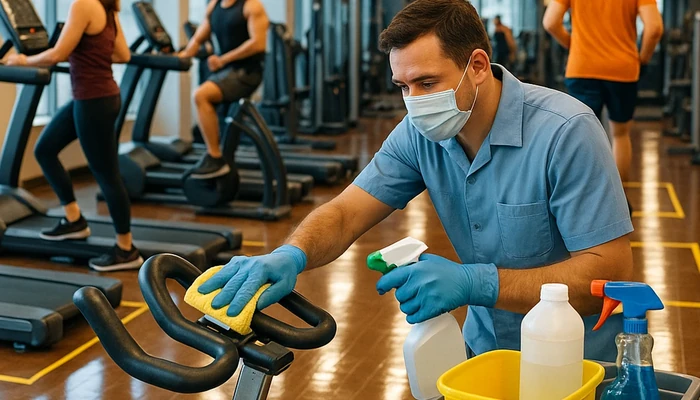
- Instructing staff to periodically circulate and spot-clean between members
- Adopting a “clean as you go” policy during group classes
For nuanced guidance on daily cleaning checklists, review this daily fitness center cleaning checklist.
Handling Bottlenecks and Special Facility Zones
Some fitness spaces have unique high-traffic or specialty areas such as:
- Dedicated spin or yoga rooms with specialized equipment
- Hydrotherapy or sauna zones
- Reception and turnstile choke points
Anticipate overflow during peak times by:
- Deploying extra staff for designated intervals
- Create advanced scheduling for deep cleaning slots in specialty rooms
- Posting hygiene protocols in visible, location-specific signage
Comparing DIY Cleaning Versus Professional Gym Cleaning Support
- DIY: Offers flexibility, can be staff-led, but risks inconsistent coverage and staff fatigue.
- Professional cleaning: Reliable, regimented, ensures compliance with best practice protocols, and elevates the perceived standard of care.
During peak hours, outsourcing some or all cleaning tasks to specialists like CHI Cleaning Services can free up your team to focus on member service while ensuring rigorous hygiene. For facilities with unique needs, explore tailored Gym cleaning service options.
Data-Driven Approaches: Monitoring, Reporting, and Accountability
Routine measurement and documentation builds a culture of accountability. Suggested tools and processes:
- Digital cleaning logs accessible by management and supervisors
- Spot-check audits during and after peak windows
- Member feedback forms or signage for quick reporting of lapses
- Monthly reviews to identify trends, weak points, and improvement opportunities
Decision Framework: Selecting Your Peak-Hour Cleaning Strategy
As you design your hygiene protocol, consider:
- Facility size and member volume: The busier and larger, the greater the need for regimented systems.
- Staffing levels and expertise: Internal teams may handle routine tasks, but pros excel at deep cleaning and disease prevention.
- Budget and risk tolerance: Investment in professional services protects your reputation and reduces liability.
- Feedback data: Listen to member complaints and suggestions as you adapt your plan.
For more comparative information, our summary of gym cleaning strategies provides clear contrasts.
Checklist: Essentials for Maintaining Peak-Hour Cleanliness
- Hourly rotation schedule with clear accountability
- Sufficient cleaning supplies and effective storage solutions
- Member education and participation encouragement
- Application of advanced equipment and safe disinfection chemicals
- Ventilation management and air filtration checks
- Special attention to locker rooms, showers, and bottleneck zones
- Ongoing data collection and responsive adjustments
Case Example: Chicago Fitness Clubs Improving Cleanliness During Rush Hours
Several Chicago-based fitness facilities have partnered with CHI Cleaning Services to:
- Audit and redesign their cleaning rotation models for high-usage times
- Deploy technology enhancements like portable HEPA air purifiers
- Increase member-facing signage and “cleaning culture” reminders
- Integrate digital cleaning logs accessible for transparency
The result? Improved member satisfaction scores, fewer complaints about gym cleanliness, and a reputation for nurturing a healthy environment—even during the busiest hours.
FAQ: Maintaining Cleanliness in Fitness Facilities During Peak Hours
- What is the most effective way to clean equipment during busy periods?
Implement an hourly cleaning checklist, use fast-acting disinfectants, and provide wipes and sprays for both staff and members to use after every session. - How can I encourage gym members to clean up after themselves?
Post clear signage, use reminder announcements, and ensure ample cleaning supplies are within easy reach on the gym floor. - What disinfectants are safe for use around exercise equipment?
Use hospital-grade, EPA-approved products that are compatible with rubber and plastic but have low fumes and non-corrosive formulations. - What are the biggest risks of poor cleaning during peak hours?
Increased infections, rapid germ spread, negative member feedback, and reputational damage can all result from lapses during high-traffic windows. - How do professional cleaning companies handle peak-hour gym cleaning?
They deploy trained staff in staggered shifts, use advanced equipment, document all tasks, and quickly address high-risk and high-traffic areas. - How often should locker rooms be cleaned during rush hours?
At minimum, locker rooms should be checked and spot-cleaned every hour, with more frequent checks if the volume is high. - What if my team can’t keep up with cleaning demands?
Consider partnering with a professional service like CHI Cleaning Services for reliable coverage and compliance. - Does improving air quality really reduce illness in gyms?
Yes, enhanced ventilation and HEPA filtration can significantly reduce airborne pathogens and odors, supporting a healthier facility. - Where can I find a detailed daily cleaning checklist?
Review our daily cleaning checklist for fitness centers for a structured guide.
Summary and Next Steps: Elevate Your Facility’s Standards
Successfully maintaining cleanliness in fitness facilities during peak hours requires more than just diligence: it’s about building effective systems, embracing technology, supporting your staff, and cultivating member cooperation. By implementing structured checklists, advanced equipment, and transparent routines, your gym can meet—and exceed—modern hygiene expectations.
If you need assistance with specialized schemes or wish to free up your staff for client support, explore Gym cleaning service offerings. For daily homes, offices, or unique cleaning scenarios, CHI Cleaning Services is ready to help you design practical, reliable solutions.
About CHI Cleaning Services
CHI Cleaning Services helps households and businesses in Chicago, Illinois and nearby areas keep their spaces consistently clean and healthy. Our experienced teams specialize in recurring house cleaning, deep cleaning, move out cleaning, office cleaning, and custom facility cleaning projects. By applying rigorous training, safety standards, thorough checklists, and the right professional products for every surface, we uphold the highest practices for sanitation and reliability. Transparent communication and a dedication to long-term relationships set us apart in delivering value and trust to every client.
best cleaning services chicago, gym deep cleaning, gym clean chicago, gym deep cleaning Aurora, workout studio cleaning Cragin, workout studio cleaning Lake Bluff IL, health club cleaning River North, gym deep cleaning Elgin, health club cleaning Itasca, gym clean Lake Villa IL