
Cleaning Protocols for Kitchen and Dining Areas in Offices: Comprehensive Guide
In modern office environments, kitchen and dining areas are vital for employee well-being, productivity, and a sense of community. However, without rigorous cleaning protocols, these spaces can quickly become hotspots for germs, bacteria, and unpleasant odors. This in-depth guide explores exactly how cleaning protocols for kitchen and dining areas in offices are designed, implemented, and maintained—so your workplace food areas stay hygienic, compliant, and welcoming.
Understanding Regulations and Hygiene Standards for Office Food Spaces
Before establishing or refining your cleaning protocols, it’s crucial to understand the relevant cleanliness and food-safety regulations. In office kitchens and dining areas, health and safety guidelines typically stem from OSHA standards and food industry best practices, even if the space isn’t a commercial kitchen.
- OSHA requirements for facility cleanliness and safe employee spaces. Learn more at OSHA’s official PPE guidelines.
- Food handling protocols common to breakrooms and shared eating spaces.
- School and healthcare facilities may have additional regulations—see local health department resources.
Applying these rules not only ensures compliance but also builds employee confidence.
Mapping Out Office Kitchen and Dining Area Surfaces
Kitchens and dining zones in workplaces combine a range of surfaces—each requiring specific approaches. An effective cleaning protocol accounts for:
- Countertops (laminate, stone, stainless steel)
- Tables and chairs (wood, plastic, metal)
- Appliances (microwaves, refrigerators, coffee machines)
- Sinks, faucets, and drainboards
- Floors (tile, linoleum, hardwood)
- Shared utensils and dishware
- Doorknobs, cabinet handles, light switches
Identifying these high-touch and food-contact points guides where to focus attention and what products to use.
Key Components of a Professional Kitchen and Dining Area Cleaning Protocol
Effective cleaning protocols are structured and repeatable. Professional teams like CHI Cleaning Services use written checklists and quality control standards that typically include:
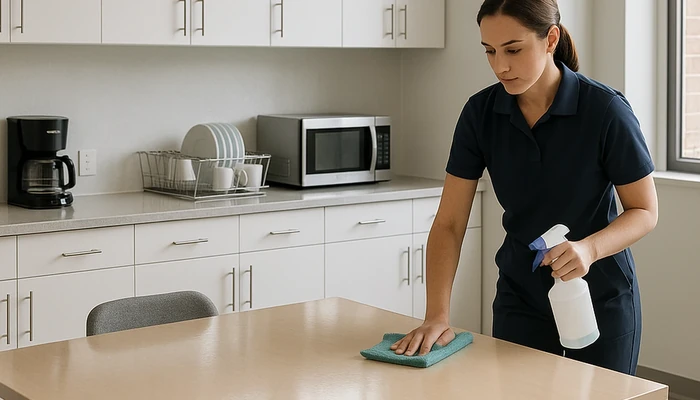
- Routine cleaning (daily/after each use): wiping down surfaces, emptying trash, cleaning sinks, and floors.
- Sanitizing food-contact and high-touch surfaces.
- Deep cleaning projects (weekly/monthly): appliance interiors, grout, vent hoods, and hard-to-reach corners.
- Inventory and supply checks: ensuring a steady stock of cleaning products and PPE.
- Documentation: signing off and tracking completed tasks for accountability.
Professional checklists provide transparency for managers and staff, ensuring nothing is missed.
Cleaning Frequency: Daily, Weekly, and Monthly Tasks
The ideal cleaning frequency for office kitchen and dining areas depends on space usage, but the following is a professional best-practices schedule:
| Task | Recommended Frequency |
|---|---|
| Wipe down counters and tables | After each use / Daily |
| Disinfect door handles and touchpoints | Daily |
| Sweep and mop floors | Daily |
| Clean appliance exteriors | Daily |
| Empty trash and recycling | Daily |
| Deep clean refrigerator and microwave interior | Weekly |
| Sanitize sinks and drainboard | Weekly |
| Clean vent hoods, grout, and baseboards | Monthly |
Adjust frequencies as needed for larger spaces, high-traffic offices, or settings serving food for events.
Product Selection: Safe and Effective Cleaning Solutions
Choosing the right cleaning products is central to protocol efficacy and occupant health. Office kitchen areas require:
- Food-safe cleaners for surfaces where food is prepped or eaten.
- EPA-registered disinfectants for high-touch and communal equipment.
- Degreasers for areas like microwaves and stovetops.
- Low-odor or green-certified products to prevent air quality issues in shared spaces.
- Compliance with industry cleaning standards for food service areas.
Professional services, including CHI Cleaning Services, provide guidance on safe product choices for mixed-use workspaces.
Step-by-Step Professional Cleaning Process
While DIY cleaning relies on good intentions, a professional protocol delivers consistent, measurable results. Each visit generally follows this sequence:
- Remove food debris and dispose of leftover items.
- Clean surfaces with appropriate detergents.
- Sanitize food-contact and high-touch areas after cleaning.
- Clean appliance exteriors and handles.
- Wash sinks and scrub drainboards using antibacterial products.
- Sweep and mop floors with attention to baseboards and corners.
- Restock supplies, paper goods, and refill soap/sanitizer dispensers.
- Document and sign off on completed tasks for full accountability.
A professional checklist—tailored to each office’s kitchen and dining zone—ensures nothing is overlooked.
Who’s Responsible? Dividing Duties Between Staff and Cleaning Providers
Clear division of responsibilities keeps shared kitchen areas tidy between professional cleaning visits:
- Employees: Clean up after themselves, load/unload dishwashers, wipe spills, and remove perishables.
- Facility/office management: Schedule professional cleanings, maintain supply inventories, and handle repairs.
- Professional cleaning teams: Perform deep cleaning, disinfection, and routine maintenance according to agreed protocols.
Posting simple “what you can do” checklists encourages staff participation without relying solely on janitorial or cleaning teams.
Comparing Office Kitchen Cleaning: Professional Service vs. DIY
- Consistency and Accountability: Professionals use written checklists and rigorous quality standards, reducing missed steps.
- Product Selection: Professionals select effective, food-safe solutions and know appropriate dwell times for disinfectants.
- Time and Labor: Outsourcing cleaning saves employee time and avoids resentment from uneven chore distribution.
- Cost: While in-house cleaning may seem cheaper, the true cost of outbreaks or unhygienic conditions can be far greater in productivity and reputation.
For high-traffic spaces, professional cleaning offers peace of mind—reducing risks and providing clear documentation.
Maintaining Appliance Hygiene in Shared Kitchens
Refrigerator
- Weekly wipe-down of shelves and bins with food-safe disinfectant.
- Monthly deep clean and removal of expired items.
Microwaves
- Daily cleanup of interior splatters.
- Weekly thorough cleaning of trays and doors.
Coffee Machines & Kettles
- Descale and sanitize at least monthly, more often with heavy use.
These protocols minimize odors and prevent cross-contamination in shared food spaces.
Managing Kitchen Waste: Collection, Separation, and Odor Control
Waste management plays a critical role in kitchen hygiene:
- Daily emptying of trash, compost, and recycling bins.
- Regular sanitizing of bin interiors and lids.
- Use of liners and foot-operated bins to reduce hand contact.
- Prompt removal of organic waste to prevent pest attraction and odor.
Integrated waste separation next to food prep areas simplifies compliance and keeps spaces fresher between cleanings.
Dealing with Spills and Accidents: Immediate Response Protocols
Prompt attention to spills, broken glass, or messes reduces slip hazards and prevents buildup:
- Invert a caution sign if it’s a liquid spill.
- Remove food debris before cleaning with detergent and water.
- Sanitize the area with an appropriate disinfectant, letting it dry fully.
- For equipment-based accidents, unplug and inspect before cleaning (follow manufacturer’s directions).
Documentation of incidents may be required in certain regulated settings.
Special Considerations for Office Dining Areas Beyond Kitchens
Dining areas attached to kitchens often have unique challenges:
- Crumbs and spills accumulate on dining tables and chairs.
- Upholstered seating may require specialized spot cleaning or periodic deep extraction.
- Dividers or shared condiment stations need regular sanitation.
Consider implementing “clean desk” policies for food to further support cleanliness outside of formal dining areas.
Choosing the Right Professional Cleaning Partner for Office Food Areas
When selecting a cleaning provider for your Chicago workspace:
- Ask about food-safe product usage in kitchen zones.
- Request sample checklists specific to kitchens and dining areas.
- Check for documented protocols around disinfection, appliance cleaning, and waste management.
- Review communication and reporting practices.
- Inquire about flexibility—such as deep cleaning during move-outs or post-event resets.
A trusted provider such as CHI Cleaning Services ensures tailored, detail-oriented care for every workplace food space.
Health, Safety, and Allergens: Reducing Worksite Risks
- Use allergen-safe, fragrance-minimized cleaning solutions when requested.
- Label all provided snacks and supplies to prevent mistakes.
- Train staff and cleaning partners on food allergy cross-contact prevention.
- Clearly post handwashing and good hygiene reminders for all users.
Proactive protocols foster a safer, more inclusive workplace kitchen and dining environment.
Monitoring and Documenting Cleaning: How to Ensure Compliance and Improvement
Track cleaning effectiveness and identify improvement opportunities by:
- Posting visible cleaning logs for accountability.
- Regular walk-throughs by office/facilities managers.
- Soliciting feedback from employees about cleanliness and issues.
- Keeping digital or paper cleaning checklists for each area and cleaning cycle.
The best protocols are living documents: adapt your cleaning approach as usage and expectations evolve.
Internal Collaboration: Engaging Employees in Maintaining Shared Spaces
Even the best protocols fail without user participation. Empower your team by:
- Setting clear expectations for self-cleaning after use.
- Promoting good hygiene: handwashing, sanitizer stations, and labeling items.
- Recognizing teams or floors that model excellent kitchen stewardship.
- Communicating cleaning schedule transparently via email or digital displays.
Shared accountability is key for pristine kitchens and pleasant dining areas.
Case Example: Chicago Office Kitchen Protocol in Practice
Consider a busy Chicago law firm’s shared kitchen—serving over 50 employees daily. Working with CHI Cleaning Services, the office implemented:
- Twice-daily surface sanitation and trash emptying.
- Weekly deep appliance cleaning and supply restocking.
- Monthly floor waxing and grout treatment.
- Posted bi-lingual cleaning logs at each station.
This approach improved staff satisfaction and reduced sick day incidents, while providing management clear records for compliance and review.
Common Missteps and How to Avoid Them
- Using non-food-safe cleaning agents on prep surfaces.
- Ignoring appliance handles and shared drawer pulls.
- Delaying spill cleanup, leading to stubborn stains or pest attraction.
- Allowing expired food to pile up in refrigerators.
- Forgetting to track and replenish cleaning supply stock.
Well-communicated protocols and provider accountability help eliminate these risks.
FAQ: Cleaning Protocols for Office Kitchen and Dining Areas
- How often should office kitchen appliances be professionally cleaned?
- High-use appliances like refrigerators and microwaves should be deep cleaned at least weekly, with daily wipe-downs for exterior surfaces.
- What’s the best way to ensure food-safe cleaning in shared office kitchens?
- Use food-safe, EPA-approved products and monitor proper dwell time. Ask your cleaning provider for documented protocols that specify product details.
- Are staff required to clean up their own dishes?
- For best hygiene, employees should handle personal items, but professional cleaners can address any residual issues during scheduled service.
- What are signs your cleaning protocol needs reexamination?
- Recurring odors, visible dirt, or employee complaints signal it’s time to review checklists, frequencies, or provider communication.
- How can office managers ensure cleaning compliance?
- Request signed checklists from cleaning staff, perform routine inspections, and solicit employee feedback on cleanliness.
- Is disinfection always necessary after every meal?
- Not for every meal, but at least daily for surfaces and more frequently during illness outbreaks or in high-traffic areas.
- How can allergens be controlled in a shared office food space?
- Label common foods, use allergen-safe cleaning agents, and communicate allergy concerns to both staff and cleaning teams.
Summary and Next Steps
Maintaining kitchen and dining areas in offices involves more than just wiping surfaces—it’s about creating structured, transparent cleaning protocols that safeguard health, foster productivity, and demonstrate care for your workforce. Use the strategies and checklists in this guide to elevate your office food spaces, and consider vetted professional partners for reliable results.
For tailored office cleaning solutions or to learn how expert teams approach workspace hygiene, explore commercial cleaning in Chicago or discover our deep cleaning services for high-traffic office hubs.
About CHI Cleaning Services
CHI Cleaning Services specializes in recurring house cleaning, deep cleaning, move out cleaning, office cleaning, and facility solutions for homes and businesses in Chicago, Illinois and surrounding areas. Our trained staff adheres to strict protocols and uses professional products appropriate to each setting. We’re committed to excellence through transparent communication, flexible scheduling, and detailed attention—helping clients keep workspaces, kitchens, and dining areas spotless and safe.
cleaning service, business office cleaning, office cleaning near me, office cleaning company in Great Lakes, Glenview office cleaning, Des Plaines office cleaning, office cleaning Westmont IL, office cleaning company in River Grove IL, office cleaning company in Markham IL, office cleaning company in Hammond