Ensuring Safe and Efficient Environments: Cleaning Services for Technology and Data Centers
Technology and data centers are mission-critical for organizations of every size, supporting everything from financial transactions to public health networks. Yet, few realize that proper cleaning is as essential as advanced climate controls or cybersecurity measures. Cleaning Services For Technology And Data Centers focus on keeping server rooms and technology hubs functioning safely through tailored protocols, specialized equipment, and rigorous attention to sensitive surfaces. In this guide, you’ll discover exactly how professional cleaning supports uptime, prevents failures, and safeguards the environment, along with the industry practices, checklists, and decision criteria necessary to choose the right provider for your facility. Whether you manage a colocation facility in Chicago or a corporate server room, this guide lays out what you need to know.
The Critical Importance of Cleanliness in Technology and Data Centers
Data centers and tech facilities contain thousands of sensitive electrical components, all vulnerable to dust, debris, and tiny particulates. Even a fine layer of dust on server racks or circuit boards can create hotspots leading to overheating, electrical shorts, or catastrophic hardware failures. Beyond equipment integrity, unclean environments degrade air quality, increase fire risks, and threaten compliance with industry safety standards. By employing specialized cleaning services, facilities reduce downtime, protect long-term hardware investments, and demonstrate due diligence in safety and data integrity.
How Contaminants Affect Equipment Operations
- Dust accumulation blocks airflow and increases cooling demands.
- Static charges may build up, damaging sensitive electronics.
- Corrosive particles accelerate wear on contacts and connectors.
- Neglected spills or cleaning chemical residues can erode surfaces.
Consequences of Inadequate Facility Cleaning
- Elevated risk of unexpected outages.
- Compromised fire suppression or environmental control systems.
- Negative audit or regulatory inspection outcomes.
- Poor staff well-being and morale.
Specialized Risks in Tech and Data Center Environments
Cleaning within these environments is a delicate operation. Improper techniques or harsh cleaning agents can do more harm than good. Successful services combine technical know-how, industry-standard methods, and an understanding of the roles played by various surfaces and hardware types.
Key Vulnerability Zones
- Server racks and network cabinets
- Power distribution units and battery storage areas
- Raised floors and subfloor cavities
- Cable trays and cooling vents
- Control panels, touchscreens, and access terminals
Sensitive Surfaces and Materials
- ESD (Electrostatic Discharge)-prone electronics
- Antistatic floor coatings
- Cleanroom-grade glass and acrylic partitions
- Sealed data storage enclosures
Core Methods and Tools Used in Data Center Cleaning Services
Unlike general commercial cleaning, services for technology and data centers utilize distinct protocols to prevent contamination and static discharge. Here’s what differentiates a true specialist:
| Technique | General Office | Data Center |
|---|---|---|
| Vacuuming | Standard HEPA | Triple-filter HEPA; anti-static |
| Surface Wiping | Multi-purpose sprays | Non-residue, static-dissipative agents |
| Dust Removal | Microfiber only | ESD-safe microfiber and tools |
| Floor Maintenance | Wet mopping allowed | Strict moisture control to prevent seepage |
| Frequency | Weekly/biweekly | Daily to monthly, by area criticality |
Checklists for Different Zones in Technology Facilities
Effective cleaning begins with tailor-made checklists—one for each zone in the facility, based on risk level and accessibility:
Server Room Checklist
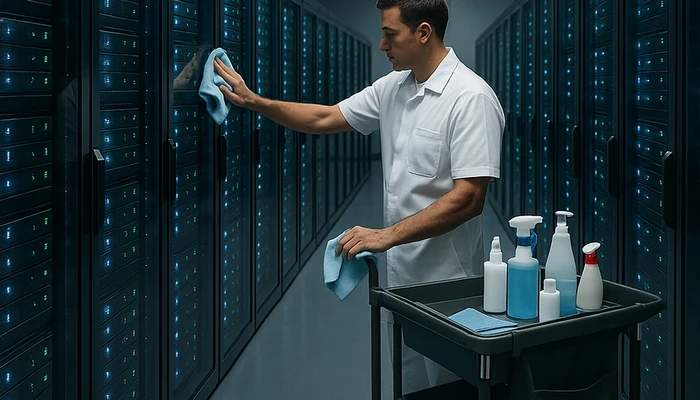
- Dust all horizontal and accessible vertical surfaces using ESD-safe tools.
- Vacuum raised flooring and subfloor cavities with HEPA equipment.
- Wipe cooling grilles, cable trays, and air vents using approved agents.
- Sanitize frequently touched knobs, control panels, and door handles.
- Review fire suppression access panels for debris and obstructions.
Network Operations Center Checklist
- Disinfect workstations and technician tools before and after each shift.
- Inspect and clean monitor bezels, keyboards, and meeting tables.
- Spot-clean carpets or specialty anti-fatigue mats as needed.
Supporting Spaces
- Empty and clean waste bins regularly.
- Maintain hallways, entryways, restrooms, and breakrooms using general and ESD-safe methods where appropriate.
Industry Standards and Guidelines for Technology Facility Cleaning
Professional cleaning teams should adhere to recognized standards, ensuring your facility meets requirements for safety and uptime. Highlights include:
- ANSI/ESD S20.20: ESD controls for electronics-handling environments.
- ISO 14644: Cleanroom and controlled environment protocols.
- ASHRAE Recommendations: Airflow and particulate management in server rooms.
- Guidelines from the Association for Professionals in Infection Control and Epidemiology for workspace sanitation.
- EPA resources on improving air quality in technology-intensive workspaces.
Differentiating Routine, Deep, and Emergency Cleaning Protocols
Not all cleaning is the same. Understanding the three main types ensures your facility is always protected:
- Routine cleaning: Daily or weekly, maintaining basic hygiene and electronics safety.
- Deep cleaning: Scheduled quarterly or annually, includes disassembly, under-rack service, and complete HEPA dusting.
- Emergency cleaning: After spills, water leaks, fire incidents, or contamination events. Special response teams use containment and rapid equipment assessment protocols.
Critical Factors When Evaluating Providers
Partnering with the wrong provider can expose your assets to risk. Here’s what to vet in every candidate:
- Proof of specialized data center cleaning training for all staff
- Written, facility-specific cleaning protocols
- Documented insurance and safety compliance (including ESD procedures)
- Ability to provide references for similar technology environments
- Transparency about cleaning product selection and safety data sheets
- Flexible scheduling to meet maintenance windows and critical uptime
Safety Precautions for Cleaning in Technology-Focused Environments
Safety is not just about protecting people—it’s also about your equipment’s continued operation. Key steps include:
- Isolating power to noncritical racks during underfloor cleaning
- Using anti-static mats and footwear
- Restricting water and moisture sources near sensitive hardware
- Working in pairs where feasible to monitor both safety and cleaning standards
- Labeling recently cleaned areas for ongoing monitoring
Scheduling: How Often Should Technology Centers Be Cleaned?
There’s no one-size-fits-all answer, as facility use and air quality vary. Here’s a general guideline:
- Critical spaces (server rooms): Weekly to biweekly, with quarterly deep cleaning.
- Support/control centers: Weekly.
- Administrative/common areas: Daily to weekly, depending on traffic.
After major projects—like hardware install, renovations, or incident recovery—a deep clean is strongly recommended.
Preparing Your Facility for a Professional Cleaning Visit
To maximize safety and efficiency when professionals arrive, consider these steps:
- Update and communicate access controls for cleaning staff entry
- Identify maintenance windows or periods of low activity
- Back up critical data in advance of any major deep cleaning
- Remove any nonessential items or obstacles from the work zones
- Designate an onsite contact for real-time questions
What Sets a High-Quality Data Center Cleaning Provider Apart?
True experts don’t just follow a checklist—they demonstrate industry fluency. Look for:
- Strict adherence to industry and manufacturer guidelines
- Real-time reporting and pre/post cleaning documentation
- Willingness to customize protocols for your unique assets
- Clear communication and transparent pricing
- Up-to-date training for all technicians
Comparing Service Models: In-house vs. Outsourced Cleaning
- In-house: Familiarity with facility, but requires significant training and can be hard to staff for emergencies.
- Outsourced professional services: Bring deep expertise, access to advanced equipment, and relieve management burden.
For most data centers and technology hubs, outsourcing to a proven cleaning partner is the safest, most cost-effective approach.
When to Consider Advanced Disinfection or Cleanroom-Level Services
Some technology environments call for additional layers of cleanliness, such as:
- ISO-certified cleanrooms
- Post-outbreak deep sanitizing
- Facilities housing medical or defense data
When these needs exist, confirm that your provider can meet, document, and sustain these higher standards—and query about prior experience.
Supporting Long-Term Uptime and Asset Longevity with Cleaning
Consistent, specialized cleaning:
- Lowers cooling and maintenance costs
- Reduces hardware failure risks
- Prolongs capital equipment lifespan
- Improves staff health and productivity
- Streamlines audits and crisis response
Consider integrating these practices into your wider facility maintenance schedule to maximize operational resilience.
Integrating Cleaning Services into Your Facility Management Plan
Whether you manage all building operations or focus on IT, communication between cleaning vendors and facility management is essential. Review and update cleaning protocols during quarterly reviews; work with your provider to adapt as your needs and compliance requirements evolve.
- Establish written cleaning and incident escalation protocols
- Schedule joint reviews following equipment upgrades or layout changes
- Monitor air quality and particulate counts for signs of change
Related Resources to Maximize Facility Hygiene and Safety
For a holistic approach, explore these in-depth guides and resources:
- Advantages of Opting for Specialty Commercial Cleaning Services
- Organizing a Cleaning Schedule to Maximize Efficiency
- Essential Equipment to Achieve a Thorough Cleanup
- Advanced Solutions for Post-Celebration Hygiene
- The Benefits of Green Cleaning Services
Frequently Asked Questions: Cleaning Services for Technology and Data Centers
- How often should a data center be cleaned?
- Critical areas like server rooms usually require biweekly surface cleaning, quarterly deep cleaning, and additional spot response following projects or incidents.
- Can regular janitorial staff clean data center spaces?
- Routine cleaners typically lack the technical training and specialized tools needed. It’s safer to use technicians with experience in technology environments.
- What cleaning techniques should never be used near servers?
- Avoid mopping, spraying liquids directly on surfaces, and all products that leave conductive or sticky residues. Only ESD-safe and non-residue solutions are appropriate.
- Are there regulations governing tech facility hygiene?
- While no single law applies, a mix of ANSI, EPA, ASHRAE, and sometimes ISO standards must be considered—especially for regulated industries or cleanroom spaces.
- Does CHI Cleaning Services handle emergency contamination in data centers?
- CHI Cleaning Services offers rapid response for data center cleaning emergencies in Chicago, including spills, water leaks, and contamination containment.
- Is disinfection with harsh chemicals necessary?
- Disinfectants must be used selectively and only with substances approved for electronics; overuse harms both equipment and air quality.
- How can I verify that a cleaning provider is qualified?
- Ask for proof of industry training, written protocols for tech spaces, client references in your vertical, and insurance certificates.
- What advance prep should facility managers do before a cleaning?
- Clear pathways, update badge access for technicians, back up critical data, and coordinate maintenance schedules to avoid unplanned downtime.
- What are the signs of effective cleaning?
- Improved airflow and particulate readings, reduced downtime or heat incidents, and absence of visible dust or debris after service.
- Which cleaning products are safe for server environments?
- Only those labeled ESD-safe and electronics-approved; these include specific alcohol-based wipes, anti-static sprays, and non-lint-producing cloths.
Conclusion & Next Steps for Facility Managers
Optimal Cleaning Services For Technology And Data Centers require a partnership with trusted specialists—those who understand equipment sensitivities, follow proven protocols, and integrate seamlessly with your facility’s needs. As technology becomes ever more critical, investing in tailored cleaning is investing in long-term uptime and asset value. Ready to support your team with best-in-class care? For ongoing needs or one-time service, Office cleaning service and Commercial cleaning booking are available should your facilities require broader support.
About CHI Cleaning Services
CHI Cleaning Services helps households and businesses in Chicago, Illinois and nearby areas keep their spaces clean and healthy. With a focus on recurring house cleaning, deep cleaning, move out cleaning, office cleaning, and special facility cleaning, our trained staff use professional products and equipment tailored for every surface. Transparent pricing, flexible scheduling, and a commitment to detail have made us a trusted name for reliable cleaning solutions. Our emphasis on high-touch areas and long-term client relationships ensures your environment is not just clean, but cared for.
cleaning services chicago il, commercial cleaning services, business cleaning services, commercial cleaning companies in Bolingbrook, commercial cleaning company Forest Park IL, Rogers Park commercial cleaning companies, commercial cleaning Wheeling, commercial cleaning contractors in Riverwoods, Glenview commercial cleaning, commercial cleaning Algonquin