 Skip to content
Designing and Following the Complete Protocol For Hygiene In Childrenʼs Centers
A safe, healthy environment is the foundation of every successful children’s center. Whether you’re a director, facility manager, or a parent seeking reassurance, understanding and implementing the complete protocol for hygiene in childrenʼs centers is vital for reducing illness, ensuring regulatory compliance, and building trust. This guide provides a meticulous walkthrough of every stage: from mapping hygiene risk zones to adapting schedules and verifying outcomes. By the end, you’ll be equipped with advanced checklists, clear action steps, and practical insight from professional cleaning standards—including the attention to detail that the Chicago-based experts at CHI Cleaning Services bring to every project.
Setting Hygiene Benchmarks: Regulatory and Safety Foundations
Before building your protocol, it’s essential to know your regulatory landscape. Children’s centers in Illinois must follow state and federal standards, along with recommendations from the Centers for Disease Control and Prevention (CDC). Reliable resources such as the Association for Professionals in Infection Control and Epidemiology and the CDC Handwashing standards provide up-to-date safety basics.
- Illinois Department of Children and Family Services (DCFS) requirements
- OSHA and CDC disinfection guidelines
- Staff training on hygiene and communicable disease prevention
Always begin your hygiene journey with a review of both legal obligations and latest best practices.
Mapping Hygiene Risk Zones in Children’s Centers
Effective cleaning protocols start with accurate identification of high-risk zones. Each children’s center is unique, but consistent hotspots include:
- Classrooms (tables, toys, door handles, cubbies)
- Restrooms and diaper changing areas
- Dining spaces and kitchens
- Playgrounds (indoor/outdoor), gymnasiums, and nap areas
- Entrances, hallways, and lobby reception zones
Customizing the Map
A detailed floor plan, annotated with frequency notes and potential cross-contamination points, streamlines staff responsibilities and audit checks.
Daily Hygiene Routines: Core Practices for Child Safety
Consistency is key. A dependable daily hygiene routine in a children’s center should cover all high-touch and high-traffic areas. Here’s a sample daily task cycle:
- Washing and disinfecting children’s hands on arrival and before meals
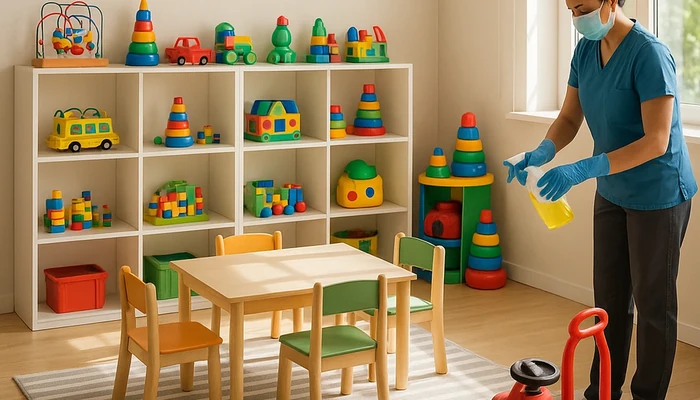
- Sanitizing tables, shared toys, and art supplies after every use
- Cleaning restrooms and changing stations multiple times daily
- Emptying trash and replacing liners
- Ventilating classrooms and group spaces
Staff Checklists and Verification
Use sign-off sheets or digital apps to verify each daily task. Supervisors should audit logs for compliance.
Weekly Facility Cleaning: Beyond the Surface
Once a week, plan deep cleaning tasks that can’t be completed daily. Examples include:
- Disinfecting all furniture, mats, and classroom storage units
- Vacuuming and steam cleaning carpets and soft furnishings
- Washing windows and door glass
- Detailing kitchen appliances and food prep surfaces
Comparison: Daily vs. Weekly Hygiene Routines
| Area | Daily Actions | Weekly Actions |
|---|---|---|
| Classroom | Wipe desks, disinfect toys | Steam carpets, clean shelves |
| Restroom | Sanitize sinks & toilets | Clean grout, wall tiles |
| Kitchen | Wipe counters | Degrease appliances |
| Play Area | Sanitize play mats | Wash playground equipment |
High-Touch Items and Shared Resources: Hygiene Musts
Young children constantly interact with toys, books, learning aids, and more. To limit germ transmission:
- Wash and disinfect shared toys after each group session
- Use washable, non-porous equipment where possible
- Rotate sets to allow for proper sanitizing
- Disinfect books and puzzles at least weekly
Labeling and Storage
Store sanitized items separately and use clear labels to avoid accidental cross-contamination.
Restroom and Diapering Area Hygiene: Protocol Precision
Restrooms are a primary vector for illness if neglected. All diaper changing areas must feature:
- Disposable, single-use liners
- Hands-free lidded trash bins
- Antibacterial hand soap and accessible sinks
- Wall charts with cleaning instructions
Immediate Cleanup Procedures
Promptly disinfect surfaces after every use, and wash hands for at least 20 seconds as endorsed by CDC research (CDC guidance).
Dining Spaces and Kitchen Protocols for Health
Food preparation and consumption zones must strictly segregate raw and cooked items. For safe dining:
- Sanitize tables and high-chair trays before and after meals
- Clean kitchen sinks with food-safe disinfectant daily
- Store utensils in closed containers
- Avoid cloth towels; opt for single-use paper or microfiber
Food Handling Guidelines
Staff must be trained in safe food handling, storage, and allergy management. Frequent auditing is recommended.
Nap Time and Rest Area Hygiene Steps
Children’s immune systems are still developing—clean nap environments are non-negotiable:
- Assign individually labeled mats and bedding
- Launder all blankets and sheets weekly, at a minimum
- Disinfect mats between uses
Emergency Response: Illness or Accidents During Rest
If a child becomes ill or has an accident, remove and thoroughly clean all affected bedding and equipment immediately.
Outdoor and Indoor Play Area Decontamination
Playgrounds and shared physical spaces require a unique protocol. Consider:
- Weekly disinfection of climbing frames, slides, and toys
- Daily scan/removal of hazards (trash, sharp objects, animal waste)
- Special attention to sandboxes: cover daily and replace sand regularly
Weather-Related Adjustments
During flu season or following an outbreak, increase cleaning frequency for all communal play equipment.
Ventilation, Air Quality, and Allergen Management
Good ventilation reduces airborne viruses and allergens. Incorporate:
- Daily airing of classrooms, restrooms, and nap areas
- Monthly filter replacements in HVAC systems
- Portable HEPA air purifiers in closed rooms
- Regular damp dusting of vents and windowsills
Special Circumstances: Managing Sick Children and Outbreaks
Every center must be prepared for illness scenarios. A robust response protocol includes:
- Immediate isolation of sick children
- Prompt notification to parents and medical staff
- Detailed disinfection of all exposed areas
- Temporary removal of shared items for deep sterilization
Advice from Infection Control Experts
The APIC resource database is regularly updated with pediatric outbreak management protocols relevant to childcare professionals.
Staff Training, Auditing, and Ongoing Compliance
Well-trained staff are at the heart of the hygiene protocol for children’s centers. Best practices include:
- Annual and quarterly training refreshers
- Routine spot checks and peer audits
- Digital checklists and sign-off to reinforce accountability
Encouraging a Hygiene Culture
Recognize and reward consistent compliance to sustain high standards across your team.
Eco-Friendly and Child-Safe Cleaning Choices
Child safety extends to the products and equipment you use. Ensure that:
- All disinfectants are EPA-approved and safe for food contact
- Strong chemicals are never used in occupied spaces
- Supplies are stored securely, away from children’s reach
- Green cleaning alternatives are prioritized where possible
Building a Custom Hygiene Protocol: Checklist Template
Every children’s center can adapt a core protocol checklist to its layout and routines. A well-constructed checklist boosts operational efficiency and regulatory compliance.
- Map all facility zones
- Assign routine and deep cleaning frequencies to each area/material
- Document cleaning/disinfection products and procedures per zone
- Record and audit staff actions
- Regularly review and update protocol based on illness reports or new regulations
Evaluating Professional Cleaning vs. In-House Staff: Decision Factors
Many Chicago centers debate whether to manage cleaning internally or partner with professionals. Consider:
- Expertise with childcare-specific cleaning products and techniques
- Ability to scale cleaning following outbreaks or seasonal needs
- Compliance documentation and audit support
When Professional Help Adds Value
For periodic deep cleaning or in response to outbreaks, specialized teams like CHI Cleaning Services offer advanced protocols and tools tailored for children’s environments.
Documentation, Communication, and Parent Transparency
Clear communication fosters trust with families. Leading facilities:
- Display or provide hygiene protocols to parents
- Email notices about illness outbreaks or protocol changes
- Summarize cleaning actions in newsletters or on bulletin boards
Linking Hygiene to Long-Term Child Health Outcomes
Robust hygiene isn’t just about compliance—it supports better health, reduced absenteeism, and higher parent satisfaction. Studies consistently show that centers with rigorous protocols have fewer illness outbreaks and improved child wellbeing. Creating an environment of safety and cleanliness helps children thrive—and centers earn lasting reputations for quality care.
Frequently Asked Questions: Complete Protocol For Hygiene In Childrenʼs Centers
- How often should toys in a children’s center be disinfected?
Shared toys should be sanitized after each group use and at least daily for high-touch items. - What products are safe for cleaning childcare facilities?
EPA-approved, child-safe disinfectants and food-contact-safe products are recommended. Avoid harsh chemicals where children are present. - Are staff required to follow specific hand-washing procedures?
Yes. Staff should follow CDC-endorsed routines, washing hands with soap and water for a minimum of 20 seconds after contact with bodily fluids, food, or contaminated surfaces. - What is the protocol for a sick child at a center?
Immediately isolate the child, notify guardians, and perform thorough disinfection of exposed areas. - How can facilities improve air quality for children?
Routine ventilation, regular filter changes, and use of HEPA air purifiers significantly improve air quality. - Is professional cleaning necessary, or can staff handle all hygiene?
Routine cleaning can be handled by staff, but periodic deep cleaning and outbreak response often require certified professionals for best results. - What documentation should childcare centers maintain?
Maintain daily, weekly, and incident-based cleaning logs, staff training records, and product usage lists for audits. - How is outdoor equipment cleaned safely?
Disinfect surfaces with child-safe products after use, inspect for hazards daily, and deep clean weekly or after known exposure. - Are green cleaning products suitable for children’s centers?
Yes, as long as they are appropriately certified for hygiene efficacy and used per manufacturer instructions. - How can parents verify a center’s hygiene standards?
Best centers are transparent—ask to view protocols and cleaning schedules, and watch for visible hygiene practices on visits.
Next Steps: Implementing and Auditing Hygiene Protocols
Equipped with this complete protocol for hygiene in children’s centers, your next move is to assess your own environment. Update checklists, train your staff, communicate with families, and schedule deep cleaning checks. For customized solutions or professional support, consider reaching out to established teams who understand the unique needs of childcare facilities.
Looking to support your team with advanced, child-safe cleaning? Explore daycare cleaning services or schedule a professional cleaning consultation for your facility. For comprehensive, quality-driven cleaning, CHI Cleaning Services is here to help you build safe environments for every child’s future.
About CHI Cleaning Services
CHI Cleaning Services is dedicated to healthy, spotless homes and facilities throughout Chicago, Illinois, and nearby areas. Our team specializes in recurring house cleaning, deep cleaning, move out cleaning, office cleaning, and specialized facility cleaning—always adhering to high standards, trained processes, and responsive customer service. Whether supporting busy families, property managers, or the leaders of children’s centers, our experience and commitment to child-safe cleaning keeps every environment both inviting and hygienic.
professional cleaning services, commercial cleaning chicago, commercial cleaning services, commercial cleaning in Homewood IL, commercial cleaning Yorkville IL, commercial cleaning companies in Aurora, commercial cleaning company Logan Square, commercial cleaning Harvey, Lombard commercial cleaning, commercial cleaning contractors in Norridge
