Mastering Industrial Cleaning: An Effective Guide to Processes, Protocols, and Results
Industrial cleaning demands a unique blend of science, discipline, and practical expertise. Whether you manage a busy manufacturing plant, oversee a warehouse, or operate a high-traffic commercial facility, cleaner, safer spaces are the goal—but getting there requires more than just effort. In this Guide To Mastering Industrial Cleaning Effectively, you’ll learn the structured steps, vital safety protocols, evaluation frameworks, and expert checklists that define truly professional results. Drawing on the expertise of CHI Cleaning Services and current industry guidance, this post will empower you to assess, plan, and upgrade your industrial cleaning approach with confidence.
Understanding the Core Principles of Industrial Cleaning
Industrial cleaning is far more complex than basic facility tidying. Effective practice is built on:
- Risk mitigation—addressing health and safety hazards first
- Regulatory compliance—meeting OSHA, EPA standards, and industry certifications
- Material and surface expertise—using techniques matched to each environment
- Result tracking—measurable outcomes, not just surface shine
Identifying Unique Industrial Cleaning Challenges
- Heavy-duty residue and buildup (grease, oils, particulates)
- Specialty flooring and sensitive equipment
- Contaminant containment (airborne, chemical, or biological)
- Large-scale square footage and cluttered layouts
- High frequency of use, minimal downtime
Each challenge shapes the cleaning plan. For instance, food-processing plants prioritize sanitization and allergen control (explore food service hygiene solutions), while industrial warehouses focus on dust control and durable surfaces.
Step-by-Step Industrial Cleaning Preparation Framework
- Detailed Site Assessment
- Walkthrough to determine contamination zones
- Inspection for safety hazards, trip risks, chemical storage
- Defining Cleaning Objectives
- What is “clean” for your site? Define in measurable terms
(e.g., zero visible dust, no slipping hazards, surfaces disinfected to specified standards)
- What is “clean” for your site? Define in measurable terms
- Material/SMS Review
- Consult Safety Data Sheets (SDS)
- Identify suitable cleaning agents
- Scheduling and Access Planning
- Work around high-traffic periods and sensitive operations
Essential Equipment and Product Selection in Industrial Contexts
- Industrial vacuums with HEPA filtration
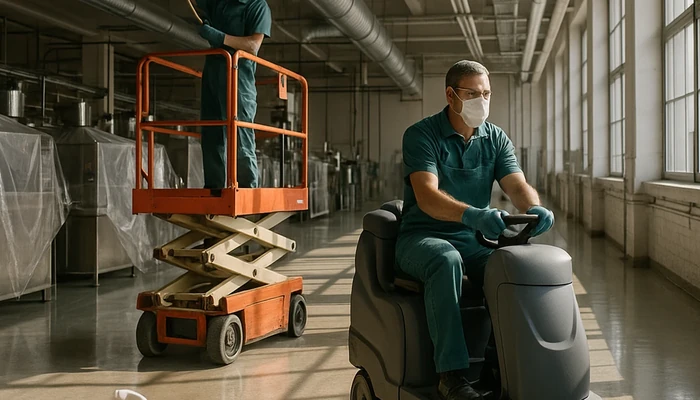
- Automated floor scrubbers, degreasers, and pressure washers
- Surface-specific disinfectants, EPA-registered as applicable (see renovation best practices)
- Appropriate PPE: gloves, respirators, and eye protection
Each facility’s needs will differ—never improvise with equipment that doesn’t match the task or material at hand.
Comparing Industrial Cleaning Methods: Manual vs. Mechanized Approaches
| Method | Strengths | Ideal Use | Limitations |
|---|---|---|---|
| Manual Cleaning | Detail work, flexibility | Corners, machinery, spot treatment | Time- and labor-intensive |
| Mechanized Scrubbing | Speed, even coverage | Large open areas, smooth floors | Can’t reach detailed or fragile areas |
| Pressure Washing | Removes deep grime, outdoor use | Loading docks, commercial kitchens | Not suitable for sensitive indoor areas |
| Fogging/Disinfection | Microbial control, fast coverage | Healthcare, food plants | Requires evacuation; may not remove soils |
Building a Robust Industrial Cleaning Checklist
- Clear loose debris
- Clean floors (sweeping, scrubbing, degreasing)
- Wipe and disinfect surfaces, especially high-touch points
- Sanitize machinery and equipment per manufacturer instructions
- Address restrooms and breakrooms with designated products
- Remove spillages and control odors
- Review all completed areas; record and sign off
Proper checklists adapt to the facility—consider referencing the detailed equipment checklist for thorough cleaning.
Disinfection, Allergen Management, and Hygiene Protocols
For many industries, mere surface cleaning isn’t enough. Facilities often require:
- Periodic disinfection using EPA-approved products and methods
- Allergen mitigation (for food, pharmaceutical, or sensitive environments)
- Adherence to ventilation and filtration standards (see expert filtration/disinfection guidance)
This is especially critical in settings serving vulnerable populations or requiring certifications.
Tackling Common Surface Types: Material-Specific Tips
- Concrete: Regular sweeping, periodic degreasing; seal cracks to limit dust
- Epoxy-coated floors: Avoid harsh chemicals, use pH-neutral cleaners
- Stainless steel: Prevent streaks with microfiber cloths; never use abrasive pads
- Machinery: Wipe non-electrical surfaces; follow lock-out/tag-out protocols for deeper cleaning
Hazard Management and Safety Protocols in Industrial Cleaning
- Conduct risk assessment before every job
- Train staff on chemical/personal safety and proper tool usage
- Ensure proper storage and labeling for cleaning agents
- Apply signage and barriers to mark slippery or hazardous areas
- Log all safety incidents and near-misses to improve future practices
To maintain compliance, update your protocols regularly and refer to resources like official EPA cleaning guidance for hazardous material handling.
Scheduling and Frequency: How Often Should Industrial Cleaning Be Performed?
There’s no one-size-fits-all frequency—your plan should be:
- Daily for high-traffic production areas or food facilities
- Weekly or biweekly for warehouses/offices
- Monthly or quarterly for deep cleaning/maintenance of large-scale or less-trafficked zones
Periodic reviews are essential; conditions and needs will evolve. For advanced scheduling tips, see maximize efficiency with a tailored cleaning schedule.
Advanced Quality Control: Inspection, Documentation, and Continuous Improvement
- Inspection forms: Use post-cleaning site walk-throughs and scorecards
- Documentation: Record product batches, dates, and responsible staff
- Feedback loops: Encourage worker and occupant input for problem spots
- Performance audits: Schedule regular third-party reviews for high-stakes facilities
When to Choose Professional Industrial Cleaning: Decision Framework
- Dangerous hazards (chemical, biohazardous, heavy buildup)
- Specialized requirements (sterilization, allergen control, safety certifications)
- Large or complex spaces with equipment/flooring at risk
- Insufficient in-house expertise or time
If these factors apply, consider enlisting professional industrial/commercial cleaning for reliable outcomes.
Integrating Green and Sustainable Practices in Industrial Cleaning
Eco-friendly cleaning isn’t just a trend—it’s effective and often required. Practices include:
- Low-VOC products and minimal harsh chemical use
- Efficient water and energy usage
- Optimized waste management and recycling
Discover more strategies for sustainable success via green cleaning service benefits.
Case Examples: Carefully Navigating Unique Industrial Scenarios
- Food plants: Prioritized allergen and bacteria avoidance; daily disinfection
- Educational campuses: Large-area floor scrubbing, intensive germ control
- Warehouses: Heavy dust/debris removal, protection of materials in storage
- Healthcare labs: Strict hygiene, specialized waste, air filtration focus
Custom protocols are essential; regularly revisit your plan so it evolves alongside your site’s needs.
Cost Factors and Value Assessment in Industrial Cleaning
- Square footage, surface types, and equipment complexity
- Required cleaning frequency
- Special certifications/labor requirements
- Level of contamination and current condition
Partnering with professionals like CHI Cleaning Services ensures true value—transparent pricing, expertise, and responsive scheduling.
Common Pitfalls to Avoid for Effective Industrial Cleaning Programs
- Neglecting regular equipment maintenance
- Using incorrect products for certain surfaces/materials
- Failing to document procedures and issues
- Overlooking high-touch zones or shared spaces
- Poor ventilation/filtration maintenance
Frequently Asked Questions: Mastering Industrial Cleaning
- What’s the most important first step in any industrial cleaning program?
- A detailed risk and safety assessment tailored to your facility’s hazards is the crucial foundation for any effective cleaning plan.
- How do I know which cleaning schedule is right for my industrial space?
- Assess facility usage, contaminant risks, and regulatory standards; adjust as work volume or hazards change.
- Can eco-friendly products deliver the same results as traditional industrial cleaners?
- For most scenarios, yes—high-performance green chemicals meet or exceed required hygiene standards with reduced environmental impact.
- When should professional cleaning teams be brought in?
- If risks are high, certification is required, or results are inconsistent with in-house practices, bring in external professionals.
- How are industrial cleaning results measured?
- Use surface testing, inspection audits, and regular feedback from occupants/workers to quantify cleaning effectiveness.
- What type of PPE is mandatory in industrial environments?
- At a minimum: gloves, eye protection, and (in dust/chemical situations) properly rated respirators as indicated by your site’s hazard analysis.
- Should we disinfect equipment after every shift?
- This depends on your environment; for food processing, healthcare, and high-touch equipment, post-shift disinfection is often best practice.
- How important is ventilation in industrial cleaning?
- Proper ventilation prevents buildup of fumes/contaminants and directly impacts worker health and results. See ASHRAE guidelines for benchmarks.
- How much downtime should we expect during a thorough industrial cleaning?
- It depends on scope, but phased scheduling and mechanized methods can minimize disruption—plan in advance for peak production times.
- Are cleaning records required for compliance?
- Yes, for many regulated industries; detailed records help demonstrate compliance and verify standards are met over time.
Wrap-Up: Building a Culture of Clean in Industrial Environments
Mastering industrial cleaning requires vigilant planning, proper resources, and an ongoing commitment to safety and quality. With these frameworks and expert checklists, you can drive measurable improvements and maintain safer, more productive facilities. Ready to raise your standards? Review your site’s unique needs and consider a partner like CHI Cleaning Services for guidance, training, or ongoing support. For specialty needs, explore Office cleaning service or Schedule Restaurant cleaning.
About CHI Cleaning Services
CHI Cleaning Services is a trusted name in residential and commercial cleaning across Chicago, Illinois and nearby areas. Our team specializes in recurring house cleaning, deep cleaning, move out cleaning, office cleaning, and specialized facility solutions. All cleaning staff are trained in industry standards, safety, and use of professional-grade equipment—ensuring consistent, high-quality results for every client. Depend on CHI Cleaning Services for transparent communication, flexible scheduling, and a reliable approach that protects your property and your people.
chicago cleaning contractors, commercial cleaning, commercial cleaning in chicago, Avondale commercial cleaning, commercial cleaning company Logan Square IL, commercial cleaning contractors in Hammond, commercial cleaning companies in Lansing, Riverwoods commercial cleaning, commercial cleaning in La Grange IL, commercial cleaning companies in Glencoe