Making Gym Sanitation a Priority: Essential Practices for Clean, Safe, and Trusted Facilities
Whether you operate a bustling fitness studio, oversee a large commercial gym, or manage a specialized facility in Chicago, gym sanitation isn’t just an added value—it’s a critical priority. Gym Sanitation: A Priority is about sustaining hygiene, ensuring member safety, and keeping spaces free from harmful germs and odors. This comprehensive guide walks you through why diligence matters, the crucial steps for both daily and deep cleaning, how to foster a culture of cleanliness among staff and members, and decision criteria for professional cleaning partnerships. By the end, you’ll grasp not only what makes gym sanitation vital, but exactly how to structure routines and standards that instill member confidence.
The Cost of Neglecting Gym Sanitation: Real Risks and Long-Term Consequences
When cleaning protocols slip, gyms become hotspots for bacteria, viruses, and fungal outbreaks. Beyond obvious surface dirt, invisible contaminants can linger on equipment, mats, locker room floors, and high-touch items. Failing to prioritize sanitation can result in:
- Member illnesses: Higher risk of colds, flu, MRSA, athlete’s foot, and viral outbreaks.
- Lost business trust: News of poor hygiene—through word of mouth or online reviews—damages reputation.
- Operational shutdowns: Health code infractions or member complaints can force costly closures.
- Legal liability: Failure to meet regulatory standards may result in lawsuits or fines.
Clear, enforceable sanitation policies aren’t just for compliance—they’re the foundation of a thriving, respected gym.
Key Contaminants and Transmission Points in Fitness Spaces
Understanding where and how germs spread empowers your cleaning staff to focus on the highest-risk areas. In gyms, the main hazards are:
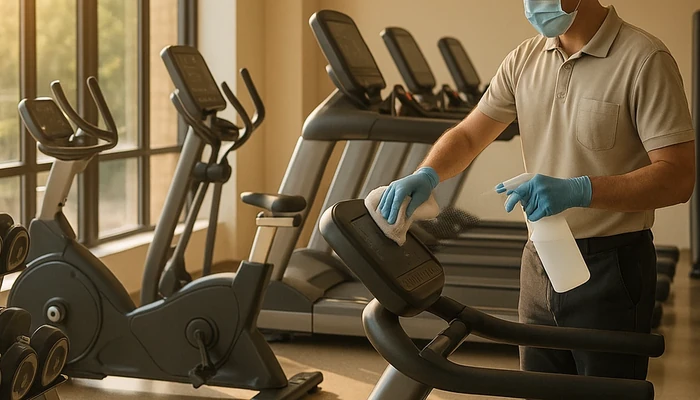
- Shared equipment (free weights, machines, mats): Sweat and skin cells linger, making them prime for bacteria and viruses.
- Locker rooms and showers: Fungus (athlete’s foot, ringworm) plus humidity fosters rapid growth.
- Cardio and touch screens: High-touch electronics and handrails transmit germs rapidly.
- Water fountains, door handles, light switches, and benches: Often neglected touchpoints where cross-contamination occurs.
Mitigating these hotspots starts with a precise, repeatable cleaning framework—detailed in the following sections.
Foundations of an Effective Gym Sanitation Protocol
Every high-performing facility builds their hygiene program around these core building blocks:
- Written checklists: Clear, task-specific guidance for daily, weekly, and monthly cleaning.
- Training and accountability: Cleaning staff must know exactly what to do—plus who is responsible and when.
- Validated cleaning products: Hospital-grade disinfectants appropriate for gym surfaces (EPA registered, non-damaging).
- Frequent monitoring: Supervisors ensure tasks are performed (and issues fixed) using logs and spot-checks.
The difference between compliant and outstanding gyms is consistency—with processes supported by education, the right supplies, and vigilant oversight.
Daily Gym Sanitation Checklist: Coverage and Critical Touchpoints
Maintaining hygiene is a multi-step process that must happen every day. Here’s an example daily checklist suited for both large and boutique facilities:
| Area | Required Actions |
|---|---|
| Entrance & Lobby | Disinfect door handles, counters, touchscreen kiosks; mop floors. |
| Fitness Floor | Wipe down cardio/strength equipment; clean weight racks, benches. |
| Mats/Stretch Zones | Sanitize mats; remove sweat and debris after each class/session. |
| Locker Rooms | Disinfect lockers, sinks, showers, toilets; replenish hygiene supplies. |
| Water Bottling/Drinks | Clean dispensers, water fountains, vending machine buttons. |
| Group Class Studios | Sanitize floors, mirrors, shared tools (bands/balls), door handles. |
| Offices/Breakrooms | Clean communal tables, touchpoints, microwaves, fridge handles. |
Tip: Use visual reminders (signs, cleaning logs) to increase accountability and reassure members their wellbeing is protected.
Deep Cleaning and Disinfection: Weekly & Monthly Priorities
Certain tasks go beyond everyday routines to prevent buildup and uncover hidden “germ reservoirs.” A typical deep cleaning schedule covers:
- Machine disassembly for hard-to-reach areas
- Steam-cleaning mats, carpets, and floors
- Sanitizing ventilation grills and around HVAC intakes
- Cleaning and disinfecting drains, grout, and corners in showers
- Washing walls, fixtures, and baseboards in high humidity zones
Partnering with a professional service ensures stubborn soils are addressed with industrial-grade methods—supporting continual gym hygiene confidence.
Comparing In-House vs. Professional Gym Cleaning: Pros, Cons & Decision Factors
- In-House Pros: Familiar with facility idiosyncrasies, rapid response, existing staff relationships.
- In-House Cons: May lack specialized tools/training, inconsistent execution, coverage gaps during sickness/turnover.
- Professional Cleaning Pros: Access to hospital-grade products, specialized training, scalable to any facility size, accountability via service contracts.
- Professional Cleaning Cons: Ongoing cost, requires clear communication of facility needs, external scheduling logistics.
Facilities managing growth, member complaints, or increased compliance pressure may see significant value in supplementing or outsourcing to professional partners for regular deep cleans or maintenance. Gym cleaning service can offer solutions tailored to your operational demands.
Gym Member Involvement: Building a Shared Culture of Cleanliness
While staff professionalism is vital, empowering members to take part in hygiene routines strengthens results. Techniques include:
- Clear signage: Display reminders to wipe equipment before/after use and wash hands.
- Easy-access supplies: Make disinfectant wipes, sprays, and hand sanitizers widely available.
- Incentives: Offer recognition (bonus perks, competitions) for members who contribute to cleanliness.
Collaborative hygiene creates a safer, more welcoming atmosphere—and sets your gym apart in member satisfaction.
The Science Behind Disinfecting Gym Surfaces
All cleaning products are not created equal. Choosing the appropriate solution means ensuring efficacy without damaging surfaces:
- EPA-registered disinfectants proven effective against common gym pathogens.
- Low-residue, non-irritant chemicals for sensitive skin and equipment.
- Contact times: Each product requires surfaces to be visibly wet for a set duration (per label) to sanitize or disinfect effectively.
- Compatibility: Some disinfectants, especially those containing bleach or strong solvents, can degrade rubber, electronics, or vinyl upholstery. Select products specially formulated for fitness environments.
Routine staff training is essential to maintain both human safety and preserve facility investment.
Reducing Airborne Contaminants Through Proper Ventilation and Air Quality
Bacteria and viruses are not limited to direct surfaces. Effective gym sanitation includes addressing indoor air quality:
- Regular inspection and cleaning of HVAC vents and filters
- Portable HEPA air filtration in high-traffic or poorly ventilated zones
- Checking systems for adequate airflow and humidity control to limit mold and bacteria growth
This holistic approach minimizes risk for members with allergies, asthma, or immune concerns. Learn more about fitness center ventilation from guidance at the Cook County Building & Construction portal.
Legal Compliance and Health Codes: Navigating Regulatory Requirements in Chicago
Staying compliant with local and state sanitation standards protects your business and members. Know your obligations regarding:
- Illinois Department of Public Health guidelines for fitness centers
- OSHA rules governing chemical use, safety data sheets (SDS), and staff PPE
- Required reporting and documentation of cleaning protocols (logs, sign-off sheets)
- Special considerations for childcare areas, aquatic facilities, or physical therapy clinics on site
Consult with authorities and always keep copies of relevant codes accessible to management and staff.
Staff Training and Accountability: Building a Motivated Cleaning Team
Great sanitation outcomes require more than written instructions—they demand a culture of responsibility and recognition.
- Periodic hands-on training (with product demonstrations)
- Performance assessments, checklists, and random spot-audits
- Recognition and incentives for those who go above and beyond
Frequent team communication keeps awareness high and ensures small lapses don’t become major issues.
Sanitation Challenges Unique to Specialized Fitness Spaces
Some gym environments have heightened cleaning needs. Examples include:
- Yoga or group studios: Porous floors, shared props, and close-contact class layouts
- Combat or martial arts zones: High sweat, bodily fluid risks, and skin-to-surface contact
- Cardio theaters: Electronics, VR goggles, headphones, and shared touchscreen panels
- Outdoor training areas: Weather-exposed equipment, organic debris, and unique pest concerns
Addressing these zones may require dedicated protocols or outside expertise to ensure member protection is always priority one.
Frequently Overlooked Gym Cleaning Hotspots
- Underneath and behind cardio/weight machines
- Ceiling fans, light fixtures, and wall-mounted TVs
- Free weight handles, kettlebells, and cable attachments
- Changing benches and cubbies in locker rooms
- Emergency equipment (AEDs, first-aid stations)
Detailed zone checklists and scheduled “deep-dive” reviews help facilities avoid lapse-driven issues that erode member trust.
Evaluating Professional Cleaners: What to Ask Before You Hire
If your facility is considering outside help for gym sanitation, ask providers about:
- Experience with fitness-specific cleaning protocols
- Product lists and suitability for sensitive skin & equipment
- Background checks, insurance, and supervisor contact
- Emergency response procedures (during outbreaks or contamination incidents)
- Customized cleaning plans for your unique gym environment
Companies like CHI Cleaning Services bring specialized knowledge, trained crews, and transparency in both pricing and communication to support your goals.
Integrating Technology for Enhanced Cleaning Oversight
Smart devices and software are making it easier to schedule, monitor, and document cleaning activities.
- Digital audit checklists for staff to complete on mobile devices
- Automated alerts when supplies need replenishing
- Member-accessible logs for transparency
- UV-C light and electrostatic sprayers to bolster traditional cleaning
Facilities adopting a blend of human and technological best practices set new standards for member trust and operational efficiency.
Choosing a Cleaning Frequency That Matches Facility Needs
There’s no universal formula. Factors influencing your sanitation routine include:
- Daily foot traffic levels and “peak hour” density (see guidance in Strategies for Maintaining Cleanliness…)
- Mix of member demographics and sensitivity (e.g., families, post-surgery, elderly)
- Local public health alerts or changes in infection rates
A qualified cleaning partner can help assess your needs and adapt frequency as your business grows.
Further Reading: Trusted Resources and Internal Guidance
- Daily Cleaning in Fitness Centers: Step-by-Step Checklist
- Fitness Center Hygiene Essentials
- Spotless Gym: Cleaning Strategies
- Strategies For Maintaining Cleanliness In Fitness Facilities During Peak Hours
Frequently Asked Questions: Gym Sanitation as a Priority
- What surfaces in a gym need sanitizing most often?
- All equipment handles, seats, mats, handrails, locker room surfaces, and water fountains should be cleaned after every use. High-touch surfaces like touchscreens and weights may need even more frequent wipe-downs.
- What’s the difference between cleaning and disinfecting in gyms?
- Cleaning removes dirt and some germs; disinfecting uses chemicals to kill pathogens. Both steps are necessary for true gym sanitation.
- How can members help keep the gym sanitary?
- Encourage members to wipe equipment before and after use, practice good personal hygiene, and report messes or supply shortages immediately.
- Which cleaning products are safest for gym equipment?
- Use EPA-approved disinfectants formulated for fitness centers. Avoid bleach on rubber or vinyl; opt for non-abrasive, non-damaging solutions recommended for your specific equipment.
- How often should a gym schedule deep cleaning?
- Deep cleaning is typically done weekly to monthly depending on use, with targeted routines for showers, floors, and HVAC. Periodic deep cleans by professional services are strongly advised for high-traffic areas.
- Are there standards for air quality in gyms?
- Yes. Regular maintenance of HVAC filters and appropriate air exchanges are required. HEPA filtration and humidity control are recommended where possible.
- What liability risks exist if sanitation is neglected?
- Gyms can face legal action, fines from regulators, or forced closure due to health hazards. Consistent protocols and documentation are essential.
- What is the benefit of hiring a professional cleaning company?
- Professional cleaners supply specialized tools, trained staff, and industry best practices for sanitation, often leading to higher member satisfaction and regulatory compliance.
- What should I look for when hiring a cleaning service?
- Look for transparent pricing, experience with gyms, insurance, safety standards, and the ability to customize routines to your facility.
- Can gym staff handle all cleaning needs in-house?
- While possible, in-house teams often miss specialty tasks or struggle with consistency. Partnering with dedicated cleaning experts can bridge the gap for robust hygiene.
Conclusion: Making Gym Sanitation a Lasting Priority
Prioritizing gym sanitation isn’t just about avoiding complaints or quick responses to viral threats. It’s a non-negotiable foundation for safeguarding health, maximizing member comfort, and protecting your business reputation in Chicago’s competitive fitness market. By embracing structured routines, advanced products, the latest guidance, and—when necessary—professional support, facility managers can deliver the consistency and trust that members expect.
Ready to improve your gym’s hygiene? Explore your commercial cleaning options or upgrade your approach with deep cleaning service—and see the difference true sanitation makes.
About CHI Cleaning Services
CHI Cleaning Services is a trusted expert in residential and commercial cleaning, helping households and businesses across Chicago, Illinois and surrounding areas create safe, spotless spaces. Our teams are professionally trained, follow strict checklists for recurring house cleaning, deep cleans, move out, office, and facility-specific projects, and ensure clear communication and transparent pricing. We use only professional-grade products suited for every surface and pride ourselves on attention to detail—especially in high-touch, high-traffic areas. CHI Cleaning Services specializes in forging long-term relationships through reliability, flexible scheduling, and exceptional standards in cleanliness.
cleaning company chicago il, gym sanitation cleaning chicago, workout studio cleaning chicago, health club cleaning Lake Bluff, fitness center cleaning Miami FL, gym cleaning Riverwoods IL, gym sanitation cleaning Glencoe, gym cleaning Lake Villa IL, gym cleaning Niles, gym deep cleaning Avondale IL