Mastering Cleanliness: Managing Sales and Customer Service Area Hygiene
In fast-paced commercial settings, first impressions and lasting customer trust hinge on one crucial factor—how to manage the cleanliness of sales and customer service areas. From high-traffic retail counters to welcoming waiting spaces, maintaining spotless, hygienic environments directly shapes client perceptions and employee well-being. This comprehensive guide will walk you through expert protocols, daily and deep-clean procedures, decision frameworks, and actionable checklists specifically tailored to sales and customer service environments. Whether you’re optimizing your own workplace or evaluating professional cleaning options in Chicago, you’ll gain the strategies and clarity you need.
Understanding the Impact of Clean Sales and Customer Service Areas
Visibility and First Impressions
Cleanliness in customer-facing zones is often interpreted as a direct reflection of professionalism. A spotless check-in counter or an organized sales floor can inspire confidence, while untidy, cluttered spaces may erode client trust from the outset.
- Visible surfaces (counters, desks, glass panels) directly influence perceived quality.
- Customers may assume similar attention to detail translates to products, policies, or services.
Employee Productivity and Safety
A clean environment boosts morale and helps prevent accidents, reducing absenteeism.
Unique Cleaning Challenges in Sales and Customer Service Areas
High Touch and High Traffic
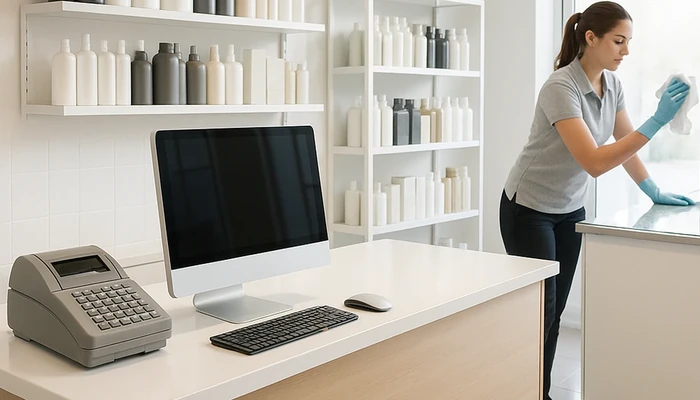
Unlike private offices or storage rooms, customer service areas endure constant contact—door handles, touchscreens, payment terminals, and shared surfaces rapidly accumulate germs and dirt.
Maintaining Appearance Throughout the Day
- Spot cleaning and rapid-response protocols are often essential.
- Frequent trash removal and restroom spot checks maintain standards.
Integration with Other Spaces
Sales areas often share proximity with entrances, waiting rooms, and even refreshment zones—all demanding synchronized cleaning schedules.
Critical Zones: What Areas Require Extra Attention?
- Reception and Entryways: These set the stage for every visit.
- Countertops and Desks: Frequent hand contact necessitates sanitation.
- Waiting Areas: Chairs, tables, and magazines should remain dust- and germ-free.
- Product Displays and Shelves: Accumulate dust, fingerprints, and debris swiftly.
- Service Touchpoints: Credit card terminals, pens, clipboards, and digital screens.
- Floors and Baseboards: Dirt accumulates quickly in high-traffic paths.
- Restroom Facilities: Proximity increases cleaning frequency requirements.
Key Table: Critical Cleaning Frequencies By Zone
| Area | Touch Level | Cleaning Frequency |
|---|---|---|
| Reception Desk | High | Hourly / After Each Visitor |
| Waiting Chairs | Medium | Twice Daily |
| Restrooms (Public) | Very High | Every 1–2 Hours |
| Display Shelves | Medium | Daily |
| Floors/Entrances | Very High | End of Day, Spot Cleaning as Needed |
Crafting Effective Cleaning Protocols
Validating Your Protocols Against Standards
- Look to CDC best practices for hand hygiene and cleaning frequency.
- Integrate EPA guidelines on selecting approved cleaning products for commercial spaces.
Components of a Reliable Protocol
- Define daily, weekly, and monthly cleaning tasks per zone.
- Assign responsibilities to specific staff roles or the cleaning service provider.
- Include real-time verification or sign-off (paper or digital log).
- Detail the products and methods to be used on each surface.
- Ensure accessibility of supplies: wipes, gloves, hand sanitizer.
Daily Cleaning Routines That Make a Difference
Priority Checks for Staff and Cleaners
- Sanitize all hand-contact surfaces: doorknobs, counters, keyboards.
- Dust product displays and customer literature holders.
- Disinfect payment terminals and touchscreens.
- Empty trash bins before overflow.
- Spot-clean entry mats and floors.
- Ensure restrooms meet visible and olfactory standards.
Team Checklist
- Start of Day: Inspect all public zones for overnight dirt/dust.
- Midday: Quick touch-up on busiest areas and restrooms.
- End of Day: Full reset, including floor vacuuming/mopping and window cleaning.
Professional cleaners use detailed checklists for consistent results. For insight into workplace productivity benefits, see Boosting productivity with clean offices.
Weekly and Deep-Clean Intervals: Planning for Thoroughness
What Should Be Covered Weekly?
- High-dusting of lights, vents, and corners.
- Thorough cleaning of windows and glass surfaces.
- Vacuuming and mopping under furniture and displays.
- Deep cleaning restroom fixtures and replenishing supplies.
- Polishing or disinfecting non-porous surfaces.
Monthly or Periodic Deep Cleaning Tasks
- Shampoo/upholstery cleaning for chairs and sofas.
- Grout and tile scrubbing in entryways or restrooms.
- Detailed attention to baseboards, trim, and less visible surfaces.
- Periodic HVAC vent cleaning to minimize allergens.
For guidance on advanced cleaning projects, refer to Detailed cleaning: a comprehensive guide.
Making the Most of Professional Cleaning Services
Benefits Over In-House Efforts
- Professionally trained cleaners know correct procedures and chemical safety.
- Structured supervision yields consistent outcomes.
- Specialized equipment (HEPA vacuums, commercial disinfectants) deliver deeper results.
- Flexible scheduling keeps disruption to a minimum.
Considering hiring experts? Understand the distinctions in Commercial cleaning: a business necessity.
Typical Checklist for Sales and Customer Service Areas
- Reception/sales desk thoroughly sanitized
- Waiting room seats and tables disinfected
- Product displays wiped and organized
- Entry doors glass cleaned and handles sanitized
- Carpets and mats vacuumed; hard floors mopped
- Restrooms deep cleaned and restocked
- Shared electronics and stationary disinfected
- Trash and recycling removed
Key Differences Between Residential and Commercial Cleaning for Service Areas
Technical Comparison: Table
| Aspect | Residential | Commercial/Sales Areas |
|---|---|---|
| Traffic Volume | Low/Moderate | High |
| Surface Types | Domestic (wood, carpet) | Mixed (glass, metal, plastic, tile) |
| Chemical Use | Low strength, minimal odor | EPA/CDC-compliant, broad-spectrum |
| Frequency | Weekly/Biweekly | Daily to hourly |
| Compliance | General household safety | Regulatory standards/customer safety |
Tying Services to Your Needs
It’s important to engage cleaning solutions tailored for business environments, as methods and standards vary. To choose the right level of service, reference Comprehensive cleaning services: a deep dive.
Decision Framework: Selecting Cleaning Solutions for Sales Areas
- Assess Usage Levels: Track visitor and staff numbers to define cleaning intervals.
- Identify Special Risks: Note whether your area includes food service, health sector, or sensitive electronics.
- Check Material Requirements: Different surfaces demand different products and techniques.
- Compare Service Models: In-house cleaning, scheduled professional visits, or hybrid approaches.
- Request Custom Checklists: Ensure the provider adapts to your space’s unique layout and workflow.
Hygiene and Safety Protocols: Essential Practices
Surface-Specific Approaches
- Use EPA-approved disinfectants on high-contact surfaces.
- Color-coded cloths reduce cross-contamination risks.
- Proper dwell time (leaving chemical on surface) is critical for disinfection effectiveness.
Hand Hygiene for Staff and Visitors
Place hand sanitizer stations prominently and restock regularly. For evidence-based hygiene strategies, visit CDC Clean Hands research.
Maintaining Cleanliness: Scheduling and Documentation Tips
The Value of Routine
- Fixed schedules ensure key zones are never overlooked.
- Checklists or digital logs help staff stay accountable.
- Document each completed task—essential for compliance, staff confidence, and customer transparency.
Sample Structured Cleaning Log
| Task | Assigned To | Status/Time |
|---|---|---|
| Disinfect Reception Desk | Front Desk Attendant | 10:30 AM – Complete |
| Spot Mop Entrance | Cleaner | 2:00 PM – Complete |
| Trash Removal | Cleaner/Janitor | 5:00 PM – Pending |
Consistency Across Shifts and Staff
Training and Communication
- Provide regular training on new products and anti-cross-contamination techniques.
- Keep open lines of communication between management and cleaning personnel for feedback and problem reporting.
For further details on improving staff cleaning awareness, explore Mastering professional cleaning techniques.
Quality Assurance and Monitoring: How to Measure Results
Visual Inspections
- Appoint staff or supervisors for periodic walk-throughs of all customer-facing zones.
- Check not just visible dirt, but hidden areas where build-up may occur.
Client and Employee Feedback
- Encourage reporting of cleanliness concerns through an easy protocol (app, phone, logbook).
- Review suggestions and update protocols regularly.
Integrating Green Cleaning and Environmental Concerns
Why Sustainable Practices Matter
- Eco-friendly cleaning products minimize indoor air pollution and customer sensitivities.
- Proper waste separation (paper, bottles, cans) aligns with sustainability goals.
- Review EPA advice on integrated pest management (IPM resource).
Special Considerations for Different Business Types
Retail vs. Office vs. Healthcare Environments
- Retail: Priority on fast, visible cleaning and anti-theft protocols.
- Offices: Deeper disinfection of shared electronics and waiting spaces.
- Healthcare or dental clinics: Enhanced sanitation following stricter protocols, see Enhancing patient experience through cleanliness.
When to Schedule Professional Cleaning Services
Busy sales and service spaces often benefit from flexible, after-hours professional cleaning. Evaluate peak times and seasonal upticks (e.g., holidays, sales events) to adjust service frequency.
- Recurring daytime cleaning for high-traffic locations
- Weekly deep cleans for lower-traffic businesses
- Emergency or same-day services for post-incident cleanup
To book specialized services like Office cleaning service or Retail cleaning, contact CHI Cleaning Services for team-led solutions tailored to your business needs.
Frequently Asked Questions: Managing Sales and Customer Service Area Cleanliness
1. How often should high-contact surfaces in sales areas be cleaned?
Ideally, these should be sanitized hourly, especially during busy periods, and always at the end of the business day.
2. What cleaning products are safest for shared service counters?
EPA-registered disinfectants are best, but always check for suitability with your surfaces and minimize harsh chemical exposure around customers.
3. Can employees handle all cleaning, or should a pro be hired?
Routine cleaning can be split, but periodic deep cleaning and regulatory compliance often require a professional service.
4. Are there legal hygiene requirements for these areas?
Yes, local and industry-specific regulations may apply. For example, OSHA and FDA guidelines for retail and customer service settings.
5. How does documentation help with cleanliness?
Logs ensure accountability and are often needed for audits and customer communications.
6. Which areas get overlooked most?
Under-desks, chair arms, and entry door frames are frequently missed during rushed sessions.
7. Is there a service that handles emergency cleaning?
Yes, you can schedule Same day cleaning when urgent issues arise.
8. What if my space has unique surfaces or equipment?
Discuss special requirements with your cleaning provider—they should adapt checklists and products appropriately.
9. Does cleaning staff need special training?
Yes, especially for high-compliance settings or if using strong chemicals. Most professional companies provide in-depth staff training.
10. How can I ensure ongoing standards are met?
Combine regular inspections, feedback loops, and clear contracts/checklists.
Key Takeaways and Next Steps
Proactive cleanliness in sales and customer service areas isn’t just about appearances—it’s vital for customer confidence, compliance, and healthy workplaces. Use structured checklists, clear schedules, approved products, and staff training to ensure consistent results. Periodic deep cleanings and expert guidance are key to rising above minimum standards.
To explore customized cleaning plans for your business, reach out for Commercial cleaning or discover our expert Deep cleaning service for enhanced results.
About CHI Cleaning Services
CHI Cleaning Services helps households and businesses in Chicago, Illinois and nearby areas keep their spaces clean and healthy. Our team specializes in recurring house cleaning, deep cleaning, move out cleaning, office cleaning, and special facility cleaning. We follow established protocols, communicate transparently, and use products and equipment right for each surface and situation. To see how CHI Cleaning Services supports your commercial or residential cleaning needs, visit our website or speak with our knowledgeable staff for tailored solutions.
cleaning service, commercial cleaning service, commercial cleaning contractors in chicago, Skokie commercial cleaning companies, commercial cleaning companies in Lincolnwood IL, commercial cleaning contractors in Hinsdale, commercial cleaning contractors in Wheeling, commercial cleaning in Rogers Park IL, commercial cleaning companies in Aurora, Cicero commercial cleaning