Organize Daycare Storage: Top Strategies for Safer, Cleaner Childcare Spaces
Daycare storage isn’t just about neat cubbies or finding space for every block and crayon. It’s a foundation for child safety, smooth daily routines, and effective cleaning. In this guide, you’ll uncover the best strategies to organize daycare storage, maintain high hygiene standards, and make your center a model of efficiency—all while supporting the well-being of every child. The insights here are built on the focus keyphrase “Organize Daycare Storage: Top Strategies” and deliver actionable frameworks adopted by cleaning professionals at CHI Cleaning Services and experts in childcare facility management. Whether you’re a daycare owner, manager, or responsible for cleaning, you’ll leave with clear, specific steps to revamp your daycare storage and safety routines.
Understanding the Impact of Organized Storage on Hygiene and Safety
Effective daycare storage isn’t just about appearance: it directly influences how easily a space is kept sanitary, safe, and free of cross-contamination. When storage systems are optimized, cleaning teams—like those from CHI Cleaning Services—can access every area and surface with minimal disruption, ensuring that no dirt or germs are overlooked. Organized environments also reduce tripping hazards and help staff adhere to established sanitation cycles.
- Easy-to-clean surfaces and clear pathways prevent dirt buildup.
- Proper storage zones keep high-risk items (e.g., art supplies, chemicals) separate from children’s areas.
- Labeled and compartmentalized storage supports thorough, routine wipe-downs and inspections.
Child-Safe Storage Zones: Structuring Spaces for Different Needs
Children’s needs vary dramatically by age and activity. Creating distinct, child-safe storage zones empowers staff to keep toys and teaching materials both easily accessible and sanitary. The key is to map out areas based on use, risk, and cleaning frequency. Here’s a breakdown:
| Zone | Main Contents | Cleaning Frequency | Special Guidelines |
|---|---|---|---|
| Infant Play | Soft toys, mats, bottles | Daily | Use only washable items; avoid choking hazards |
| Toddler Activity | Blocks, art supplies, books | Daily to Weekly | Secure shelving, child-level bins |
| Art & Craft | Paints, glues, scissors | After use | Store high; clean all surfaces after projects |
| Nap/Rest | Cots, blankets, soft toys | Weekly or after illness | Individual storage bags per child |
| Cleaning Supplies | Detergents, wipes, gloves | Replace as needed | Locked, outside child access |
Developing a Storage Inventory System for Daycares
To streamline daily cleaning and avoid unnecessary clutter—both of which are essential for health and safety—develop a comprehensive inventory system. Here’s how:
- Catalog Every Item: Use digital tools or clear spreadsheets to log all toys, materials, and equipment.
- Group By Category or Risk: For example, group washable toys, electronic devices, and art materials separately. Assign color-coded bins or labels.
- Set Cleaning and Inspection Schedules: Align the catalog with cleaning checklists tailored for frequency needed by each item type.
- Track Replenishment Cycles: Maintain records for when items are sanitized, replaced, or require repair.
Best Practices for Labeling and Accessibility
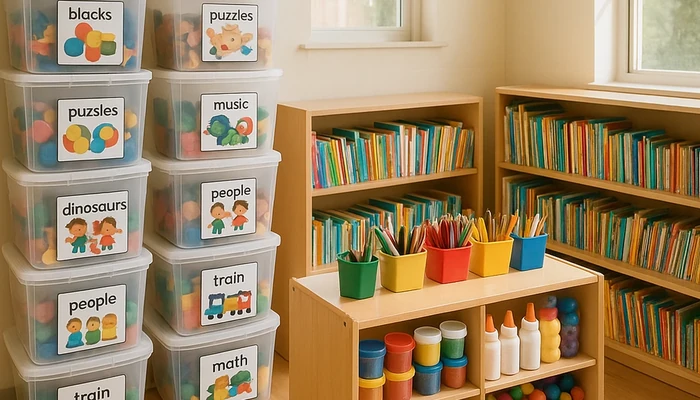
Proper labeling is crucial—not only for efficiency but also for effective cleaning and regulatory compliance. Make use of large, clear, wipeable labels. Laminated labels or magnetic tags support easy item rotation and regular disinfection. Strategic accessibility means storing most-used items at child level while keeping hazardous or rarely used supplies out of reach. This approach supports quick, routine cleaning and reduces unnecessary cross-contact.
- Color-coding bins by room function or age group minimizes mix-ups.
- Label both bin and shelf to make cleaning audits faster.
- Place cleaning schedules beside storage areas for team visibility.
Storage Materials: Choosing Wipeable, Non-Toxic Solutions
The materials used for storage containers and shelving should be easy to disinfect and free of harmful chemicals. CHI Cleaning Services always recommends products that meet EPA Safer Choice criteria, ensuring that children are not exposed to unnecessary toxins during cleaning or daily activity.
Recommended options include:
- Heavy-duty plastic bins (BPA free and labeled “dishwasher safe”)
- Laminated wooden cubbies (sealed)
- Stainless steel or powder-coated wire racks for kitchens and food zones
For a full list of certified non-toxic storage solutions, consider referencing the EPA’s Safer Choice product guide.
Integrating Storage with Cleaning Protocols
Organized storage supports strict cleaning routines. Here are key strategies for alignment:
- Plan Open Access: Leave enough space around storage units for cleaning tools—this prevents dust and allergen buildup behind shelves.
- Rotate Frequently Used Items: Implement “first in, first out” rotation to ensure all toys and materials are cycled through cleaning before use.
- Checklist Integration: Attach storage-specific tasks (like sanitizing bin handles) to routine cleaning checklists used by staff or contractors.
Tip: Many professional providers supply their own color-coded checklists for different zones and materials, as used at CHI Cleaning Services for daycares.
Managing High-Germ Items and Materials
Certain materials—like plush toys, dress-up clothes, sensory bins, and electronic learning devices—attract and retain germs more than others. Manage these by:
- Storing plush and porous items in individually labeled mesh bags and washing weekly
- Limiting shared use; assigning specific toys to each group or child when feasible
- Disinfecting electronics with wipes suitable for delicate surfaces, storing them in closed containers overnight
- Maintaining logs of the cleaning and disinfection schedule, visible to all staff
Implementing Age-Appropriate Storage Approaches
Children’s developmental stages affect how they interact with and put away items. Infants and young toddlers require out-of-sight storage for hazardous items, while preschoolers can learn to use labeled bins and cubbies. Include visual cues (colors, shapes) along with text to boost comprehension.
- For Infants: Closed shelving, soft bins, minimal objects in reach.
- For Toddlers: Low shelves, clear bins with photos of contents, guided clean-up routines.
- For Preschoolers: Open shelves with detailed labels, assign a storage cubby per child, encouragement of independence in tidying.
Regulatory Requirements: Meeting Local and National Standards
Daycares in Chicago and across the U.S. are subject to state and local storage and cleaning regulations. While requirements may vary, common mandates include:
- Separate storage for cleaning chemicals away from children’s items
- Labeled first aid and emergency supply bins
- Rotation and sanitizing schedules for shared items
- Documentation of storage practices and cleaning protocols for inspections
Stay informed by regularly consulting local guidelines, and reference EPA standards for child-safe storage materials.
Storage Maintenance Routines: Schedules and Checklists
Establishing regular maintenance for storage areas is essential. Here’s a sample weekly and monthly checklist adopted by many cleaning professionals:
- Weekly: Wipe down all bins, inspect for broken items, rotate materials forward.
- Monthly: Deep clean shelves, disinfect all storage contact points, review for potential upgrades or hazard corrections.
- As-Needed: Immediate removal of contaminated or broken items, spot cleaning, recordkeeping of any changes.
Downloadable or printed cleaning lists placed inside each storage zone keep teams on the same page.
Strategies for Minimizing Clutter in Limited Spaces
Urban daycares in Chicago may struggle with space. To organize and optimize storage, consider:
- Utilizing vertical storage and wall-mounted racks
- Rotating toys and materials—store seasonal items away from active areas
- Decluttering by donating or recycling unused items each quarter
- Selecting multi-use, stackable storage that cleans easily
Creative space management ensures easier cleaning and reduces the risk of overcrowded or unsafe areas.
Empowering Staff and Children: Organizational Training
Organized storage systems work best when everyone knows the system. Conduct orientation for staff and periodic “storage games” for children. Teach adults to recognize when bins are overdue for cleaning. Children can learn to return toys to the right spot, using visual labels or color codes to support memory and independence.
- Host biannual staff meetings focused on storage updates, safety, and cleaning integration.
- Incorporate brief storage lessons into children’s routines.
- Solicit feedback from staff for continuous improvement.
Planning Storage Zones for Emergency Preparedness
Emergency preparedness is a requirement in every daycare. Dedicated storage for emergency supplies (e.g., first aid, contact lists, extra food/water, flashlights) should be:
- Clearly labeled, regularly checked for expiration
- Accessible only to staff but easy to locate
- Integrated into cleaning and inspection routines to prevent dust, pests, or inaccessibility
Technology and Apps: Digital Solutions for Storage Oversight
Many modern daycares are adopting digital inventory systems and maintenance reminders. These help track cleaning logs, supply levels, and compliance in real time. Features can include:
- Automated cleaning checklists per storage zone
- Digital issue reporting for repairs or hazards
- Mobile alerts for restocking supplies or rotating shared items
This technology is especially effective when paired with detailed cleaning schedules by services like CHI Cleaning Services or in-house teams.
Real-World Examples: Storage Organization That Supports Effective Cleaning
Case studies from professional cleaning experts reveal key trends:
- Color-coded bins in busy toddler rooms reduce cross-contamination: Staff clean each color zone at different intervals based on activity level, minimizing overlap and doubling cleaning efficiency.
- High-mounted disinfectant stations: Enable staff to quickly disinfect storage handles after use, while keeping chemicals out of children’s reach.
- Rotating “daily play” storage: Reduces need for full-scale disinfecting of every toy each day, instead cycling materials through sanitizing before returning to use.
Deep dives into effective cleaning routines in daycares can be found at Establishing An Effective Cleaning Routine In A Day Care Center.
Coordinating With Professional Cleaning Teams
Partnering with a professional provider like CHI Cleaning Services brings insights into high-touch storage areas and sanitation best practices. Pro teams:
- Conduct walk-throughs to identify overlooked storage hazards
- Offer zone-specific cleaning and disinfecting protocols
- Supply staff checklists and guidance tailored to your unique storage map
When hiring professionals, ensure they are familiar with both storage and hygiene requirements for childcare centers in your area. For specialized support, review daycare cleaning options at daycare cleaning and related pages for tailored service details.
FAQ: Organizing and Maintaining Safe Daycare Storage
- What are the best containers for daycare storage? Choose shatterproof, BPA-free plastic bins or sealed wooden shelves that are easy to wipe clean, labeled clearly, and sized for easy child or staff access.
- How often should storage areas be cleaned? High-use areas should be cleaned daily; all storage zones should be deep-cleaned at least monthly. Rotate and disinfect toys and materials per manufacturer and regulatory guidelines.
- How can I keep cleaning chemicals safe? Store all cleaning agents in a locked, high cabinet or dedicated room, always out of children’s reach, and use only approved child-safe products.
- What is the best way to label storage for non-readers? Combine color-coding, pictures, and large-print text labels. Bins with laminated images help children identify where to return items independently.
- How do I integrate new storage solutions into an existing daycare? Start with one area, introduce new bins and labels, train staff and children, and gradually expand changes with regular feedback and cleaning audits.
- How can digital tracking help storage management? Use inventory apps or spreadsheets to log items, cleaning dates, and repairs. This streamlines compliance and helps staff spot missing or overdue tasks quickly.
- Is professional cleaning necessary if storage is organized? While excellent organization makes daily cleaning easier, periodic deep cleans by a professional service ensures all areas—including storage units—are sanitized properly.
- How do I ensure compliance with local daycare storage rules? Check state and city regulations, maintain up-to-date documentation of procedures, and work with providers familiar with local requirements such as CHI Cleaning Services.
Next Steps: Evaluating and Upgrading Your Daycare Storage
Start by auditing your current storage, using the frameworks outlined in this guide. Involve your team, set cleaning and labeling standards, and gradually introduce safer, more efficient storage solutions. Track progress and solicit feedback—continuous improvement is essential for compliance and the health of your community.
If you want expert input or a truly detailed cleaning and storage plan, explore support from professional teams in your area. For specialized solutions, consider services such as daycare cleaning or office cleaning service for multi-purpose facilities.
About CHI Cleaning Services
CHI Cleaning Services helps households and businesses in Chicago, Illinois and nearby areas keep their spaces clean and healthy. With a team of trained cleaning professionals, we specialize in recurring house cleaning, deep cleaning, move out cleaning, office cleaning, and facility-specific janitorial projects. Our quality standards include using professional cleaning equipment, non-toxic products whenever possible, and following detailed checklists to protect every client’s health and safety. Whatever your needs—daycare, office, rental property, or beyond—trust our expertise to deliver reliable, detail-oriented service every time. To discover more about how CHI Cleaning Services can support your facility, visit our homepage.
cleaning contractors, daycare cleaning chicago, childcare cleaning chicago, daycare cleaning Franklin Park, preschool cleaning South Loop IL, childcare cleaning Hannover Park, preschool cleaning Itasca IL, preschool cleaning Rogers Park IL, daycare cleaning Countryside IL, childcare center cleaning Wilmette IL