 Skip to content
Restaurant Restroom Cleaning: How To Do It Right Every Time
Restroom cleanliness in restaurants is crucial—not just for meeting health codes, but also for shaping guest perceptions and brand reputation. If you’re seeking a framework for restaurant restroom cleaning: how to do it right, you’re in the right place. This guide will walk you through every essential aspect of professional restroom cleaning, from supplies selection to detailed checklists, frequency planning, audit standards, and actionable pro tips directly from experts at CHI Cleaning Services. Let’s create restrooms that customers trust—and staff can manage with confidence.
Understanding the Stakes: Why Restaurant Restroom Cleanliness Matters
A restaurant may serve exquisite meals, but a dirty restroom creates a negative impression that’s hard to overcome. Clean restrooms support public health, safety, and customer loyalty. In Chicago’s competitive dining landscape, overlooking restroom hygiene puts your business at risk of customer complaints, negative reviews, health code violations, and even closures. Regulatory agencies like the CDC provide extensive guidance on facility hygiene standards because restrooms are hotspots for germ transmission if overlooked.
- Damaged reputation and online reviews
- Decreased repeat business
- Potential health code citations or fines
- Higher risk of illness for both staff and guests
Non-Negotiable Hygiene Standards for Restaurant Restrooms
Before detailing supplies or routines, clear hygiene standards must be set. Professional restroom cleaning isn’t just about visible dirt—it’s about eliminating pathogens and meeting regulatory expectations.
- Visible spotless surfaces: No grime, soap scum, build-up, or stains.
- No lingering odors: Freshness that signals deep cleaning, not just masking scents.
- Touchpoint sanitation: Door handles, faucets, flush levers, partitions, soap/towel dispensers—disinfected at every cleaning.
- Sufficient and functional supplies: Soap, paper towels/toilet paper, hand dryers always stocked and operational.
- Floor safety: No puddles, sticky residues, trash, or debris left behind.
- Compliance: Adherence to CDC, OSHA, and Chicago public health requirements for cleaning agents and processes.
Essential Supplies and Equipment for Restaurant Restroom Cleaning
The right cleaning products and tools are critical. Professional services like CHI Cleaning Services rely on specialized supplies to ensure thorough sanitization and safety.
| Category | Supplies/Equipment | Purpose |
|---|---|---|
| Disinfectants & Cleaners | Hospital-grade disinfectant, restroom cleaner/deodorizer, glass cleaner | Kills bacteria, removes organic soils, prevents odor |
| Application Tools | Color-coded microfiber cloths, mop & bucket, toilet brush, grout brush, sponges | Avoids cross-contamination, enables deep scrubbing |
| Protective Gear | Disposable gloves, goggles, apron/safety vest | Personal safety & compliance |
| Stock & Supplies | Soap, paper towels, toilet tissue, sanitizer refills, liners | Ensures guest comfort and hygiene |
Tip: For hazardous dust or respiratory concerns, consider specialized equipment such as those outlined by Nilfisk’s commercial cleaning solutions.
Daily, Weekly, and Monthly Restroom Cleaning Frequencies
How often should a restaurant restroom be cleaned? There’s no universal rule; the best approach is a tiered cleaning frequency model, tailored to restaurant traffic and compliance needs.
- High-traffic locations: Spot checks and touch-ups every 45–60 minutes during service; full cleaning at opening, mid-shift, and closing.
- Lower-volume restaurants: At minimum, restrooms should be deep-cleaned before opening and after closing, with interim checks.
- Weekly/Monthly: Grout scrubbing, hard-water deposit removal, fixture polishing, air vent cleaning, and less-accessible area checks.
Sample Frequency Table
| Task | Recommended Frequency |
|---|---|
| Trash collection & restock supplies | Every 1–2 hours |
| Sanitize high-touch areas | Multiple times daily |
| Floors/mop/sweep | 2–3 times daily |
| Deodorize/refill dispensers | Daily |
| Deep grout scrubbing/air vent cleaning | Weekly–Monthly |
The Complete Step-by-Step Restaurant Restroom Cleaning Process
- Put on personal protective equipment (PPE): Gloves, goggles, apron.
- Display safety signage: Wet floor or cleaning-in-progress signs at all entrances.
- Remove debris and empty trash: Replace liners and inspect for spills.
- Stock up: Refill soap, tissue, towels, and inspect dispensers for function and cleanliness.
- Clean toilets and urinals: Scrub bowls and flush handles with toilet-specific disinfectant; don’t forget the base and backside. Allow appropriate dwell time for disinfectants.
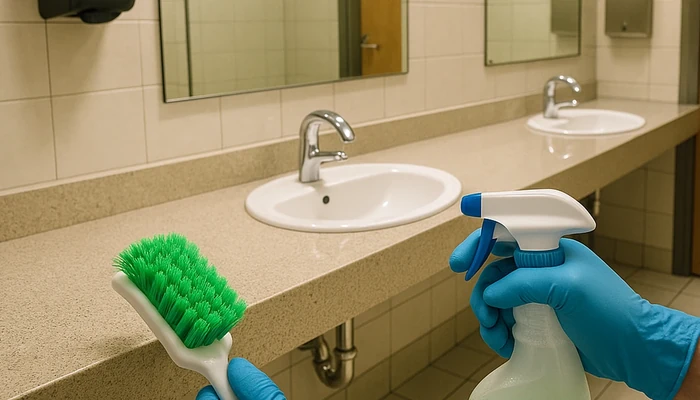
- Disinfect sinks and countertops: Clean with non-abrasive disinfectant; pay attention to faucet handles, drains, and backsplash.
- Wipe down hand dryers and dispensers: Disinfect all plastic and metal surfaces.
- Clean mirrors: Use glass cleaner for streak-free shine.
- Scrub partitions and doors: High-touch zones must be sanitized top-to-bottom.
- Mop the floor: Use a clean mop—never one used elsewhere. Start at the farthest corner, move toward the exit. Check for slip hazards.
- Replace all supplies as needed, remove safety signs only when dry.
Every step must be documented in a cleaning log—an essential practice for compliance and team accountability.
Advanced Restroom Cleaning Checklists for Restaurant Staff
Go beyond “wipe and mop.” Professional-grade checklists help staff hit every critical spot. Here’s an actionable guide adapted for Chicago’s busy dining environments:
- ☑ Entry door plate/handle sanitized
- ☑ All stall and partition walls cleaned
- ☑ Under sinks, faucet bases, and piping wiped down
- ☑ Soap scum or calcium build-up removed from all surfaces
- ☑ Floor drains checked and sanitized
- ☑ Inside trash bins wiped before liners replaced
- ☑ Air freshener refilled and functioning
- ☑ High shelving and light fixtures dusted
- ☑ Graffiti and stains addressed promptly
- ☑ Inspection log signed by cleaning staff
Dealing with Common Restroom Problems in Restaurants
Challenges are common: persistent odors, clogged toilets, hard water stains, vandalism, and rapid depletion of supplies during peak hours. Addressing them requires proactive strategies:
- Persistent odors: Check for hidden spills, clean floor drains, and use enzymatic deodorizers.
- Clogging: Prevent by checking toilets during routine walkthroughs. Provide staff with plungers and clear reporting processes.
- Hard water stains: Use acidic cleaner designed for restrooms—never abrasives that can damage finishes.
- Restocking issues: Assign responsibility during each shift; use digital logs to monitor supply levels.
- Vandalism/graffiti: Quick removal prevents escalation. Use appropriate solvents based on surface type.
Creating a Staff Training & Accountability Framework
Regardless of experience, ongoing training is necessary for consistent results. Regularly update staff on:
- ☑ Updated cleaning protocols based on the latest health guidance
- ☑ Preventing cross-contamination (color-coded tools, cleaning order)
- ☑ Use and safe storage of chemicals
- ☑ Proper donning/doffing of PPE
- ☑ Filling out checklists and cleaning logs accurately
Reinforce standards through quarterly refresher sessions—especially when local regulations change.
Pro Tips for Outstanding Restroom Impressions in Restaurants
Beyond the basic cleaning routine, consider these expert touches for a top-tier restroom experience:
- Ambient touches: Use neutral air fresheners, subtle music, and strategic lighting to elevate comfort.
- Accessibility check: Confirm ADA compliance (hardware height, stall sizing, grab bars, automatic features).
- Signage: Clear, friendly reminders on handwashing and cleanliness reinforce standards for both guests and team.
- Touchless tech: Upgrade where possible to motion-sensor faucets, soap dispensers, and flushers to reduce germ transfer.
- Regular feedback loop: Invite feedback via QR codes or comment cards for ongoing improvement.
How to Audit Restaurant Restroom Cleaning Quality
Auditing ensures what’s expected is what’s delivered. CHI Cleaning Services recommends periodic self-audits and third-party reviews to maintain standards.
- Create an auditing checklist: verify both cleanliness and supply status.
- Random spot-checks managed by supervisors.
- Document findings, review trends monthly, act on repeated issues.
An objective outside provider can give honest feedback and regulatory insights—including suggestions on best practices outlined in this authoritative resource.
Comparison: In-House vs. Outsourced Restaurant Restroom Cleaning
Deciding whether to train your in-house staff or hire a pro cleaning service depends on cost, complexity, and desired results. Here’s a structured comparison:
- In-House Cleaning
- Lower direct costs, but higher training and oversight demands
- Best for round-the-clock minor cleaning and supply restocking
- Challenging to maintain consistent, expert-level standards
- Professional Services
- Consistent, high-standard results from trained teams
- Assured compliance with CDC/OSHA standards
- Reduced supervisory time; very effective for deep cleaning and periodic audits
For more on what a deep clean involves, visit What’s Included in Deep Restaurant Cleaning?
Safety First: Chemical Handling & Infection Control in Restroom Cleaning
Improper handling of chemicals can risk health and violate regulations. Professional providers always:
- Label and store chemicals per OSHA rules
- Never mix bleach with ammonia or acidic cleansers
- Ensure ventilation during use
- Maintain a Material Safety Data Sheet (MSDS) station onsite
- Train staff on exposure response and reporting
See the CDC’s latest guidelines for up-to-date infection control protocols.
Restaurant Restroom Cleaning for Special Situations (High-Volume, Seasonal, Emergency)
Peak times (event nights, holidays) or incidents (sickness, flooding) demand a plan:
- Temporary increase in cleaning/check frequency
- Rapid response kits: include PPE, biohazard bags, isolation signage
- Pre-schedule extra cleaning staff or engage pros for overnight deep cleaning after special events
- Follow enhanced procedures per this special-event cleanup guide
Frequently Overlooked Details in Restaurant Restroom Cleaning
Spot cleaning misses these areas most:
- Base of toilets and urinals (including the floor underneath)
- Door tops, air vents, and floor molding
- Sink overflow holes
- Shower or baby changing stations, if present
- Dispenser push bars/areas
- Trash receptacle exteriors and interior surfaces
Be vigilant—these tend to accumulate germs and odors quickly.
How To Choose a Trusted Restaurant Restroom Cleaning Provider
Your provider’s protocols should meet the standards highlighted above. When evaluating vendors:
- Ask about checklist transparency and regular supervisor audits
- Review certifications, insurance, and employee training processes
- Request sample cleaning logs and references
- Clarify support for deep cleaning and special event coverage
- Confirm ability to meet local Chicago regulations
Need a reliable partner? Consider restaurant cleaning solutions from local professionals.
Integrating Restroom Cleaning with Your Overall Restaurant Hygiene Program
Restroom standards should complement kitchen, dining, and entryway routines. For holistic approaches and scheduling support, review daily and weekly cleaning task guides and see how cross-training staff can pay off.
Frequently Asked Questions: Restaurant Restroom Cleaning
- How often should restaurant restrooms be cleaned during service hours?
- Check every 45–60 minutes for high-traffic restaurants. Restock, sanitize, and address visible messes. Full cleaning should always occur before opening and after closing.
- What disinfectants are safe for food service restrooms?
- Use EPA-registered, food-safe disinfectants with short dwell times. Never use products with harsh fumes near prep or dining areas.
- What should be included in a restroom cleaning checklist?
- All touchpoints (handles, dispensers), toilets/urinals, sinks, partitions, mirrors, floors, drains, high surfaces, and a supply check. Document who performed each task and when.
- How do you eliminate persistent restroom odors?
- Target sources: sanitize drains, remove hidden debris, use enzymatic cleaners, and improve ventilation.
- What’s the best way to prevent cross-contamination in restroom cleaning?
- Color-coded cloths and mop heads, proper hand hygiene after each restroom, and routine staff re-training.
- Can in-house staff handle deep restroom cleaning?
- For daily upkeep, yes. For periodic deep cleaning, professional teams like those at CHI Cleaning Services ensure compliance and thoroughness.
- What should a restaurant do after an accident or biohazard incident in the restroom?
- Follow OSHA protocols: isolate the area, use PPE, clean with appropriate disinfectants, log the incident, and consider a professional remediation service.
- How do you audit restroom cleaning performance?
- Regular supervisor checks, cleaning logs, feedback from guests, and periodic third-party inspections.
- Are touchless fixtures worth the investment for restrooms?
- Yes—they reduce germ transfer and simplify cleaning duties. They can also signal commitment to guest safety.
Bringing It All Together: Raise Your Restaurant Restroom Cleaning Standards
Excellence in restroom cleaning isn’t negotiable in the restaurant industry—especially in Chicago’s competitive dining scene. By adopting structured routines, leveraging pro checklists, investing in training, and selecting the right supplies, you demonstrate care for every guest. For expert assistance or deep cleaning beyond your team’s reach, CHI Cleaning Services is here to help create comfortable, healthy environments that earn customer trust for every visit.
About CHI Cleaning Services
CHI Cleaning Services helps households and businesses in Chicago, Illinois and nearby areas keep their spaces impeccably clean and healthy. Specializing in recurring house cleaning, detailed deep cleaning, move out cleaning, office cleaning, and specialized facility routines—from restaurants to unique venues—CHI Cleaning Services stands out for its professionally trained staff, detail-oriented checklists, flexible scheduling, and transparent client communication. A focus on quality standards and long-term relationships means every service—big or small—is delivered with professionalism and integrity. For more information, visit CHI Cleaning Services.
cleaning contractors, restaurant cleaning services, Reliable restaurant cleaners, bar and restaurant cleaning River North, restaurant cleaning Great Lakes, restaurant cleaning Wilmette, Hammond restaurant cleaning, bar and restaurant cleaning Washington, restaurant cleaning Cicero, bar and restaurant cleaning Countryside IL
