Sanitizing Solutions for Gym Spaces: A Detailed Guide to Safe, Healthy Fitness Environments
Gyms and fitness centers see hundreds of hands, feet, and faces daily—a perfect recipe for germs to proliferate unless strict sanitizing solutions for gym spaces are in place. This guide delivers proven, science-backed approaches for gym sanitizing, product and frequency selection, a robust daily cleaning checklist, EPA-approved methods, and essential frameworks for choosing professional cleaning support. By the end, you’ll be equipped with actionable strategies to keep your gym spaces in Chicago safe, healthy, and exceptionally clean.
Understanding Contamination Risks Unique to Gym Spaces
Unlike homes or offices, gyms are high-contact, shared environments. Risks include:
- Constant cross-contact: Equipment, mats, dumbbells, and lockers touched by many people per hour.
- Moisture and sweat: Promote bacteria, fungi, and virus growth—especially on porous and soft surfaces.
- Shared air: Frequent, heavy breathing increases the chance of airborne pathogens settling on surfaces.
- High-traffic restrooms and showers: Extra risk for surface and airborne transmission.
Regular and validated sanitizing solutions are non-negotiable for any responsible gym operator.
Mapping High-Touch and High-Risk Zones in Gyms
Effective sanitizing starts with identifying the most transmitted and pathogen-prone areas, such as:
- Cardio machines (buttons, handles, seats)
- Strength equipment (benches, free weights, resistance bands)
- Mats, yoga blocks, foam rollers
- Locker handles and benches
- Water fountains and vending machines
- Bathroom and shower stall door handles
- Group fitness props and shared accessories
Concentrating sanitizing efforts here vastly reduces overall contamination load.
How Germs Spread in Gym Environments
Transmission occurs through:
- Direct touch: Contact with contaminated surfaces (e.g., dumbbells or mats)
- Indirect spread: Airborne droplets settling onto equipment or seating
- Residual moisture: Sweat or shower humidity aiding microbe longevity
Sanitizing solutions for gym spaces must break these cycles with both correct technique and frequency.
Types of Sanitizing Agents and When to Use Each
There is no one-size-fits-all product. Professional cleaners select from:
- Detergent cleaners: Remove organic soil (sweat, dirt); necessary before disinfectants.
- Disinfectants (EPA List N): Inactivate viruses and bacteria; check label for dwell times and material safety. (EPA Safer Choice guidance offers product insights.)
- Sanitizers: Lower overall microbe count (but may not kill all pathogens); best for non-critical surfaces.
- Specialty products: For soft surfaces, electronics, or food/drink zones (refer to Diversey for approved solutions).
Pro tip: Always use a cleaning step before disinfecting—residual dirt can prevent disinfectants from working effectively.
Daily, Weekly, and Deep Sanitizing Protocols: A Structured Timeline
Maintaining healthy gym environments requires customized protocols:
- Multiple times daily: All high-touch equipment, door handles, and restroom fixtures
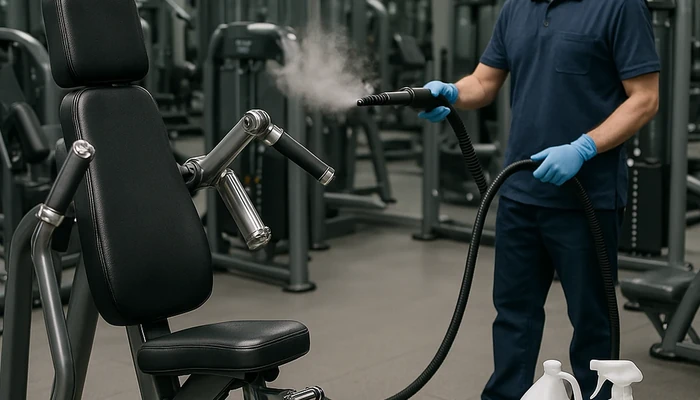
- Daily close-out: Full disinfectant wipe-down of all machines, mats, benches, floors
- Weekly: Deep sanitizing of shared equipment (weight racks, stretching areas), behind/under equipment, and storage spaces
- Monthly: HVAC vent and filter cleaning, thorough wall/ceiling disinfecting, full locker treatments
Comprehensive Gym Sanitizing Checklist for Staff and Cleaners
| Area | Task | Frequency |
|---|---|---|
| Cardio/Strength Equipment | Spray, wipe all touchpoints with disinfectant | Between each user & closing |
| Mats/Floor Surfaces | Clean and disinfect both sides | Daily |
| Water Fountains | Sanitize buttons, mouthpieces | Multiple times daily |
| Locker Rooms | Disinfect handles, benches, lockers | Multiple times daily |
| Showers/Restrooms | Clean and disinfect stalls, sinks, dryers | Multiple times daily |
| Reception | Desks, door handles, payment terminals | Hourly |
| Group Fitness Gear | Spray/wipe all accessories | After each class |
How to Select Safe and Effective Products for Gym Sanitizing
When choosing cleaning products:
- Check for EPA approval for viruses, bacteria, and fungi
- Ensure compatibility with gym surfaces (e.g., no corrosive ingredients for metals, no bleach for rubber or vinyl)
- Prioritize Safer Choice certified solutions where possible
- If handling food/drink areas, refer to food-safe cleaning agents
- Check for low-residue, low-odor formulas to maintain gym air quality
Balancing In-House Cleaning vs. Professional Sanitizing Services
- In-house: Day-to-day wipe-downs, basic visible soiling removal, restocking hand sanitizer stations
- Professional cleaning: Deep disinfection, hard-to-access areas, specialized protocols (HVAC, upholstery, post-illness outbreaks)
If your gym struggles to keep up or sees recurrent hygiene complaints, bringing in experts like CHI Cleaning Services for specialized deep cleaning can reset your baseline.
Ensuring Staff Training and Hygiene Compliance
- Use posted instruction checklists for equipment sanitizing
- Provide personal protective equipment (PPE) for staff (disposable gloves, masks if needed)
- Hold quarterly cleaning protocol training
- Audit completion with logs or digital checklists
- Encourage all staff to report issues or supply shortages immediately
Science-Backed Methods: Key Considerations for Effective Sanitization
Efficiency depends not only on products but also on method:
- Respect “dwell times”: Disinfectants must remain wet on the surface (per label) to fully kill pathogens
- Use color-coded cloths/mops to avoid cross-contamination between locker rooms, gym areas, and office/reception
- Disassemble multi-part equipment for thorough cleaning when possible
- Rotate cleaning chemicals to minimize microbe adaptation (consult with deep cleaning experts if unsure)
Addressing Special Zones: Locker Rooms, Airflow, and Soft Surfaces
Locker Rooms & Showers
- Use anti-fungal treatments on floors and grout
- Ventilate with mechanical fans during and after cleaning
- Sanitize shared items (hairdryers, benches) with each cleaning round
Air Quality & HVAC
- Change and sanitize air filters monthly
- Disinfect air vent covers
- Consider UV-C solutions for air sanitizing when possible
Soft Equipment
- Choose products for absorbent/vinyl surfaces to prevent material breakdown
- Dry thoroughly to avoid fungal growth
Member Involvement: Promoting Shared Responsibility
- Visible signage for “wipe before and after use”
- Accessible, filled spray bottles and disposable towel stations
- Encourage good hand hygiene with sanitizer dispensers at entry and equipment zones
- Communicate cleaning schedules transparently via posters or app notifications
When gym-goers understand and participate, disease spread drops dramatically.
Regulatory Standards and Hygiene Certifications for Chicago Gyms
All gyms in Illinois must comply with health department and EPA disinfection standards.
- Document all cleaning procedures and keep records for inspections
- Implement protocols outlined by EPA Safer Choice and relevant city guidelines
- Consider annual third-party hygiene audits for peace of mind
Preparing for Exceptional Cases: Illness Outbreaks and Seasonal Demands
If a member or staff is diagnosed with an infectious disease:
- Quarantine affected areas immediately
- Initiate enhanced deep disinfecting (using EPA List N products)
- Increase cleaning frequency in high-traffic spaces
During cold/flu season or when usage spikes, ramp up cycles and consider bringing in supplementary gym cleaning professionals to maintain standards.
Building a Culture of Clean: Communication and Reporting
- Provide easy channels for members to report cleanliness issues (QR codes, front desk, digital surveys)
- Share success metrics (e.g., “Zero MRSA outbreaks this year!”)
- Reward staff for consistently excellent cleaning performance
FAQ: Sanitizing Solutions for Gym Spaces
- What is the difference between cleaning, sanitizing, and disinfecting in gyms?
- Cleaning removes visible soil, sanitizing lowers overall germs, and disinfecting kills a broad range of pathogens. All three are necessary at specific intervals in gym environments.
- How often should equipment and mats be disinfected?
- Ideally between each user, with a full facility-wide closeout at the end of each day.
- Are homemade cleaners safe for gym use?
- Homemade solutions are risky unless EPA-validated. Professional agents are always preferable for health and compliance.
- Which areas present the highest risk for germ transfer?
- Handles, grips, mat surfaces, locker room benches, and communal bathrooms are the most critical areas to sanitize.
- What role does ventilation play in gym sanitation?
- Proper airflow reduces airborne pathogens. Regular HVAC filter cleaning is integral to a complete gym sanitizing solution.
- Should members be required to wipe down equipment?
- Yes, but facility staff must still ensure consistent, thorough cleaning as member cleaning is often inconsistent.
- What’s the best way to handle contagious illness outbreaks?
- Immediate quarantine and a professional, enhanced deep clean using EPA List N disinfectants is critical.
- Can professional cleaning services customize protocols for specialty equipment?
- Yes, experienced companies evaluate material types and usage patterns to create tailored cleaning strategies for every area, including unique gym equipment and group fitness zones.
- How can we verify if products are EPA-approved?
- Check the EPA registration number on the label or consult the EPA’s Safer Choice database.
Summary and Action Steps for Maintaining Safe Gym Spaces
Effective sanitizing solutions for gym spaces require a well-established routine, proper product selection, and a partnership between staff, members, and professional cleaning support. Start with a thorough assessment of your gym’s highest-risk areas, train your staff, equip them with high-quality products, and consider periodic deep cleaning from specialists. For those wanting dedicated support, request gym cleaning service for the highest sanitation standards. Consistency is the real game-changer—make hygiene a daily priority and keep your community healthy and thriving.
About CHI Cleaning Services
CHI Cleaning Services helps households and businesses in Chicago, Illinois, and nearby areas keep their spaces clean and healthy. Our experienced, trained cleaners specialize in recurring house cleaning, deep cleaning, move out cleaning, office janitorial, and special facility cleaning. We follow strict protocols, use advanced equipment, and stay up-to-date with health and safety best practices. For flexible scheduling, superior detail, and transparent pricing, trust CHI Cleaning Services for professional care of your home, office, or gym space.
24 Hr Gym Cleaning Service Chicago, cleaning contractors in the city of chicago, wellness center cleaning, spa deep cleaning chicago, wellness center cleaning Rosemont IL, spa cleaning Spring Grove IL, day spa cleaning Fort Sheridan, massage studio cleaning River North IL, wellness center cleaning Crest Hill IL, spa cleaning Homewood, massage studio cleaning River Grove IL