 Skip to content
The Importance of Rigorous Cleaning for Food Safety Certification: Protecting Health and Reputation
Food safety certification is more than a regulatory milestone—it’s a daily commitment to public health, business reputation, and operational excellence. Whether you manage a restaurant, commercial kitchen, food production facility, or oversee specialized cleaning for shared living spaces, understanding The Importance of Rigorous Cleaning for Food Safety Certification is essential. This in-depth guide demystifies the steps, checklists, and science behind rigorous cleaning, helping you navigate compliance confidently and efficiently. You’ll discover how professional cleaning standards, clear documentation, and expert routines make the difference, giving your organization the safest possible footing.
1. Food Safety Certification: What It Demands from Your Cleaning Practices
Food safety certification, whether through local health authorities, ServSafe, SQF, HACCP, or other bodies, sets standards for how environments where food is prepared, served, or stored must be cleaned and managed. The requirements are precise:
- Prevention of cross-contamination and allergen exposure
- Consistent, traceable cleaning procedures for all areas and equipment
- Use of approved cleaning agents and sanitizers
- Detailed record-keeping and audit readiness
Failure to meet these benchmarks can result in failed inspections, costly remediation, or, worse, foodborne illness outbreaks. Understanding certification standards is the foundation for building the right cleaning protocol.
2. Decoding Standards: Key Food Industry Cleaning Certifications Explained
While the end goal—safe, hygienic environments—remains constant, the approach varies by certification framework. Here’s a high-level comparison:
| Certification | Main Focus | Key Cleaning Components |
|---|---|---|
| HACCP | Hazard analysis and critical control points to avoid contamination | Surface, equipment, and environmental cleaning mapped to risk points |
| SQF/BRC/IFS | End-to-end supply chain safety and documentation | Evidence-based cleaning logs; validation of cleaning agents |
| Local Health Codes | Sanitation of food contact surfaces, hand hygiene, pest prevention | Frequent disinfection of prep areas, tools, dishwashing stations |
No matter your certification, the backbone is always meticulous, documented cleaning customized for your facility’s unique risk profile.
3. The Science Behind Rigorous Cleaning: Microbes, Allergen Control, and Surface Challenges
Food environments foster the rapid spread of bacteria, viruses, and allergens. To truly protect guests and pass inspections, rigorous cleaning tackles risks at their source:
- Biofilm removal: Regular cleaning alone may not suffice—biofilms (protective layers of microorganisms) need targeted strategies.
- Allergen control: Preventing cross-contact between foods, tools, and hands is complex and must be managed methodically.
- Material-specific cleaning: Stainless steel, acrylic, wood, and plastics all demand different cleaning agents to avoid damage or residue.
According to the Centers for Disease Control and Prevention, hand hygiene is also a critical barrier against foodborne illness. Integrated cleaning plans protect not just surfaces, but the people handling food as well.
4. Cleaning Procedures for Food Safety: More Than Just Soap and Water
- Cleaning: Removal of visible soil and food debris from surfaces
- Sanitizing: Reduction of microbial load to safe levels
- Disinfecting: Targeted elimination of a wider range of pathogens—especially for high-risk or regulated areas
These processes are not interchangeable. The right procedure depends on the item/material in question and its risk level. Commercial kitchens often require daily cleaning with periodic deep disinfection, while offices with food service (breakrooms, vending) have unique standards.
5. Developing a Rigorous Cleaning Checklist for Food Facility Certification
Developing and following an actionable, auditable cleaning checklist is essential for passing inspections. Here’s a starting point for compliant environments:
- List every room, appliance, and food-contact surface
- Define cleaning frequency (hourly, daily, weekly, etc.)
- Specify cleaning agent and method for each item
- Assign responsibility (specific teams or individuals)
- Include verification/monitoring steps (visual checks, ATP testing)
- Document completion (log sheets, electronic records)
For example, see industry-approved lists at the EPA’s list of greener products—these support safe and effective cleaning practices crucial to certification.
6. Facility-Specific Cleaning Concerns: Restaurants, Food Production, and Shared Spaces
Every food facility brings unique compliance risks. Here’s how rigorous cleaning is tailored for different settings:
- Restaurants and cafes: Fast turnover means multiple cleaning cycles per day for prep counters, equipment, and restrooms.
- Bakery or production kitchen: Flour dust, sticky residues, and shared tools require specialty cleaning and regular deep sanitation.
- Shared tenant kitchens or Airbnb kitchens: Documentation and monitoring are paramount when multiple parties share food-handling spaces.
Review integrated hygiene solutions for food service environments for more context.
7. Cleaning Tools and Products: Selection for Certification Success
Certification bodies often require or recommend specific types of cleaning tools and disinfectants:
- Color-coded microfiber cloths to avoid cross-contamination
- EPA-approved, food-safe disinfectants (avoid off-label use)
- Clean, well-maintained mops, buckets, and spray bottles
- Equipment-specific cleaning brushes for grills, vent hoods, slicers, etc.
Documenting the use of these products, as well as regular replacement and cleaning of equipment, is often an audit requirement.
8. Staff Training and Personal Hygiene: Pillars of Safe Food Handling
No cleaning program can succeed without ongoing staff education. Required staff practices include:
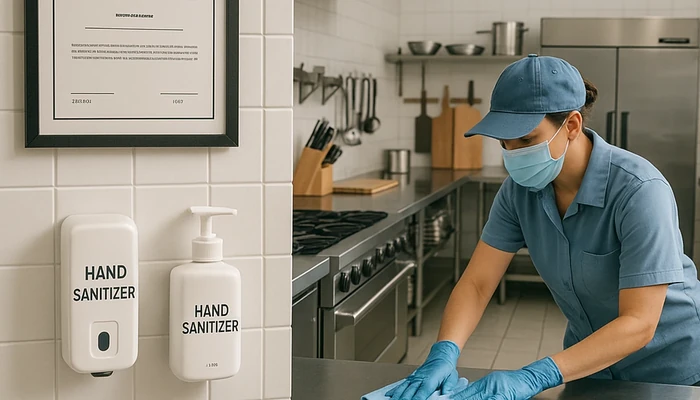
- Hand washing protocols backed by CDC recommendations
- Consistent use of gloves, hairnets, and aprons
- Immediate cleaning of spills and breakages
- Documentation of all training and policy refreshers
Staff who understand why and how to follow cleaning protocols are less likely to make errors. For facility managers, a written training log is often required for certification audits.
9. Documentation: How to Prove and Track Rigorous Cleaning for Audits
Certification inspectors won’t just look at your surfaces—they’ll check your records. A compliant cleaning documentation system typically includes:
- Daily, weekly, and monthly cleaning schedules/checklists
- Employee sign-in and sign-off sheets
- Incident reports for any cleaning/sanitation failure or lapse
- Records of cleaning agent batch numbers and MSDS sheets
- Third-party cleaning or disinfection logs (if using a service partner)
Digital logs and audit dashboards can streamline this process and support rapid retrieval during a surprise inspection.
10. Frequency Matters: Structuring Your Cleaning Cadence for Certification
- High-touch surfaces (handles, switches, counters): Multiple times per shift
- Food-contact surfaces (utensils, equipment): After each task/change of food type
- Floors, walls, and ceilings: Daily for kitchens; weekly for low-risk storage
- Restrooms and staff areas: Hourly/daily, depending on use and occupancy
Establish clear escalation triggers—if visible contamination or spills happen, cleaning must occur immediately, regardless of scheduled intervals.
11. Critical Control Points: Where Most Facilities Fall Short (and How to Pass)
Through thousands of commercial audits, common trouble areas include:
- Behind appliances and under counters: Require special access and cleaning tools
- Ice machines, beverage dispensers: Overlooked for microbial buildup
- Restroom door handles and cleaning equipment itself: Frequent cross-contamination risks
A periodic deep clean, alongside routine surface disinfection, addresses these blind spots. See additional examples at detailed cleaning: a comprehensive guide.
12. Professional Cleaning vs. In-House: Decision Criteria for Food Safety Compliance
- Size and complexity of your facility (multiple kitchens, specialized equipment, variable shifts)
- Staffing and training resources (available labor, program consistency)
- Audit history (recent failures or near-misses suggest outside help)
- Budget and risk tolerance
Professional teams provide detailed checklists, supervision, and regulatory-expert support. Compare this with available internal resources and choose the option best aligned to long-term certification success.
13. Choosing a Cleaning Partner: What to Ask to Ensure Compliance Support
When sourcing professional cleaning support, ask the following (document the answers):
- Can you provide references from similar certified food facilities?
- Are all staff trained on local food safety and sanitation standards?
- What products are used, and do they align with EPA/CDC recommendations?
- Will you supply cleaning and training logs compatible with our audits?
- How frequently is deep cleaning performed and documented?
A quality cleaning partner like CHI Cleaning Services will answer these questions transparently and help structure a program supporting both daily operation and audit outcomes.
14. Sustainability, Safety, and Regulatory Alignment: Cleaning Agents That Satisfy Inspectors
Your cleaning protocols must also meet regulations on environmental and employee safety. Increasingly, certifications require or prefer greener products and methods. According to the EPA’s Greener Products portal, verifying both sanitizing power and eco-safety is critical for food environments.
- Use certified green cleaners when possible
- Clearly label and store all chemicals
- Train staff on safe handling and emergency procedures
This not only makes passing audits easier, it also protects your staff and reputation.
15. Integrated Cleaning and Facility Upkeep: Going Beyond Certification
While cleaning for compliance is a baseline, the gold standard is a culture of sanitation woven into everyday facility management. This includes:
- Regular third-party inspections
- Ongoing staff engagement (recognizing, rewarding diligence)
- Proactive upgrades to cleaning technology and materials
- Feedback systems for continuous improvement
To see the broader value, explore insights at commercial cleaning: a business necessity and specialty commercial cleaning services.
Frequently Asked Questions: Rigorous Cleaning & Food Safety Certification
- What are the main components of a compliant cleaning program?
- Documented procedures for every surface and tool, use of approved chemicals, staff training, checklists, and logs.
- How often should deep disinfection be done for certification?
- At least monthly for most facilities; some areas require more frequent deep cleans based on risk and regulatory guidance.
- Is in-house cleaning enough for certification?
- For small operations, yes—if staff are trained and protocols are well-documented. Larger or complex sites often utilize professional cleaners for reliability.
- Do all cleaning products need to be food-safe?
- All products used on or near food-contact surfaces must be food-safe and approved by local health departments or regulatory bodies.
- How should allergen cross-contact be prevented?
- By using color-coded tools, cleaning between uses of common surfaces, and enforcing strict documentation and process controls.
- What cleaning records are required for inspection?
- Daily checklists, product MSDS logs, equipment cleaning logs, staff training records, and any incident documentation.
- Does certification apply to shared kitchens or Airbnb rentals?
- Yes, spaces where food is handled or prepared must follow applicable local laws and certification standards for guest safety.
- Which are the most overlooked cleaning spots?
- Under/behind equipment, inside ice machines, dishwashers, and drains; often missed in basic routines.
- Can we use green cleaning products for certification?
- Yes, as long as they meet efficacy/approval standards for food environments. See the EPA’s greener product guidance.
- How can a cleaning partner support certification?
- They provide documented routines, specialized tools/products, staff training, and audit support for compliance assurance.
Summary and Next Steps: Achieving Long-Term Certification Success
Rigorous cleaning is the backbone of food safety certification, affecting everything from guest health to business viability. By understanding requirements, building facility-specific checklists, prioritizing staff training, maintaining meticulous documentation, and considering expert partners, you set the stage for sustainable compliance and peace of mind.
If your Chicago business or property requires support, review our Restaurant cleaning, Office cleaning service, or Airbnb cleaning options for reliable, standards-aligned service.
About CHI Cleaning Services
CHI Cleaning Services delivers expert residential and commercial cleaning in Chicago, Illinois and surrounding areas. With specialized experience in recurring house cleaning, deep cleaning, move out cleaning, office cleaning, and facility cleaning for regulated environments, we ensure health, compliance, and outstanding presentation every time. Our staff are thoroughly trained, equipped with professional products, and follow detailed checklists for consistent results. CHI Cleaning Services helps households and businesses in Chicago, Illinois and nearby areas keep their spaces clean and healthy.
cleaning service, commercial janitorial services, commercial cleaning chicago il, North Riverside commercial cleaning, commercial cleaning contractors in Forest Park, commercial cleaning Burr Ridge, commercial cleaning Loop, commercial cleaning company Glencoe, Albany Park commercial cleaning companies, commercial cleaning companies in Brookfield IL
