
Expert Tips for Disinfecting High Traffic Event Venues
High traffic event venues—from convention centers and concert halls to corporate meeting rooms—demand specialized cleaning and disinfecting strategies to protect the health of every attendee. Surfaces that see hundreds or thousands of touches can quickly harbor viruses and bacteria, making rigorous, professional disinfection a necessity. In this complete guide, you’ll find practical tips for disinfecting high traffic event venues using best-in-class protocols, recommended by industry professionals like CHI Cleaning Services. You’ll also discover essential checklists, team coordination methods, tools for validating cleanliness, and what to look for when assessing a professional cleaning provider for events in places like Chicago and beyond.
Understanding Pathogen Risks in High Traffic Event Spaces
Before setting up a disinfecting framework, it’s critical to understand the unique risks of event environments. High occupancy leads to unpredictable touch patterns, crowd density, and surfaces exposed to countless hands, shoes, and belongings. This makes venues especially susceptible to pathogens such as norovirus (learn more from the CDC’s norovirus overview) and respiratory viruses. Large gatherings also increase the odds of cross-contamination between shared equipment, food areas, and restrooms.
Top Risk Factors in Event Venues
- Shared touchpoints—doorknobs, railings, elevator buttons, AV equipment
- Food service areas and bars
- Restrooms and wash stations
- Queueing or registration zones
- Backstage, staff-only areas
Mapping Out High-Touch Zones for Targeted Disinfection
A successful disinfection protocol for event venues begins with mapping out all high-touch zones. Every event is unique, so venues should assess floorplans in advance and adjust for the specific flow of traffic and surface exposure.
How to Identify Critical Hotspots
- Walk the venue during peak hours to observe touch patterns.
- List communal surfaces and shared items (tables, seating, kiosks).
- Review historical incident reports of sickness outbreaks or contamination.
- Note portable fixtures (e.g., voting booths, exhibit stands).
- Consider both guest and staff-only routes for comprehensive coverage.
| High-Touch Area | Recommended Disinfection Frequency (during event) |
|---|---|
| Restroom fixtures & basins | Every 60–90 minutes |
| Entry/exit door handles | Every 30–60 minutes |
| Food prep/service counters | Every 30 minutes or after serving |
| Elevator buttons & rails | Hourly |
| Shared AV equipment | After every use |
Preparing an Event-Specific Disinfection Plan
An actionable plan saves time—and ensures nothing is overlooked. Your cleaning provider should create a custom event checklist tailored to the venue, attendee volume, and event type.
- Review the expected attendance and flow (single session vs. multiple or rolling groups).
- Note if alcohol, food service, or hands-on activities (crafts, demos) are involved.
- Specify responsibilities between in-house and contracted cleaning teams.
- Include emergency procedures for spills, illness, or biohazard cleanup.
- Document all surfaces, cleaning intervals, and product requirements.
Selecting Professional-Grade Disinfectants: What Matters Most
Event venues demand EPA-registered disinfectants that kill a broad range of viruses and bacteria, particularly norovirus and influenza. For Chicago venues, always check your product’s compatibility with local and state health guidelines.
Key Considerations When Choosing Disinfectants
- Contact time (dwell time): Shorter dwell times speed up turnaround, but product must remain wet until the end of stated contact period.
- Residue and fragrance: Products with minimal residue are safer for sensitive guests; unscented or hypoallergenic options reduce allergy risk.
- Material compatibility: Use products safe for electronics, upholstery, and non-porous surfaces.
Industry resources like those highlighted by the Association for Professionals in Infection Control and Epidemiology provide further insight into credible disinfectants and best practices for event environments.
Scheduling Pre-, During-, and Post-Event Disinfection
Optimal protection comes from multi-phase cleaning: before guests arrive, while the event is in progress, and immediately after departure. Each phase requires its own checklist, tools, and staff assignment.
Strategic Cleaning Windows
- Pre-event: Disinfect all high-touch and communal surfaces before setup. Verify supplies are stocked.
- Ongoing “hot spot” rounds: Assign roaming cleaning teams for bathrooms, entryways, and food service zones at regular intervals.
- Post-event deep disinfection: Comprehensive cleaning for all event areas, staff rooms, and equipment. Log and report findings to venue/facility managers.
Checklist for Disinfecting High Traffic Event Spaces
- Disinfect door handles, push bars, stair rails
- Sanitize restroom fixtures, dispensers, entry/exit locks
- Wipe down seating, armrests, and chair backs
- Clean all AV equipment and remote controls after use
- Disinfect registration/check-in stations after every group
- Sanitize food surfaces including buffet lines, condiment stations, and trash can lids
- Decontaminate backstage or staff-only areas and supplies
- Address elevator buttons, keypads, and touchscreen kiosks
- Replace or empty waste bins before, during, and after the event
- Document each cleaning action step in a log for accountability
Coordinating Cleaning Teams for Maximum Efficiency
Event venues benefit from well-trained teams with clear roles. Prioritize communication—CHICleaning Services’ approach includes site maps, shift schedules, and color-coded task lists.
Recommended Team Structure
- Lead Supervisor: Oversees timing, supply needs, and reporting.
- Dedicated sanitizers for restrooms, food service, and entryways
- Roving staff for ongoing table, seat, and equipment touch-ups
- Rapid response team for spills and biohazard situations
Implementing Quality Assurance: Inspections and Checkpoints
Best-in-class venues require formal inspection at critical stages. Assign checklists for each team and document completion. Use ATP meters or UV checks for verification, especially in kitchens and restrooms.
Inspection Steps
- Visual inspections of all high-touch surfaces
- Spot testing with swabs or meters where appropriate
- Random checks of completed logs
- Immediate corrective cleaning if any area is missed
Ensuring Safety for Cleaning Staff and Attendees
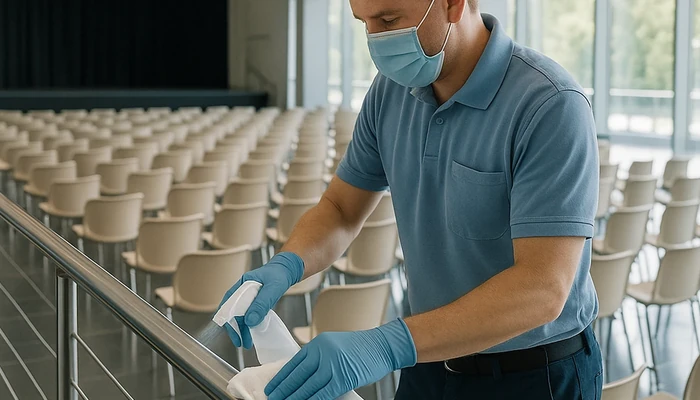
Safety should be prioritized for both your team and event visitors. Equip staff with gloves, masks, appropriate uniforms, and eye protection as necessary. Secure signage to indicate when areas are being cleaned.
- Choose PPE suited to disinfectant chemicals and exposure risks
- Maintain ventilation in cleaning areas
- Keep disinfectants out of guest reach
- Train all staff on safe product use (per manufacturer and EPA guidance)
Special Considerations for Food Service, Restrooms, and Backstage Areas
Food-handling zones require food-safe disinfectants and strict protocols. Restrooms should be stocked and checked even more frequently during peak events. Staff-exclusive spaces may still transmit pathogens—never overlook them.
- Choose products labeled for food-contact surfaces.
- Disinfect faucet handles, toilet seats, flush levers, and entry locks.
- Provide extra sanitizer units for backstage and break areas.
Comparing In-House vs. Professional Event Cleaning Providers
When deciding whether to rely on in-house staff or hire a specialized team, consider:
- Training and certification on infection prevention
- Credentialed professionals with hospitality/event experience
- Access to industrial-grade tools (electrostatic sprayers, ULV foggers, ATP meters)
- Ability to scale staffing up or down based on event size
- Service guarantees and insurance coverage for incidents
Engaging a provider such as CHI Cleaning Services offers advantages including tailored plans and local expertise for venues in Chicago, Illinois.
Adapting Disinfection Protocols for Multiday and Recurrent Events
Events spanning multiple days or recurring frequently (like weekly conferences or weddings) require enhanced planning:
- Between-day deep cleaning and airing-out of spaces
- Restocking disinfectants and supplies after each session
- Documentation of cleaning cycles for safety verification
- Provision for overnight cleaning teams, as needed
Educating Staff and Attendees on Hygiene Etiquette
Even the best protocols rely on cooperation from all participants. Work with your cleaning provider to:
- Post signage on handwashing and sanitizer locations
- Provide printed or digital hygiene reminders for event staff
- Encourage mask use and social distancing, when relevant
For further strategies on maintaining impeccable event spaces, see these tips for maintaining event spaces between uses.
Leveraging Technology for Enhanced Disinfection
Today’s venues can benefit from cutting-edge technology to boost results and confidence, including:
- Electrostatic sprayers for quick, even disinfectant coverage
- ATP bioluminescence meters to assess cleanliness on-site
- Automated cleaning robots for large open areas (ballrooms, exhibit halls)
- Mobile checklists and reporting tools
Case Examples: Adapting Your Protocols for Special Event Scenarios
Corporate Seminar: Prioritize microphones, podiums, touchscreens, and water stations. Increase disinfection between sessions and provide staff coverage for high-traffic registration points.
Music Festival: Focus on restroom trailers, food tents, barricades, wristband scan stations, and bag check tables. Use extra portable sanitizer stands.
Trade Show: Prepare for heavy handouts, badge exchanges, and demo units. Assign rapid response for booth turnovers and demo product cleaning.
How to Evaluate and Select the Right Event Cleaning Service
As you compare potential cleaning vendors, consider:
- Evidence of past event experience (ask for case studies or examples)
- Transparency of protocols, checklists, and reporting tools
- Insurance, certifications, and staff training credentials
- Availability of references and transparent communication channels
- Willingness to adapt plans for unique venue layouts or attendee needs
To review what else to look for in comprehensive event cleaning, visit this approach to event cleaning.
Coordinating With Event Planners and Facility Managers
Open communication with organizers ensures seamless disinfection, especially for complex setups. Share your protocols, create a joint plan, and keep all stakeholders informed of any schedule changes or incident reports.
- Hold pre-event meetings to map routes and cleaning access
- Document and share cleaning logs digitally, when possible
- Designate a single point of contact for real-time issues
FAQ: Disinfecting High Traffic Event Venues
- How often should high-touch areas be disinfected during a large event?
- At a minimum, every 60–90 minutes for restrooms and entryways, and more frequently in food service and registration areas as needed.
- What’s the difference between cleaning and disinfection in event venues?
- Cleaning removes debris and dirt; disinfection kills pathogens on surfaces. Both steps are essential and often performed consecutively.
- Are regular janitorial products enough for event disinfection?
- No. Only EPA-registered disinfectants proven effective against viruses (not just bacteria) are recommended for high traffic events. Always check label claims.
- Do electrostatic sprayers make a difference for event cleaning?
- Yes. Electrostatic sprayers provide even, rapid coverage for large spaces, helping cleaning teams work efficiently and reach hidden surfaces.
- Can disinfection protocols help reduce the spread of viruses like norovirus?
- Absolutely. Targeted disinfection, especially restrooms and food surfaces, can dramatically lower virus transmission—see CDC’s norovirus facts for details.
- What should I look for in a professional event cleaning provider?
- Experience with events, certified staff, insurance, clear supply lists, custom checklists, and transparent reporting tools.
- Should I require logs or proof of cleaning from contractors?
- Yes. Documented logs provide accountability and peace of mind for venue operators and attendees alike.
- How can I make sure disinfection is effective between multiple event sessions?
- Schedule quick-turnover “micro cleans,” prioritize critical touchpoints, and use ATP meters or UV markers if available for inspection.
- Where can I get more advice on proper venue cleaning for special event types?
- Consult industry resources like the APIC event cleaning perspectives or connect with experienced providers in your area.
Summary and Next Steps for Event Venue Disinfection
Disinfecting high traffic event venues is a multifaceted challenge that demands expertise, planning, team coordination, and constant vigilance. From mapping out high-touch zones and selecting the right disinfectants to leveraging new technology and documenting every step, a professional approach keeps guests safe and events running smoothly. Use these tips to craft a plan tailored to your venue and consider partnering with established experts, especially when planning large gatherings or multiday events.
About CHI Cleaning Services
CHI Cleaning Services is dedicated to helping homeowners, property managers, and businesses in Chicago, Illinois, and the surrounding region maintain healthy, spotless spaces. With specialties in recurring house cleaning, deep cleaning, move out cleaning, office cleaning, and special facility cleaning, our team is extensively trained to follow consistent checklists, use professional-grade products, and pay attention to detail—especially in high-touch, high-traffic areas. For transparent communication and long-term reliability, trust CHI Cleaning Services to deliver peace of mind for your next event or everyday cleaning needs.
best cleaning services, event cleaning services, event cleaning chicago il, event cleaning Niles IL, Bolingbrook event cleaning, event cleaning Markham IL, event cleaning Waco, event cleaning Aurora, Round Lake event cleaning service, event cleaning Glencoe IL