
Retail Store Floor Care During Open Hours: Managing Slip Risk Without Shutting Down
Retailers face a critical challenge: maintaining clean, safe floors throughout busy store hours without disrupting business or increasing slip risk. For shop owners, managers, and facility supervisors, it’s not enough to simply clean—floor care routines must align with foot traffic, merchandise zones, and stringent safety needs. In this definitive guide from CHI Cleaning Services, you’ll learn exactly how to approach retail store floor care during open hours: managing slip risk without shutting down. Explore proven frameworks, detailed checklists, and safety-first cleaning strategies for retail spaces in Chicago and beyond.
Understanding Slip Risk in Retail Environments During Business Hours
Slip risks in retail settings intensify when stores are open to the public. Spilled drinks, tracked-in moisture, and unforeseen debris can all create unexpected hazards—sometimes within minutes. Unlike closed environments, open stores contend with constant movement from customers, carts, and staff. To reduce incidents, it’s essential to:
- Proactively identify floor areas most vulnerable to moisture or spills (entrances, restrooms, high-traffic aisles).
- Recognize the impact of weather conditions on ingress and interior walkways.
- Understand liability: most slip-related claims occur during open hours, especially when cleaning is visible but insufficiently managed.
Retailers must anchor their cleaning approach to these real-world risk pressures—building preventive measures, not just reactive fixes.
Mapping High-Risk Zones: Where Floor Safety Demands Precision
Not all areas carry the same risk. Effective open-hours floor care begins with precise mapping:
- Entrances and vestibules: First point of contact, often affected by outdoor weather.
- Beverage and food stations: Sites of frequent spills and crumbs.
- Checkout lanes: High turnover and occasional packaging debris.
- Restrooms: Moisture escape common during peak periods.
- Display changes & seasonal sections: Temporary layouts can impede visibility or quick access.
- Stockroom access doors: Crossover points between staff-only and public zones.
Documenting these zones enables staff or cleaning partners to anticipate and prioritize fast, effective cleaning as needs arise—without confusion.
Traffic Flow and Cleaning Timing: How to Clean Without Interruption
To prevent business disruption, cleaning routines should flexibly adapt to customer flows. This means:
- Tracking hourly traffic patterns (morning rush, midday lulls, evening peaks).
- Scheduling spot cleaning during less crowded windows—never at peak, unless essential.
- Using focused teams for quick interventions that don’t require full area closures—reducing wait times and bottlenecks.
The most effective cleaning companies study store usage data and develop rotating task matrices to minimize distraction and maximize floor safety in Chicago’s bustling retail scene.
Cleaning Product Selection: Fast-Drying, Safe, and Surface-Specific
The choice of cleaning solutions can make the difference between rapid re-use and lingering hazard. Retail stores should opt for:
- Low-moisture, fast-evaporating floor cleaners that are compatible with tile, vinyl, wood, and composite surfaces.
- EPA-registered disinfectants, as recommended on the EPA’s List N, for necessary high-touch disinfection.
- Neutral pH cleaners to avoid surface damage or sticky residues.
- Slip-resistant treatment agents for entrances or wet weather periods.
Consulting cleaning professionals ensures that solutions are not just effective, but safe for continuous public access.
Equipment and Tools for Open-Hour Floor Cleaning
Retailers and their contractors must employ tools designed for minimal intrusion and maximum efficiency, such as:
- Microfiber mops and cloths: Quick-drying, trap fine particles better than conventional options.
- Bottle sprayers and spot-cleaning kits kept on carts for rapid deployment.
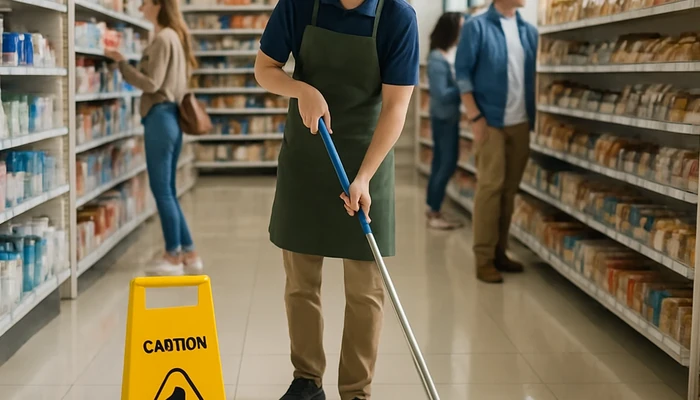
- Wet floor signs: Essential during all cleaning activity and directly after, per OSHA and industry best practices.
- Compact, low-profile scrubbers for larger flooring zones that require more than mopping.
- Backpack vacuums for dry debris cleanup with minimal physical footprint.
- Entryway mats—changed or vacuumed as often as needed during wet weather.
Decision Framework: Should You Clean or Wait?
Not every minor spot requires immediate intervention, and aggressive cleaning in crowded aisles may create more risk. Use this decision flow:
| Situation | Action | Required Follow-Up |
|---|---|---|
| Visible liquid spill in walkway | Immediate clean-up with proper signage | Monitor until fully dry |
| Dry debris (crumbs, dirt) | Spot vacuum or sweep if safe; postpone if crowded | Check at next lull |
| Sticky residue or tracked-in weather moisture | Use fast-drying method during low traffic | Post “Caution” signs |
| Employee notices hazard, but area is congested | Deploy warning signs first; schedule spot clean ASAP | Communicate with floor staff |
| Entry mats saturated | Swap with clean mats or vacuum-dry quickly | Inspect adjacent floors |
This framework trains both employees and cleaning partners to act with confidence—balancing store flow and risk mitigation.
Open-Hours Floor Care Checklist: Daily and Hourly Task Segments
Hourly (or as needed):
- Inspect entrance mats and replace if saturated
- Scan all mapped risk zones (see above)
- Remove small debris with portable vacuum or dustpan
- Spot-clean spills with appropriate neutral cleaner and signage
- Update safety log if intervention was required
Once per shift:
- Check condition of all safety signage and replenish supplies
- Sanitize high-touch floor zones (restrooms, checkout)
- Communicate challenges or product needs to management
Staff and Cleaning Crew Collaboration: Communication Protocols for Safety
Efficient open-hours cleaning relies on strong coordination between retail staff and cleaning professionals. Key practices include:
- Shared messaging logs for reporting spills, urgent needs, or repeated trouble spots.
- Briefings for store associates on how to deploy/signal for cleaning help—especially during rush periods.
- Clear responsibilities: Employees handle low-risk dry debris, while cleaning teams manage liquid hazards and sanitization.
Clear channels and documented processes foster a proactive, accident-reducing culture.
Customer Safety During Cleaning: Visibility, Barriers, and Minimal Intrusion
When cleaning must occur in public, visibility and transparency are crucial:
- Use highly visible “Wet Floor” and “Cleaning in Progress” signage at all access points.
- Where possible, cordon off a small cleaning area with portable barriers—create pathways or suggest quick detours.
- Train cleaning staff to politely direct customers and answer questions about safety.
- Document all cleaning interventions for possible incident reporting or insurance needs.
Professional cleaners are trained not only in effective cleaning, but in customer interaction and hazard signaling.
Adapting to Weather and Seasonal Factors
Chicago’s retail landscape faces dramatic seasonal shifts—slush, salt, and rain present persistent floor care challenges:
- Increase inspection frequency during inclement weather.
- Upgrade to larger, bristle-heavy entrance mats for winter and rainy months.
- Use special neutralizers for salt and de-icer residues that can degrade floors.
- Double clean-up efforts at opening/midday/close during high-snow or rainy days.
Seasonal cleaning schedules are foundational for retail safety in Chicago and other urban areas with variable climates.
Compliance and Regulatory Considerations for Retail Floor Care
Following OSHA and local safety guidelines is a must. Retailers should:
- Review slip, trip, and fall compliance rules annually with legal or insurance advisors.
- Document cleaning frequency and spill management in a written SOP (standard operating procedure).
- Train all cleaning staff and employees using recorded modules or live sessions.
- Stay up to date on recommended disinfectants—see EPA’s List N for current standards.
Proper records and compliance reduce liability risk and support a safer, healthier place to shop and work.
Professional Cleaning Services vs. DIY: Comparative Value for Open-Hours Care
- DIY (with in-house team): Immediate access, but limited by skill, product, and tool inventory.
- Professional partner (like CHI Cleaning Services): Provides specialty products, OSHA-awareness, faster drying, and documented processes; can scale up teams during events or bad weather.
- Experts plan floor care routines that mesh with your specific retail flow, not just generic checklists.
- Professional cleaning contracts often include risk-mapping and ongoing staff training.
Partnering with a cleaning company can bring long-term savings by preventing both slips and reputational losses from avoidable hazards.
For those seeking specialized retail cleaning, see Retail store cleaning services.
Case Scenarios: Retail Floor Care Challenges and Solutions
Case 1: Entryway Puddle During Rush Hour
Scenario: Slush and snow melt near retail entrance at noon. Employees flag a puddle, but customer flow is constant.
- Action: Employee places “Wet Floor” signage; cleaning crew waits for minimal lull to spot-clean with fast-drying method.
- Ongoing: Mat rotated out and replaced; spot re-inspected in 30 mins.
Case 2: Beverage Spill in Busy Aisle
Scenario: Customer spills soft drink in beverage aisle during a promotion.
- Action: Both ends of the spill cordoned with signs; crew spot-mops with neutral cleaner and towels until dry.
- Staff direct customers to alternate aisle during cleaning.
Aligning Your Retail Floor Care Plan with Facility Changes and Store Layouts
Renovations, layout tweaks, or pop-up events can dramatically change risk profiles. Best practices:
- Update the mapped risk zone list immediately after any layout change.
- Conduct a new walkthrough with cleaning partners to identify new hazards (e.g., narrower pathways, new display locations).
- Review and revise cleaning frequency for sections seeing increased foot traffic.
Continuous adaptation ensures that your slip risk management evolves along with your store’s design and offering.
Staff Training: Ensuring Everyone Knows the Protocol
- Onboard every retail employee in basic spill response and floor hazard identification.
- Schedule quarterly refreshers with either your in-house expert or through professional cleaning partners.
- Post quick-reference guides or QR codes in employee-only areas for incident response procedures.
- Ensure backup supplies (mops, signs, cleaning fluid) are available and accessible throughout staff shifts.
Engaged, informed employees make for safer retail floors—during all hours of operation.
Frequently Asked Questions: Retail Store Floor Care During Open Hours
- What is the biggest slip risk for retail stores during open hours?
- Entrances with tracked-in moisture and high-traffic spots where food or drink is served are the most common sources of slip hazards during business hours.
- What cleaning products are safest for quick spill clean-up during store hours?
- Low-residue, neutral pH cleaners that dry quickly are ideal. Professional-grade spot treatments reduce downtime and minimize customer risk.
- Should you close aisles for cleaning during busy times?
- Full closures are rarely practical; instead, use signage and focused, fast methods. Reserve large-area cleaning for very low-traffic times when possible.
- How often should retail floors be inspected for safety issues?
- High-risk areas should be inspected every hour, or more frequently during inclement weather or major sales days.
- Is it worth hiring professional cleaners for retail floor maintenance?
- Professionals have access to high-grade products and safety protocols, reducing risk and interruptions. They can also train staff on incident response and documentation.
- How can you train employees for hazard prevention?
- Regular onboarding, posted reminders, and collaboration with professional partners like CHI Cleaning Services are key tools.
- Does slip-resistant flooring eliminate the need for careful cleaning?
- No. While slip-resistant floors reduce risk, prompt cleaning and moisture management are still essential for customer and staff safety.
- Where can I find official recommendations for cleaning products?
- The EPA List N provides the most current disinfectant guidance for public spaces.
- How should floor cleaning routines be adapted for seasonal changes?
- Increase inspection during wet/snowy seasons, adjust entrance mats, and use cleaners designed for salt or de-icing residue.
- What documentation is required for compliance?
- Maintain cleaning logs, incident reports, and Standard Operating Procedures (SOPs). Partnering with a professional cleaning service can streamline these processes.
Summary and Next Steps for Safer, Cleaner Retail Stores
Managing retail store floor care during open hours requires more than routine cleaning: it takes strategic planning, real-time observation, and skilled intervention. By mapping risk zones, employing flexible routines, and investing in professional support when needed, retailers drastically reduce slip risk—protecting both customers and revenue. For specialized support, consider reaching out to CHI Cleaning Services or learn more about office cleaning services and commercial cleaning solutions. Safety, compliance, and reputation start with the floor beneath your customers’ feet.
About CHI Cleaning Services
CHI Cleaning Services delivers comprehensive cleaning solutions for residential and commercial spaces across Chicago, Illinois. Our trained staff use professional-grade products, advanced equipment, and established checklists for recurring, deep, move-out, specialty, and office cleaning. We’re committed to transparent communication, flexible scheduling, and long-term relationships—helping households and businesses in Chicago and nearby communities achieve cleaner, healthier environments every day.
best cleaning services chicago, retail floor cleaning, store cleaning services, boutique cleaning Montgomery IL, shop cleaning Matteson IL, store cleaning Morton Grove IL, retail cleaning Bolingbrook, retail floor cleaning Wood Dale IL, retail janitorial services Itasca, retail store cleaning Crystal Lake