 Skip to content
Disinfection Methods in Large Gymnasium Spaces: A Practical Framework
Large gymnasiums are high-traffic environments where numerous people exercise, compete, and gather daily, making these spaces prone to the spread of germs and bacteria. Ensuring a healthy environment for users means going well beyond surface cleaning—reliable, science-based disinfection practices are essential. In this in-depth guide, you’ll uncover the key disinfection methods in large gymnasium spaces, how to apply them, and what factors make them effective. Whether you manage a sports facility, oversee cleaning for a school, or are investigating best practices before booking professional cleaning, you’ll find a holistic framework here to elevate hygiene and user safety. Read on to discover comparison checklists, decision guides, and actionable steps developed and reviewed by experienced professionals at CHI Cleaning Services.
Understanding the Unique Challenges of Large Gymnasium Spaces
Gymnasiums come with distinct disinfection concerns due to their vast square footage, variety of surfaces, and concentration of high-touch areas. Unlike typical commercial spaces, gyms face:
- Continuous flow of users, increasing microbial load throughout the day
- Large open surfaces (floors, bleachers) requiring efficient, scalable disinfection
- Shared equipment, mats, and locker rooms as vectors for contaminant transmission
- Complex HVAC and air circulation systems influencing pathogen spread (ASHRAE’s commercial facility research underscores this)
Effective disinfection in these environments must address not just visible dirt, but the microbial threats hidden in corners, fabrics, and on frequently touched surfaces.
Scientific Foundations of Gymnasium Disinfection
Why is dedicated disinfection essential for gymnasiums?
- Athletes generate increased perspiration, accelerating bacteria and virus spread
- Shared contact surfaces—basketballs, gym mats, door handles—become hotspots for germs
- Insufficient cleaning frequency can allow microorganisms to survive for days or longer
The Association for Professionals in Infection Control and Epidemiology (APIC) provides foundational standards, helping professionals select appropriate disinfectants and protocols for athletic facilities.
Disinfection vs. Cleaning: Critical Differences for Gym Spaces
It’s essential to distinguish between cleaning and disinfection, particularly in gyms:
| Process | Purpose | Typical Techniques | Frequency |
|---|---|---|---|
| Cleaning | Removes visible dirt, dust, and debris | Sweeping, mopping, general detergent use | Daily, multiple times/day |
| Disinfection | Reduces/eliminates germs and pathogens by chemical/physical means | EPA-approved disinfectants, electrostatic spraying, UV-C devices | Scheduled, after events, or as per risk level |
Checklist: When to Clean and When to Disinfect
- Daily cleaning: Floors, benches, locker rooms
- Targeted disinfection: Shared fitness equipment, mats, high-touch points after each use/session
- Comprehensive disinfection: After major events, outbreaks, or suspected contamination
Mapping Critical Touchpoints and Spaces in Gymnasiums
A practical gym disinfection plan starts with mapping:
- High-traffic zones (entrances, seating, score tables)
- Locker rooms and restrooms
- Sports equipment and storage areas
- Ventilation grilles, handrails, doorknobs
Facility managers should tailor protocols to the unique facilities under their care. Internal resources like Cleaning Storage Areas in Gyms: What You Should Know offer deep dives into these overlooked spots.
Comparing Disinfection Methods: Manual, Chemical, and Technological
What are the main options for gym disinfection today?
- Manual Disinfection: Precise, allows focused cleaning on small or complex objects
- Chemical Disinfection (Sprays/Wipes): Fast and familiar, but may miss uneven surfaces
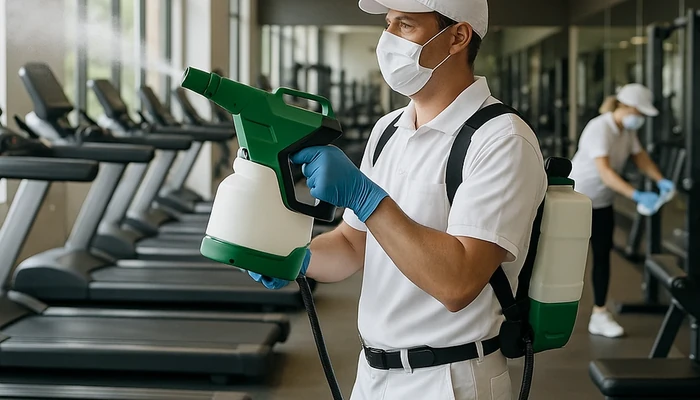
- Electrostatic Spraying: Delivers disinfectant across wide areas, wraps around surfaces
- UV-C Light Devices: Effective on exposed surfaces, ideal for periodic, unoccupied-room use
- Fogging Solutions: Covers large volumes quickly, best for whole-space resets during off-hours
Comparison Table: Gymnasium Disinfection Methods
| Method | Coverage | Pros | Cons |
|---|---|---|---|
| Manual (Wipe/Scrub) | High-touch points, detailed cleaning | Thorough on small items | Labor-intensive, slow for large spaces |
| Electrostatic Spraying | Entire rooms, equipment, seating | Efficient, even distribution | Requires training and PPE |
| UV-C Light | Floors, mats, benches | Chemical-free, no residue | Needs clear surfaces, limited penetration |
| Fogging | Large volumes, air & surfaces | Rapid process | Temporary closure required |
| Chemical Disinfectant Spray | Most hard surfaces | Accessible products | Can oversaturate, requires dwell time |
Selecting and Validating Disinfectants for Gym Facilities
Key steps in choosing the right disinfectant:
- Verify EPA registration and label claims (efficacy against bacteria, viruses, fungi)
- Ensure product suitability for surface types: wood courts, plastic, glass, metal
- Assess compatibility with gym ventilation and HVAC requirements (check ASHRAE guidance for air quality integration)
- Balance rapid action (short dwell times) with residue and odor control
Step-by-Step Disinfection Workflow for Large Gymnasiums
Implement an efficient, replicable workflow:
- Pre-clean: Remove visible debris, mop/sweep floors, collect lost & found items
- Map zones and assign staff to defined sections (e.g., per court or locker area)
- Apply chosen disinfectant method following manufacturer recommendations
- Allow required contact/dwell times, ventilate as needed
- Change PPE and cleaning supplies between high-risk zones
- Inspect and record completion for QA and regulatory purposes
For critical events or outbreaks, escalate to deep disinfection protocols or professional teams specialized in large-facility cleaning.
Frequency Frameworks: How Often Should Each Zone Be Disinfected?
- General floors/seating: Daily, with extra cycles after peak events
- Equipment, mats, touch-points: After each use/session
- Locker rooms/restrooms: Multiple times per day
- HVAC and ventilation surfaces: Weekly checkups
For tailored guidelines by facility type, see Commercial Cleaning: A Health Investment for a breakdown by risk and traffic levels.
Staff Safety Protocols in Gym Disinfection
Protecting cleaning staff is paramount:
- Provide training in chemical handling, PPE usage, and hazard communication
- Rotate teams to limit exposure during high-risk sessions
- Ensure all staff have access to state-mandated PPE (masks, gloves, eye protection)
- Review ongoing professional resources, like APIC’s career development resources, for up-to-date protocols
Integrating Disinfection with Air Quality Management
Modern gyms must synchronize surface disinfection with air quality strategies. According to ASHRAE guidance:
- Ensure HVAC systems are properly maintained and filter replacements are on schedule
- Use air purifiers judiciously in closed or high-use rooms
- Schedule fogging or chemical spraying when spaces can remain unoccupied
This dual approach limits both surface and airborne risks.
Disinfection Documentation and Compliance in Gymnasiums
Regulatory bodies require detailed, timely records:
- Log each disinfection session with date, time, zone, product used, and staff name
- Conduct periodic audits of protocol adherence
- Stay updated on local health department and CDC guidance for athletic facilities
Digitizing checklists and logs improves transparency and accountability, especially critical for large institutions.
Seasonal and Event-Based Disinfection Variations
- During cold/flu season: Increase disinfection frequency, especially for locker rooms and high-traffic paths
- After tournaments/events: Deep clean with full-space methods (fogging or electrostatic)
- Summer/Wet conditions: Focus on moisture-prone mold/algae growth, add antimicrobial floor treatments
Synchronize event calendars with intensified disinfection for optimal safety.
Special Considerations: Athletic Mats and Specialized Equipment
These require targeted approaches:
- Pre-treat mats before use and disinfect after every session with EPA-approved products
- Check non-slip mats for residue buildup, rotating use to allow full drying
- Adopt specialty machine cleaning for large crash mats
Guidance on rigorous hygiene for training equipment is valuable for evolving protocols.
Decision Guide: Choosing Professional vs. In-House Disinfection
Consider the following factors for your gym:
- Do you have trained staff and scalable equipment suited for the space?
- Are there special events or health incidents that require expert intervention?
- Budget for both ongoing supplies and periodic deep cleaning reviews
Professional services like CHI Cleaning Services often bring advanced equipment, EPA-validated products, and rigorous staff training—especially beneficial for large-volume or specialty gymnasiums.
Integrating Disinfection Practices into Ongoing Facility Maintenance
Disinfection should become a core part of daily gym upkeep, not a periodic chore. Facility managers are encouraged to:
- Develop hygiene checklists for front-line staff
- Combine routine cleaning with targeted disinfection (for example, after each PE class or game)
- Incorporate ongoing education and feedback for cleaning teams
- Oversee quality through random post-cleaning inspections
Resources like Detailed Cleaning: A Comprehensive Guide offer deeper process integration ideas for any large-space setting.
Coordination With Event Organizers and Third Parties
For large tournaments or community events:
- Share disinfection protocols with all involved parties before the event
- Schedule interim wipe-downs and reset breaks during multi-day events
- Require external vendors to follow facility-specific protocols
Proactive communication avoids lapses and ensures event safety continuity.
Training and Continuous Improvement for Cleaning Staff
Regular training sessions are vital. Priorities include:
- Updates on new disinfection technologies and products
- Hands-on drills for using electrostatic sprayers, foggers, or UV systems
- Scenario training for outbreak or incident response
- Feedback loops between management and cleaning teams for process refinement
Soft CTA: Consider Professional Gym Facility Cleaning
If your gym demands a scalable, results-driven cleaning schedule or needs expert help adapting to fluctuating user loads and safety protocols, Gym cleaning by experts is available for specialized, scheduled, or emergency situations.
Frequently Asked Questions: Disinfection Methods in Large Gymnasium Spaces
- What is the most effective disinfection method for large gyms?
Efficiency often comes from a combination—manual wipe-downs for high-touch areas plus periodic electrostatic spraying or fogging for wide-spread coverage. - How often should gymnasiums be disinfected?
General areas should be disinfected at least once daily, with additional attention to shared equipment after each use and extra deep cleaning following large events. - Are UV-C devices safe and effective in gymnasiums?
Yes, when properly applied in unoccupied rooms. They are an excellent chemical-free supplement, but do not reach shadowed zones. - What should be included in staff training for gym disinfection?
Teams require regular instruction on product handling, PPE use, cross-contamination prevention, and new technology applications. - How do I know if my disinfection protocols are working?
Maintain inspection records, perform spot ATP testing if possible, and solicit feedback from staff and users. - What do I do after a known illness or outbreak in the gym?
Escalate to full-space disinfection, use EPA-approved virucidal products, and follow local public health guidance on potential closures and re-openings. - Does air ventilation affect disinfection outcomes?
Absolutely. Enhanced ventilation dilutes airborne pathogens, helping surface disinfection reduce overall risk. - What products are safest for sensitive sports flooring?
Only use products approved for wood, rubber, or specialty flooring, and never oversaturate surfaces—refer to manufacturer recommendations. - Should facility disinfection be outsourced or managed in-house?
If your team is well-trained, daily routines can be in-house, but consider outside help for deep-cleaning, large-scale, or emergency disinfecting. - Where can I find official guidance for gym disinfection protocols?
Professional bodies like APIC and ASHRAE, as well as local public health departments, publish up-to-date recommendations for athletic spaces.
Summing Up: Safer, Cleaner Gymnasiums Through Modern Disinfection
Large gymnasiums demand more than basic cleaning—the right combination of targeted manual methods, advanced technology, and rigorous protocols creates safer spaces for everyone from athletes to spectators. Decision-makers, facility managers, and cleaning teams can leverage this guide to optimize their routines, cater to changing event risks, and build a reputation for safety and reliability. For situations where expert help is needed, turn to reputable providers experienced in large-scale gym and facility cleaning.
About CHI Cleaning Services
CHI Cleaning Services is dedicated to helping households, businesses, and specialty facilities in Chicago, Illinois and nearby areas achieve spotless, healthy environments. Our trained staff specializes in recurring house cleaning, deep cleaning, move out cleaning, office cleaning, and dedicated facility cleaning for gyms and other complex spaces. With a focus on industry-standard protocols, transparent pricing, and flexible scheduling, we build long-term relationships through detail-oriented service. For questions about advanced cleaning projects or to explore a customized plan, visit CHI Cleaning Services.
cleaning companies chicago, commercial cleaning contractors in chicago, commercial cleaning chicago il, Glenview commercial cleaning, commercial cleaning company River North IL, commercial cleaning companies in Burbank IL, commercial cleaning Evanston, commercial cleaning companies in Evergreen Park, commercial cleaning Morton Grove, commercial cleaning Western Springs IL
