 Skip to content
Cleaning Storage Areas In Gyms: What You Should Know
Whether you manage a sprawling fitness center or a boutique gym in Chicago, keeping your facility clean is a non-negotiable standard—especially in hidden but critical zones like storage areas. This comprehensive guide arms you with everything you need to know about cleaning storage areas in gyms: from identifying problem points to implementing protocols and ensuring the health and safety of your staff and members. Let’s explore the systems, challenges, and best practices unique to storage spaces to elevate your gym’s cleanliness to professional standards.
Why Storage Areas in Gyms Pose Unique Hygiene Risks
Storage zones in gyms are often overlooked, yet they host a diverse inventory: equipment, cleaning supplies, towels, spare mats, and sometimes perishable items. As these spaces serve as touchpoints for staff and occasionally members, they are a perfect harbor for germs if not maintained correctly.
- Equipment rotation means new germs are introduced daily.
- Lack of ventilation allows bacteria and odors to build up.
- Moisture & humidity from wet towels or water bottles can encourage mold.
- Shared access increases cross-contamination risk.
Addressing these risks begins with targeted cleaning routines and regular inspections.
Common Types of Storage Areas Found in Gyms
A gym’s back-of-house may feature several storage types, each with distinct cleaning requirements:
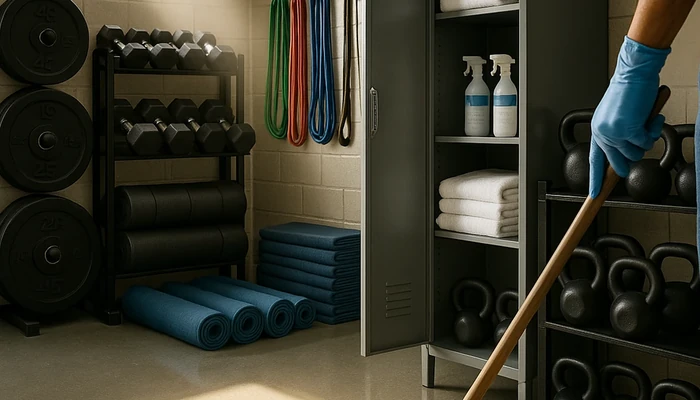
- General equipment storage (weights, resistance bands, medicine balls)
- Textile/towel storage
- Cleaning supply closets
- Biohazard/waste rooms
- Maintenance supply rooms
- Staff/employee lockers
Table: Storage Area Types and Key Cleaning Focus
| Storage Type | Main Contaminants | Special Considerations |
|---|---|---|
| Equipment Room | Sweat, dust | Rack and shelf cleaning, equipment wipe-down |
| Towel Cabinet | Moisture, mildew | Ventilation, laundry rotation, shelf disinfection |
| Biohazard/Waste Area | Bodily fluids, sharps | OSHA standards, sealed disposal, personal protective equipment |
| Cleaning Supplies | Chemical residue | Spill control, S.D.S. compliance |
High-Touch Surfaces and Forgotten Contamination Points
Storage areas have more “hidden” high-touch surfaces than most realize. These can include:
- Door handles and lock pads
- Shelf ledges and bins
- Equipment handles stored in racks
- Laundry carts and basket handles
- Light switches and thermostats
A best practice is to treat all contact surfaces with the same diligence as gym equipment in main workout areas. Daily gym cleaning checklists often overlook these, so supplement as needed.
Key Steps in Cleaning Storage Areas Safely
Cleaning storage spaces in gyms differs from cleaning public workout zones. Here’s a tailored step-by-step protocol:
- Don appropriate personal protective equipment (PPE) before entry, especially when handling chemicals or biohazards.
- Remove all items from shelves or bins. Discard any expired, damaged, or soiled items per gym policy.
- Dust and vacuum surfaces, including high shelves and corners.
- Clean and disinfect all surfaces with professional-grade products safe for the material.
- Dry and reinstall items, rotating stock to promote older items’ use first.
- Sanitize high-touch points last and replace gloves as needed to avoid cross-contamination.
- Record completion in a cleaning log for accountability.
Schedules should adapt to foot traffic and storage purpose—daily, weekly, or monthly routines apply, but biohazard or towel storage may demand more frequent cleaning.
Essential Cleaning Supplies and Equipment for Storage Zones
- Hospital-grade disinfectants confirmed on the EPA List N
- Color-coded microfiber cloths to prevent cross-use between different areas
- Nitrile gloves, disposable aprons, and masks
- Mops or specialty floor cleaners for slip-prone zones
- HEPA vacuums for dust-sensitive storage
- Labeling materials for chemicals and supplies
For hazardous waste storage, comply with all OSHA bloodborne pathogens standards for safe handling and cleanup, including registration of all spill kits and regulated waste containers.
Frequency Guide: How Often Should Different Storage Areas Be Cleaned?
Frequency depends on the storage type, access, and contamination risk:
- Daily: Towel storage, cleaning supply rooms, biohazard waste rooms
- Weekly: Equipment storage, maintenance storage
- Monthly/Quarterly: Deep cleaning of areas with infrequent use
Facilities with high turnover or 24/7 access in Chicago should consider more frequent touch-ups. For guidance on cleaning cycles across gym areas, explore hygiene essentials for gyms.
Workflow: Staff Roles, Training, and Accountability
Effective storage area cleaning hinges on well-trained staff and protocols:
- Assign specific storage zones to each shift for consistent responsibility
- Use sign-off logs or digital checklists after each cleaning cycle
- Instruct on correct chemical use and PPE donning/doffing
- Provide annual or quarterly refresher training on biohazard/chemical handling
Holding regular team briefings about recent issues or audit findings keeps everyone accountable and vigilant.
Comparing DIY, In-House, and Professional Cleaning for Storage Rooms
- DIY (by gym staff): Useful for daily tidying, but risks shortcutting safety when mixing tasks.
- In-House Cleaning Staff: Provides more consistency but requires ongoing training and PPE oversight.
- Professional Cleaning Providers: Bring experience with high-risk materials, OSHA compliance, and accountability. Cleaning companies like CHI Cleaning Services offer customized protocols for these specific zones.
Cost, legal liability, and staff satisfaction should factor into your decision. Outsourcing often ensures adherence to the latest protocols and risk-reduction strategies.
Legal and Safety Requirements in Gym Storage Zones
Failure to properly clean and store hazardous materials in gyms may breach local, state, or federal regulations. Key requirements include:
- OSHA-compliant labeling and disposal bins
- Access control for hazardous or chemical closets
- Material Safety Data Sheet (MSDS) posting for all chemicals
- Training logs and incident records
- Emergency eyewash stations for chemical spill areas
Consult APIC’s facility hygiene resources and OSHA guidelines for up-to-date compliance standards.
Handling Laundry and Textile Storage Safely
Laundry rooms must prevent cross-contamination from dirty to clean fabrics. Use these guidelines:
- Store clean and soiled items separately, always above floor level
- Disinfect storage bins after each batch
- Inspect regularly for moisture or visible mold
- Rotate towel stock and remove any musty-smelling items immediately
To keep textile storage top-notch year-round, see fitness cleanliness musts.
Addressing Chemical and Biohazard Storage in Gyms
Biohazard and chemical storage require strict protocols:
- Keep chemicals in original containers, never mix products
- Secure access to hazardous cabinet keys
- Log all chemical usage/disposal; replace expired materials promptly
- For biohazard disposal, follow OSHA’s standards
Many gyms assign this area’s care to a dedicated, trained professional or outsource to cleaning specialists accustomed to hazardous waste handling.
Signs of Inadequate Cleaning in Storage Areas
- Unpleasant odors or visible mold
- Residual dust, puddles, or stickiness
- Cluttered or overstuffed storage bins
- Outdated, unlabeled, or mismatched chemicals
- Lack of disinfection logs or visible PPE supplies
Spotting any of these red flags means it’s time to review protocols. For comprehensive facility strategies, read about spotless gym cleaning strategies.
Checklist: Cleaning Storage Areas in Gyms
- Wear appropriate PPE (gloves, mask, apron)
- Remove and inspect all stored items
- Wipe shelves, bins, and all surfaces with correct disinfectant
- Vacuum or mop floors as needed
- Disinfect high-touch points (handles, switches, keypad)
- Replace and rotate items, remove damaged/soiled inventory
- Log cleaning activity
- Dispose of waste properly (biohazards in OSHA-approved bins)
Best Practices for Deep Cleaning Storage Zones
- Empty shelves fully for quarterly detailing
- Use air movers or dehumidifiers for moisture-prone areas
- Review and document the shelf-life of stored products
- Test and update labels to meet all compliance rules
- Audit logs and retrain staff after major cleanings
Comparison of Routine vs. Deep Cleaning Tasks
- Routine: Wiping, vacuuming, disinfecting high-touch points, inspecting for obvious hazards
- Deep cleaning: Full emptying and reorganization, shelf and wall scrubbing, air system cleaning, product audits
Evaluating a Cleaning Company for Gym Storage Needs
If partnering with a pro cleaning provider, ask about:
- Protocols specific to gym storage areas (not just general rooms)
- Staff certification and training on OSHA biohazard/chemical safety
- Customizable checklists and documentation for accountability
- Previous experience with fitness or high-traffic facilities
- Flexibility in scheduling for overnight or off-peak cleaning cycles
Opt for experienced cleaning companies familiar with regulations and best practices in gym settings—like CHI Cleaning Services.
Case Examples: Storage Cleaning Successes and Pitfalls
Success: Eliminating Odor in Towel Storage
A Chicago gym implemented scheduled shelf cleanings, improved ventilation, and staff PPE training. Result: odors disappeared, and member complaints dropped 70%.
Pitfall: Chemical Spill Negligence
An on-site staffer mixed incompatible products, causing a hazardous reaction. Investigation revealed missing signage and lack of documented training. Solution: professional intervention and new staff protocols based on industry guidelines.
Integrating Storage Cleaning Into Broader Facility Hygiene
Storage area cleanliness supports wider gym sanitation. Integrate protocols from related facility hygiene checklists, such as:
- Daily Cleaning in Fitness Centers
- Maintaining Gym Cleanliness During Peak Hours
- Sanitizing Solutions for Gym Spaces
Standardize documentation and audits to ensure nothing slips between team shifts.
FAQ: Storage Area Cleaning in Gyms
What makes storage areas in gyms so prone to contamination?
High traffic, frequent item rotation, and moisture buildup make these areas a haven for bacteria and odor.
How often should towel storage be disinfected?
Disinfect towel storage daily, and do a deep clean weekly—especially if humidity is high.
Which disinfectants are safest for gym equipment storage?
Use hospital-grade, non-corrosive products confirmed on EPA List N, and check with manufacturers for compatibility with surfaces.
Can general staff clean biohazard or chemical storage?
Only trained personnel should clean these zones, following OSHA standards and wearing required PPE.
What’s the risk of neglecting gym storage area cleaning?
Poor cleaning can lead to mold, cross-contamination, member illness, and even legal penalties for non-compliance.
Do professional cleaners bring their own supplies?
Reputable companies like CHI Cleaning Services provide all professional products and equipment, using them according to each zone’s requirements.
Are electronic access panels in storage rooms germ hotspots?
Yes—wipe and disinfect keypads and touchscreens at every cleaning round.
How should old or expired chemicals be removed?
Follow your city’s hazardous waste protocols and use only authorized disposal channels per your facility’s MSDS.
What goes in a storage area cleaning checklist?
PPE check, removal and review of items, shelf/floor cleaning, high-touch point disinfection, restocking, and logging each step.
How can I tell it’s time to call in professional help for storage cleaning?
If you see recurring problems (mold, odors, missing PPE), poor documentation, or increased staff sick days, it’s time to consider expert cleaning assistance.
Summary and Next Steps for Cleaner Gym Storage Areas
Storage areas are the hidden backbone of gym hygiene, crucial to facility safety and reputation. By understanding risks, building cleaning checklists, adopting compliant protocols, and partnering with trained professionals when needed, your gym can maintain spotless, safe storage spaces. For a full facility shine, work these strategies into your overall cleaning plan and review them regularly.
If your gym is ready for consistent quality, consider booking Gym cleaning by professionals or explore Commercial cleaning solutions for all your facility’s needs.
About CHI Cleaning Services
CHI Cleaning Services delivers high-standard cleaning for residential and commercial clients throughout Chicago, Illinois, and surrounding areas. Our team is trained in recurring home cleaning, deep cleaning, move out cleaning, office sanitation, and specialized facility services. We follow consistent checklists, use professional equipment, and uphold strict safety standards. Trust CHI Cleaning Services to help you maintain cleaner, safer storage spaces and beyond.
cleaning services chicago il, gym clean chicago, fitness center cleaning services, fitness center cleaning Wheeling, gym cleaning Glendale Heights IL, gym cleaning Gold Coast, gym cleaning Aurora IL, workout studio cleaning Glen Ellyn IL, gym deep cleaning North Riverside IL, workout studio cleaning Matteson
