Mastering Carpet and Floor Cleaning Techniques in Commercial Environments
Carpet and floor cleaning in commercial environments is far more than a matter of appearances—it’s about health, safety, durability, and professional pride. Whether you manage an office, oversee a large retail facility, or own a multi-unit residential property in Chicago, understanding how professionals tackle carpet and floor cleaning techniques in commercial environments empowers you to choose the right solutions and partners for your space. In this detailed guide, we break down what actually goes into expert carpet and floor care: step-by-step processes, differences by surface type, frequency standards, hygiene safeguards, and an insider’s view on what makes cleaning effective in high-traffic settings.
Understanding Floor Types and Their Unique Cleaning Demands
Commercial environments feature a rich mix of flooring materials. Each surface—carpet, tile, vinyl, hardwood, laminate, and specialty finish—requires unique care.
- Carpet: Varies from low-pile commercial carpets to plush residential-grade options. Each holds dirt and allergens differently.
- Vinyl Composition Tile (VCT): Durable but needs regular stripping and waxing to keep a glossy, clean surface.
- Hardwood: Sensitive to moisture and chemicals; water control is essential.
- Ceramic/Porcelain Tile: Grout lines are the primary harbor for residue and bacteria.
- Laminate: Prone to streaking and water damage if mopped incorrectly.
- Specialty Floors (rubber, epoxy, gym surfaces): Require custom care and approved cleaners only.
Matching Cleaning Techniques to Flooring Type
What works for a carpeted executive suite is not the same as what’s safe for a hospital corridor or a gym. The choice of equipment, cleaning agents, and technique influences efficacy and longevity.
- Use CRB (counter-rotating brush) machines for deep soil removal in carpets.
- Opt for neutral pH cleaners with fast-drying methods for sealed hardwood or laminates.
- Apply color-safe disinfectants on tile floors in food-service facilities, focusing on grout with specialty brushes.
High-Traffic Areas: Cleaning Strategies That Stand Up to Wear
Areas like building entrances, hallways, break rooms, and elevators demand the most frequent and thorough cleaning protocols. The goal is to control soiling before it spreads and to reduce damage from cumulative wear.
- Vacuum (for carpets) or dust mop (for hard floors) daily with HEPA filtration equipment.
- Target “capture zones”—the first 10 feet inside every entryway—with extra focus and mat cleaning.
- Weekly: Hot water extraction (carpet) or auto-scrubbing (hard surfaces) to remove embedded soils.
Comparison Table: Daily vs. Deep Cleaning in Commercial Spaces
| Task | Daily Cleaning | Deep Cleaning |
|---|---|---|
| Carpet | HEPA Vacuuming, Spot Removal | Hot Water Extraction, Encapsulation |
| Tile/Grout | Sweeping, Damp Mopping | Power Scrubbing, Grout Cleaning, Steam |
| VCT | Dust Mopping, Light Mop | Stripping, Waxing, Burnishing |
| Hardwood | Dry Mop, Damp Cloth (neutral cleaner) | Buffing, Recoating (if needed) |
The Science Behind Stain Removal and Residue Control
Commercial environments face everything from tracked-in salt to spilled coffee. Deep cleaning techniques focus on identifying stain type and applying tailored solutions:
- For organic stains (coffee, food): Use enzyme-based cleaners designed for carpet fibers.
- For oily residues (workshops, kitchens): Degreasers appropriate to floor finish and slip-resistance.
- For salt/calcium deposits: Neutralize with acidic rinse, then extract thoroughly.
Technicians always pre-test spotters in a hidden area to avoid color loss or fiber damage. Some stains require repeated treatment; aged stains may not be fully reversible but can often be reduced dramatically.
Cleaning Protocols: From Preparation to Post-Clean Inspection
Effective care doesn’t start with equipment—preparation is crucial. Professionals follow a structured process:
- Assess foot traffic and soil load to determine frequency and methods.
- Pre-clean: Remove large debris, check for sensitive equipment/fixtures, place warning signage.
- Equipment prep: Use clean pads, correct brushes, and regularly serviced machines.
- Chemical selection: Match the solution to the surface, referencing manufacturer safety data.
- Methodical cleaning: Overlapping passes, focusing on corners and edges often missed in DIY or rushed work.
- Post-clean inspection: Ensure areas are dry, no residue remains, and re-treat if needed.
Checklist: Essentials for a Professional-Grade Floor Cleaning
- Proper vacuum with functioning filters and beater bars
- Approved cleaning chemicals (neutral pH for most hard floors, enzyme or oxygenated for stains)
- Color-coded microfiber cloths and mops to prevent cross-contamination
- Edge/detail tools for corners, transitions, and under furniture
- Wet/dry caution signs and access restriction barriers
- Spotting kit for emergency spills
Green Cleaning: Sustainable Practices for Healthier Indoor Spaces
Many Chicago organizations now require eco-friendly cleaning protocols. Look for these benchmarks:
- Use of third-party certified products such as Green Seal or Safer Choice.
- Microfiber systems, which trap more dirt with less chemical use.
- Auto-scrubbers with water-saving features and reduced chemical output.
- Paper and plastic consumables from sustainable sources.
For additional insights, the U.S. EPA’s environmental topics detail safe chemical selection and waste handling relevant for large workplaces.
Safety Protocols and Compliance in Commercial Floor Care
Cleaning teams must balance thorough cleaning with safety for occupants and staff. Key safety practices include:
- Adhering to OSHA regulations for chemical labeling and equipment operation.
- Minimizing slip and trip hazards by promptly drying floors and using warning signage.
- Wearing appropriate PPE—gloves, slip-resistant footwear, and sometimes masks or goggles.
- Documenting cleaning schedules and incidents to support insurance and quality assurance.
Deciphering Industry Standards: Certifying Quality Cleaning Methods
The cleaning industry follows recognized standards to ensure effectiveness and safety—such as those from ASTM International, which provides best practice guidance and test methods for floor and carpet care.
- Check if your cleaning team uses methods in line with ASTM or ISSA protocols.
- Ask about regular training updates and evidence of compliance.
Choosing the Right Frequency: How Often Should Commercial Floors Be Cleaned?
There’s no one-size-fits-all schedule. Instead, professional cleaners base their approach on usage patterns, visitor volume, and surface type:
- Lobbies and entrances
- Daily vacuuming or auto-scrubbing
- Corridors (carpeted)
- 3–5 times/week vacuuming; Monthly or quarterly extraction
- Restrooms/kitchens
- Daily disinfection; weekly or monthly deep clean
- Private offices
- Weekly
High-traffic businesses may increase frequency during inclement weather or peak usage.
Behind the Scenes: Professional Equipment and Innovations in Floor Care
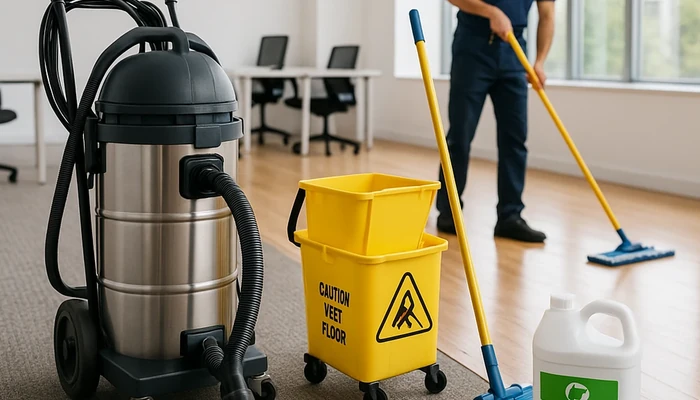
Modern commercial cleaning relies on advanced equipment:
- HEPA vacuums: Filter fine particles and allergens.
- Auto-scrubbers: Fast, consistent cleaning for large hard floors with built-in chemical dosing.
- Encapsulation machines: For low-moisture carpet cleaning, reducing downtime.
- Truck-mounted extractors: Deep carpet cleaning with improved drying speeds.
Many companies, including CHI Cleaning Services, regularly upgrade equipment and maintain service logs to ensure both effectiveness and safety for clients and staff.
Hygiene and Allergen Control: Best Practices for Sensitive Environments
Healthcare facilities, schools, and certain offices require more than just “clean”—they need hygienic, low-allergen spaces. Key strategies:
- Use hospital-grade disinfectants where needed (follow dwell times and rinsing requirements).
- HEPA filtration to capture dust mites, pollen, and dander (critical for carpets and upholstery).
- Color-coded tools to minimize cross-contamination between restrooms and common areas.
Adapting Carpet and Floor Care to Special Situations
Not all commercial settings are created equal. Cleaning companies like CHI Cleaning Services routinely customize approaches for:
- Conference centers/large events: Nighttime crews and rapid-dry methods for minimal disruption.
- Flexible workspace (shared offices): Portable, low-noise equipment for use during business hours.
- Food service: Strict separation of kitchen and dining zone equipment, food-contact safe solutions.
For one-time specialty needs such as move out cleaning, office cleaning service, or event cleaning, service frequency and methods adapt to volume and facility requirements.
Decision Framework: Vetting a Commercial Cleaning Company
- Check experience: Do cleaners have training with your floor types and business model?
- Review checklists: Are there documented, customized carpet and floor protocols?
- Ask about quality audits: Is there a formal inspection and reporting process?
- Assess green standards: Are products and waste methods in line with sustainability goals?
- Confirm safety procedures: How are staff trained on chemical handling and security?
- Evaluate communication: Is customer service transparent and proactive?
Maintaining Clean Floors Between Professional Visits
Your on-site staff can help preserve results with simple routines:
- Promptly spot-clean spills using approved supplies.
- Remove loose debris daily to prevent scratches and abrasion.
- Keep mats at all entries in good condition and clean regularly.
- Encourage a “shoes-off” policy in select zones if possible.
Additional Resources: In-Depth Reading on Commercial Hygiene
- Effective strategies from Clean, Healthy and Comfortable Environments
- Benefits of regular professional visits: Regular Cleaning and Property Value
- Innovations in business cleaning: Specialty Commercial Cleaning Advantages
- Health and safety outcomes: Commercial Cleaning as a Health Investment
- Maintaining clean, productive offices: Boosting Productivity with Clean Offices
FAQ: Carpet and Floor Cleaning Techniques in Commercial Environments
- What is the ideal cleaning frequency for office carpets?
- Daily vacuuming is preferred in high-traffic areas. Deep extraction every 1–3 months keeps fibers fresh and indoor air quality high.
- Are green cleaning products as effective as conventional ones?
- Certified eco-friendly products perform on par with standard cleaners for most soils and stains. Always ask about compatibility with your specific floor type.
- How can businesses minimize downtime during floor cleaning?
- Professional teams schedule cleaning for off-hours and use rapid-dry equipment. Low-moisture processes and ventilation further shorten drying times.
- What’s the best method for removing salt stains in Chicago winters?
- Apply a mild acidic solution, such as a diluted vinegar mix, then thoroughly extract with a wet vac. Preventative matting at entrances helps reduce tracking.
- When is it safe to use steam cleaning on commercial carpets?
- Steam cleaning works well for deep soils, but only if carpet backing and adhesives are rated for moisture. Experienced teams always pre-test for colorfastness.
- How does CHI Cleaning Services protect sensitive electronics during cleaning?
- We safeguard all outlets, power strips, and devices using plastic sheeting. Cleaning staff are trained to avoid direct liquid contact with electronics at all times.
- Can cleaning remove all odors from carpet and grout?
- Most odors respond to enzyme or oxidation treatments, but deep or aged smells (such as pet accidents or mildew) may need repeated applications and, occasionally, professional remediation.
- What’s the difference between professional and DIY carpet cleaning?
- Professionals use industrial-grade extractors, controlled chemistry, and routine quality checks—resulting in deeper cleaning, faster drying, and less residue. DIY machines often lack sufficient power and leave excess moisture behind.
- Why is color-coded equipment used in floor cleaning?
- Color-coded mops and cloths help prevent cross-contamination between sensitive zones such as restrooms, kitchens, and public spaces, supporting stricter hygiene standards.
Conclusion: Ensuring Immaculate Floors in Your Commercial Space
Mastering carpet and floor cleaning techniques in commercial environments requires more than spot-mopping or occasional vacuuming. It blends scientific knowledge, specialized equipment, and ongoing attention to health, safety, and the specific needs of each facility. By understanding these frameworks, managers and occupants can work hand in hand with trusted cleaning partners like CHI Cleaning Services to deliver both immediate results and long-term floor care value. Ready for a consistently clean and professional business environment? Consider exploring Office cleaning service or Move out cleaning for your facility’s next-level cleanliness.
About CHI Cleaning Services
CHI Cleaning Services helps households and businesses in Chicago, Illinois and nearby areas keep their spaces clean and healthy. Our teams are trained to handle all types of carpet and floor cleaning in commercial environments—using advanced methods, professional-grade products, and stringent safety standards. From recurring house cleaning and deep cleaning to move-out and office cleaning solutions, we’re known for our attention to detail and commitment to transparent, reliable service.
cleaning service chicago, chicago commercial cleaning companies, business cleaning services, commercial cleaning Elmhurst IL, commercial cleaning companies in Holland IL, Lansing commercial cleaning companies, commercial cleaning Morton Grove, commercial cleaning company Avondale IL, commercial cleaning in Westmont, commercial cleaning contractors in Wheeling