 Skip to content
COI, Keys, Alarm Codes: The Security & Liability Setup for Office Cleaning
When hiring an office cleaning service, business owners and workplace managers must consider not just cleanliness but also safety, liability, and access control. This guide provides a deep dive into the role of Certificates of Insurance (COI), key and alarm code management, and the crucial steps required for a secure, compliant, and hassle-free office cleaning partnership. With practical frameworks and checklists, you’ll understand the security and liability setup for office cleaning from first inquiry to daily operations, helping you choose the right protocols, avoid costly mistakes, and protect your business and staff along the way.
Understanding Certificates of Insurance (COI) in Office Cleaning
A Certificate of Insurance (COI) is more than paperwork—it’s your protection. This document certifies that your cleaning provider carries adequate insurance, including general liability and, where applicable, workers’ compensation. Requesting and vetting a COI ensures your business is not exposed to unnecessary risk should an incident occur during after-hours cleaning.
- What a COI covers: Bodily injury, property damage, and sometimes theft or negligent work.
- Why it matters: Without verified insurance, a cleaning incident could result in denied claims, legal complications, or out-of-pocket costs for your organization.
- Essential COI details: Confirm the cleaning company’s name, coverage types, policy numbers, effective dates, and required limits. Always have your business named as the certificate holder.
Key Handoffs: Secure Access Protocols for Cleaning Teams
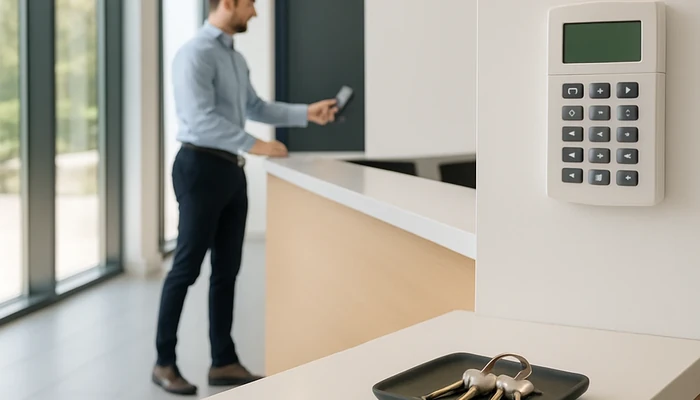
Professional cleaning in business environments depends on controlled access. Handing over keys—digital, physical or card-based—should follow a documented chain of custody, with strict logs that detail who accesses which areas and when.
- Require a signed key log/tracking sheet for every handoff and return.
- Label keys with codes, not business names or addresses, for extra security.
- Limit keys to only the areas that need cleaning access.
- Regularly audit keys and revoke access for former cleaning staff.
Common Types of Office Keys & Access Tools
- Traditional metal keys
- Key cards or fobs
- Digital keypad entries
- Master keys for building managers only
Alarm Codes and Security Alarm Coordination
Many offices are protected by alarm systems that require codes for arming and disarming. Sharing alarm codes with third-party cleaning teams introduces an extra layer of risk, so this process must be thoughtfully managed.
- Assign unique alarm codes to each vendor if possible.
- Provide written protocols for arming/disarming, including after-cleaning checks.
- Change or deactivate codes if staff change or contracts end.
- Limit code sharing to trusted supervisors, not temporary or short-term cleaners.
This helps trace any alarm events or accidental breaches back to specific users, improving both accountability and response times.
Security & Liability Checklist Before Starting Office Cleaning
| Preparation Step | Who Oversees | Best Practice |
|---|---|---|
| Verify COI up to date | Office/Facilities Manager | Check dates, coverage, and ensure on file |
| Log key handoff/return | Manager & Cleaning Supervisor | Maintain written record for all keys/fobs |
| Document alarm code | Manager | Assign unique code; log codeholder |
| Review cleaning agreement | Both Parties | Include protocols for access, liability, confidentiality |
| Prepare areas for access | Manager | Secure valuables; communicate restricted zones |
| Emergency contacts on file | Both Parties | Confirm after-hours support and reporting |
Cleaning Company Vetting: Security Questions to Ask
- What insurance coverage can you provide (COI)?
- How do you screen and train cleaning staff for access?
- What’s your protocol for handling keys and alarm codes?
- How do you document and log facility access every visit?
- Can you accommodate after-hours access with minimal disruption?
Answers to these questions will reveal the cleaning company’s professionalism and attention to liability safeguards—key markers of a trustworthy service.
Legal Requirements and Regulatory Guidance
Employers share responsibility when hiring outsourced cleaning, especially when granting after-hours access. It’s crucial to understand both the legal minimums and best practices:
- Insurance: Commercial cleaning companies are usually required by building management or company policy to carry general liability and workers’ compensation (consult the OSHA guidance on workplace hazards).
- Access: Some cities/buildings require vendors to be registered with property management.
- Alarm/alarm response: Ensure compliance with local alarm ordinances.
- Data protection: The cleaning contract should address confidentiality of sensitive documents/devices that may be present in the workplace.
Reference industry-specific public health protocols and data privacy best practices when developing site-specific procedures.
Roles and Responsibilities: Who Does What?
- Business/facility manager: Provides COI requirements, oversees key and code protocols, coordinates site access, and reviews policy compliance.
- Cleaning company operations lead: Delivers COI proof, assigns trained team, trains in house SOPs for security and alarm handling, and logs site visits.
- Individual cleaning staff: Follows documented procedures, maintains logs, and never discloses codes/keys beyond their direct manager.
Clear documentation ensures responsibility does not fall through the cracks, and supports effective incident resolution if issues arise.
Onboarding Cleaning Teams: Best Practices for Secure Transitions
- Walk through the office onsite—flag valuables, IT areas, and any off-limits locations.
- Deliver only the minimum required access (keys, codes, ID badges).
- Demonstrate alarm system use and emergency exit procedures.
- Document cleaning schedules in line with staff hours to reduce overlap and confusion.
- Review cleaning checklists or quality standards—such as those found in Ensuring Public Health and Practice Safety.
These steps are essential in busy commercial environments and help establish long-term trust between client and cleaning partner.
Alarm Response and Incident Procedures
Despite careful planning, alarm triggers, misplaced keys, or security questions may occur. Prepare with clear protocols:
- Set up an after-hours contact tree for both cleaning staff and property management.
- Step-by-step incident reporting, including photographic documentation for damages or unusual activity.
- Define who is authorized to reset the alarm or secure the site if triggered.
- Request summary reports from cleaning leads, especially after any event requiring emergency response.
Such documentation supports accountability and streamlines insurance claims if necessary.
Managing Access and Liability for Special Facilities
Some workplaces—like medical clinics, research labs, or high-security offices—require even tighter access controls. Cleaning protocols in these locations are often detailed in documents such as Ensuring Healthy Clinic Environments and Dental Clinic Cleaning: Essential Practices.
- Require extra badges or time-limited codes for especially sensitive rooms.
- Mandate dual-authentication (two-person access) for certain areas.
- Review and refresh codes for every rotating staff group or vendor change.
- Include detailed equipment and infection control checklists where appropriate. The CDC guidelines on cleaning and disinfecting outline best practices for both office and clinical settings.
When in doubt, opt for higher scrutiny and layer your risk management systems accordingly.
Data Sensitivity, Confidentiality, and Contract Considerations
- Add confidentiality clauses to your cleaning contract covering IT rooms, file cabinets, and proprietary data.
- Require staff background checks where needed, especially for access to sensitive workspaces.
- Include penalties or financial responsibility for unreported security breaches.
- Require written documentation of every scheduled or unscheduled access event.
For high-risk settings, work with your own legal counsel to ensure all necessary boxes are checked.
Staff Training and Ongoing Security Updates
Security protocols are only as strong as the people following them. Make staff onboarding and ongoing training a core part of your office cleaning partnership:
- Require biannual reviews of key and alarm protocols with all cleaning team leaders.
- Promptly update access controls after any staff departure.
- Conduct unscheduled key/code audits as a best practice.
- Offer training refreshers whenever alarm systems or office layouts change.
Balancing Accessibility and Security: Customizing the Protocols
Not every office has the same risk profile. Discuss your company’s unique needs upfront:
- Do you need night/weekend access, or always during staffed hours?
- Can access routes be limited to certain entries and corridors?
- Do you require camera footage review as part of every shift?
- Are there particularly valuable, dangerous, or confidential zones? These may warrant stricter controls and abbreviated checklists.
Working with Professional Cleaning Companies: Red Flags and Best Practices
- Red flags: Refusal to provide a COI, lack of documented key/code procedures, reluctance to answer security questions, vague insurance limits.
- Best practices: Written policies, named points of contact for both parties, willingness to demonstrate protocols, clear after-hours support structure.
- Insurance collaboration: Some providers help your office satisfy requirements set by property managers—ask about this during the quoting stage.
FAQ: Security & Liability Setup for Office Cleaning
- 1. What is a Certificate of Insurance (COI) and why do I need one for office cleaning?
A COI verifies that your cleaning provider is insured, minimizing risk of liability for accidents, damage, or theft during cleaning. - 2. How should keys be handled and logged with cleaning companies?
Always use a sign-out log, restrict duplicates, and limit staff access. Label keys with codes, not business names. - 3. Should I give cleaning staff my main alarm code?
It’s best practice to assign a unique code to cleaning teams, traceable to them, and update it when team changes occur. - 4. What insurance should an office cleaning company carry?
General liability and workers’ compensation are standard; verify with your own legal or insurance advisor. - 5. What should I do if keys are lost or a security incident occurs?
Follow your documented policy: rekey locks, change codes, and file timely reports to both management and your provider. - 6. Do COIs guarantee any losses are covered?
COIs show valid insurance, but only losses that fit within actual coverage terms will be covered. Always review details. - 7. Are there special steps for medical or high-security offices?
Yes—require added IDs, more frequent code changes, and refer to strict protocols like those for clinics and dental offices. - 8. Who is responsible for security during off-hours cleaning?
Both the office manager (providing alerts, support) and the cleaning company (following protocols) share joint responsibility. - 9. How can I verify my cleaning company has proper procedures?
Ask to review policy documents, see sample logs, and verify employee background screening and training certifications. - 10. What additional measures can I take to minimize risks?
Periodically audit access records, review contracts, and work with cleaning partners open to ongoing improvement.
Wrap-Up: Secure, Compliant Office Cleaning Starts with the Right Protocols
Managing COI, keys, and alarm codes isn’t just a formality; it’s central to safe, reliable office cleaning. With thoughtful setup—covering insurance, access, codes, and clear documentation—your business can enjoy a spotless space and peace of mind. If your organization needs assistance or has a specialized workspace, reach out to a trusted provider to establish tailored protocols that fit your team’s needs.
For organizations looking for recurring or same-day cleaning with robust security practices, explore options such as Office cleaning service or Deep clean scheduling. For other specialized environments, consider services like Medical office cleaning.
About CHI Cleaning Services
CHI Cleaning Services helps households and businesses in Chicago, Illinois and nearby areas keep their spaces clean and healthy. Our teams are trained in recurring house cleaning, deep cleaning, move out cleaning, office cleaning, and facility cleaning—always following strict checklists, security protocols, and clear communication. From sensitive environments to busy workspaces, we focus on transparency, tailored solutions, and reliable results to support long-term partnerships and peace of mind.
cleaning company chicago, office cleaning in Cleaning Services Chicago, corporate office cleaning, office cleaning in Wood Dale, office cleaning company in Burr Ridge IL, office clean Round Lake IL, office cleaning Aurora IL, Wheeling office cleaning, office cleaning Countryside IL, Elmhurst office cleaning
