 Skip to content
Implementing Efficient Cleaning Techniques in Small Dental Offices: A Comprehensive Guide
A spotless, hygienic dental office is essential for patient safety, staff well-being, and your practice’s reputation. Yet, maintaining high cleaning standards in a compact clinic involves unique challenges—from tight storage and high-touch traffic to strict regulatory compliance. In this educational guide, you’ll learn everything about implementing efficient cleaning techniques in small dental offices: proven routines, smart checklists, frequency strategies, supply selection, and what to expect from a top-tier cleaning professional. Whether you’re an office manager, practitioner, or considering outsourcing, these step-by-step insights will help you deliver a consistently healthy environment.
Recognizing the Distinct Hygiene Demands of Small Dental Offices
Dental practices are held to some of the highest cleanliness standards in healthcare. Small offices amplify these demands with limited space and resources, requiring thorough protocols that address patient safety, pathogen control, and equipment integrity.
- High-touch zone concentration: Door handles, chairs, counters, and dental tools quickly accumulate bacteria in compact spaces.
- Flow constraints: Limited rooms mean more frequent patient turnover and staff movement, increasing the risk of cross-contamination.
- Storage challenges: Janitorial supplies and hazardous materials need thoughtful, space-saving organization.
Understanding these context-specific demands helps set realistic expectations and design efficient cleaning workflows tailored for small clinics.
Framework for Zoning: Breaking Down the Dental Office for Systematic Cleaning
Efficient cleaning begins with mapping your dental office into zones, each with its unique cleaning needs:
| Zone | Critical Surfaces | Cleaning Priority |
|---|---|---|
| Treatment Areas | Dental chairs, instrument trays, lighting arms | Highest |
| Sterilization/Prep | Sinks, counters, ultrasonic baths | High |
| Reception/Waiting | Desks, phones, entry doors, toys | Moderate |
| Restrooms | Faucets, touchpoints, dispensers | High |
| Staff Areas | Lockers, lunch spaces | Moderate |
- Use this zoning as the foundation for rotating cleaning routines and detailed checklists.
Daily Cleaning Protocol: The Stepwise Approach for Small Clinics
Establishing a reliable daily regimen ensures every critical zone is addressed without overtaxing limited staff or missing high-risk spots.
- Before Opening: Disinfect reception and high-traffic touchpoints (door handles, pens, counters).
- Between Patients: Wipe and disinfect dental chairs, trays, reusable equipment; swap coverings as per ADA guidelines.
- Restrooms: Sanitize toilets, faucets, dispensers, and replenish supplies regularly—especially in shared buildings.
- End of Day: Deep wipe zones, mop all floors, empty garbage with sealed liners, check air filtration status.
Tip: Assign color-coded microfiber cloths and mops to each zone to prevent cross-contamination.
Deep Cleaning Frequency and Specialized Tasks: A Dental Office Calendar
While daily maintenance keeps pathogens in check, small dental offices require regular in-depth cleaning and periodic specialized tasks. Here’s a sample frequency guide for efficient planning:
- Weekly: Disinfect walls, storage cabinets, and non-critical surfaces.
- Monthly: Clean air vents, behind equipment, and upholstery; check for mold and mildew, especially in humid months.
- Quarterly: Full inventory of cleaning chemical safety, deep clean sterilizers, and inspects for pest ingress.
Document completed tasks visibly (e.g., log charts) to track compliance and accountability.
Checklists for Staff: Ensuring No Step Gets Missed
A clear, concise checklist reduces human error and supports consistency, especially in small teams or rotating staff. Sample daily treatment room checklist:
- Disinfect chair arms, headrest, and handpieces
- Replace single-use barriers and coverings
- Sanitize light handles and switches
- Wipe all flat surfaces and instrument trays
- Dispose or sterilize all used PPE and sharps
- Check EPA-approved disinfectant dwell times
Review and update these lists regularly based on new infection control guidance.
Choosing Appropriate Cleaning Products and Tools for Dental Environments
Dental clinics must use cleaning agents that protect staff and patients while ensuring compliance with health authorities.
- Surface cleaners: Use EPA-registered disinfectants with proven efficacy against bloodborne pathogens (APIC on disinfectant selection).
- Instrument care: Use only products suitable for high-level disinfection; avoid corrosives on sensitive dental equipment.
- Microfiber systems: Reduce residue and chemical loads for both environmental and patient safety.
- Storage: Label and securely store chemicals out of patient areas; maintain updated SDS sheets for all products.
Efficient Workflow: Reducing Bottlenecks in Tight Spaces
Coordination is key for smooth operation in dental offices where every square foot counts. Consider these workflow tips:
- Stagger cleaning tasks with appointment schedules to avoid disrupting patient flow.
- Centralize supply storage in a single, easily accessible location.
- Assign defined cleaning roles per team member when possible.
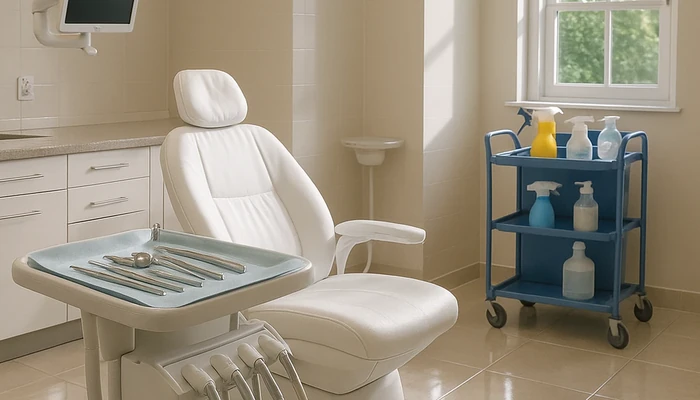
- Adopt mobile caddies or rolling trolleys for quick, clutter-free cleaning transitions.
Compliance with Dental Infection Prevention Standards
Efficient cleaning is only valuable if it aligns with best-practice regulations. Dental offices should adhere to guidelines mapped by relevant authorities.
- Follow infection prevention frameworks from organizations like the AORN and ADA for procedural guidelines.
- Document and retrain staff on CDC/EPA protocol updates annually.
- Ensure all cleaning routines meet or exceed local health code requirements.
Addressing High-Risk and Sensitive Areas: What Needs Special Attention?
Certain zones and equipment in a dental office harbor greater risks and require advanced care:
- X-ray rooms: Use only approved wipes on electronics, taking care to avoid solution seepage.
- Vacuum lines and suction: Regular flushing with enzyme cleaners prevents biofilm buildup.
- Digital devices: Sanitize touch screens, keyboards, and card readers with non-abrasive, non-corrosive wipes.
Stay alert to manufacturer recommendations for disinfecting sensitive dental tech.
Minimizing Chemical Exposure and Supporting Safer Air Quality
Small spaces intensify exposure to cleaning agents. Balance hygiene with safety by:
- Choosing low-VOC, fragrance-free disinfectants when possible
- Running air purifiers or upgrading HVAC filtration after major cleaning tasks
- Allowing ample drying and airing-out time before reopening rooms to staff or patients
Explore more about reducing chemical load from our resource on reducing chemicals in dental cleaning.
Training, Documentation, and Accountability in Small Teams
Consistent results require continuous staff training and clear records. Strategies for smaller dental practices include:
- Annual refresher courses on cleaning protocols and product usage
- Visible posted schedules for zone-specific tasks
- Check-in/check-out logs to confirm task completion
- Quick “huddle” reviews to reinforce priorities based on weekly trends
Integrating Professional Cleaning Services: When and How to Outsource
Many small dental offices benefit from hiring facility cleaning professionals. Here’s when to consider outsourcing:
- Periodic deep cleaning that exceeds staff bandwidth or expertise
- Specialized tasks (air vent sanitation, terminal cleaning, post-construction readiness)
- Extended hours or high patient turnover that challenge daily routines
When vetting a provider, look for teams with experience in health facility protocols and a commitment to transparent communication and flexible scheduling, such as those offered by CHI Cleaning Services.
Comparing DIY Staff Cleaning With Professional Dental Facility Services
- Staff-Led: Direct control, staff familiarity; may lack depth for periodic deep tasks.
- Professional: Specialized tools, regulatory expertise, efficient for time-intensive or hard-to-reach cleaning zones.
Hybrid models—routine tasks in-house, scheduled deep cleans by professionals—offer the best of both approaches for most dental offices in Chicago and similar areas.
Addressing Patient Perception and Comfort through Cleaning
Visible cleanliness influences patient trust and satisfaction. You can reinforce positive perceptions by:
- Ensuring visible cleaning activity before/after appointments
- Placing compliance signage (e.g., “This treatment zone is sanitized between every appointment”)
- Maintaining odor-free, well-ventilated reception and waiting rooms
Patient education brochures about your infection control protocol show an extra layer of professionalism.
Dealing With Spills, Accidents, and Immediate Hazards
Prompt action on spills and biological hazards is essential in small dental practices to maintain compliance and safety. Include these fast-response steps:
- Identify and isolate the hazard immediately
- Use proper PPE for all biological spills
- Follow EPA/OSHA disposal and disinfection protocol
- Update the incident log with times and actions taken
Evaluating Cleaning Outcomes: What to Check After Cleaning
Establish post-cleaning inspection steps to assure nothing is missed:
- Randomly swab high-touch areas for ATP/bioburden (where feasible)
- Visual checks for streaks, residue, and debris—especially on dental chairs, lights, and trays
- Patient feedback on visual and odor impression
Document findings for quality improvement. Refer to resources like our insight on preparing an impeccable dental care environment.
Adapting Techniques in Response to New Guidance and Emerging Threats
Regulatory standards and pathogen threats evolve. Stay updated by:
- Subscribing to updates from APIC and reviewing AORN guidelines regularly
- Assigning one staff member to monitor and disseminate new recommendations
- Promptly updating checklists and training as standards change
FAQs: Efficient Cleaning Techniques for Small Dental Offices
- What makes dental office cleaning different from general office cleaning?
- Dental cleaning requires specific disinfection protocols, frequent patient area turnarounds, and strict infection prevention measures not present in general offices.
- How often should a small dental office deep clean?
- Deep cleans should occur at least monthly for patient zones, with quarterly enhanced tasks based on risk assessments and patient load.
- Can routine cleaning be performed by non-medical staff?
- Daily non-clinical tasks can be done by trained staff, but tasks involving hazardous waste, sterilization, or regulated protocols should follow strict training and compliance procedures.
- What are the most commonly missed spots during cleaning?
- Commonly overlooked areas include under dental chairs, light switches, X-ray apparatus, keyboards, and air vents.
- Which products are safe for sensitive dental equipment?
- Always use manufacturer-recommended, EPA-approved, non-abrasive disinfectants for sensitive equipment to avoid damage.
- How can I ensure compliance with regulations?
- Implement regular staff training, maintain up-to-date cleaning protocols, and monitor with periodic internal audits or professional service review.
- What is the best way to store cleaning chemicals in a small space?
- Designate a locked, ventilated cabinet out of patient areas; keep only essentials close to point-of-use, and maintain up-to-date labels and safety sheets.
- Should small dental offices outsource cleaning?
- Outsourcing is recommended for deep cleans, regulatory compliance, or when staff time is limited. Choose services experienced in dental or medical facilities for best results.
- Do patients notice when a dental office is regularly cleaned?
- Yes. Visible cleaning activity and immaculate spaces enhance patient confidence and satisfaction.
Summary and Next Steps
Implementing efficient cleaning techniques in small dental offices requires structured zoning, disciplined routines, product safety, documentation, and periodic external review. By leveraging detailed checklists, aligning with authoritative guidance, and adopting the right outsourcing when needed, even compact clinics can achieve hospital-grade hygiene and a welcoming atmosphere.
Ready to optimize your cleaning? For those requiring recurring or specialized dental facility services, schedule a Dental office cleaning or explore options for Office cleaning service with an experienced partner prioritizing health and detail.
About CHI Cleaning Services
CHI Cleaning Services helps households and businesses in Chicago, Illinois and nearby areas keep their spaces clean and healthy. Our team specializes in recurring house cleaning, deep cleaning, move out cleaning, office cleaning, and facility cleaning services tailored for dental clinics and medical environments. We maintain strict adherence to cleaning standards, use professional-grade equipment, and train our staff in up-to-date health and safety protocols. Partner with us for transparent communication, committed attention to every detail, and a genuine focus on long-term client well-being.
cleaning contractors in the city of chicago, dental clinic cleaning, dental office cleaning in chicago, dental office cleaning Gold Coast, dental office cleaning Glencoe IL, dentist office cleaning Highland Park, dental office cleaning in Lake Bluff, dentist office cleaning Wllowbrook IL, dental office cleaning Bensenville, dental practice cleaning Elgin IL
