 Skip to content
After-Hours Medical Office Cleaning: What Patients Should Never See the Next Morning
When patients enter a medical office first thing in the morning, their expectations go far beyond a quick dust and vacuum. Every detail—from the gleam of high-touch surfaces to the absence of any lingering odors—signals whether they trust the care environment. After-hours medical office cleaning: what patients should never see the next morning is the difference between patient reassurance and a credibility gap.
In this deep dive, you’ll learn what thorough after-hours cleaning really entails, critical hospital-grade protocols, the visual and hidden red flags, and insider checklists professional cleaners use. Whether you manage a clinic, run a dental office, or contract out facility cleaning, this guide equips you to evaluate, supervise, and guarantee a medical space that exceeds hygiene expectations.
What Defines an Impeccable After-Hours Medical Office Cleaning?
While many people recognize the importance of clinical hygiene, few realize the specific standards set for medical office cleaning when patients aren’t present. Impeccable after-hours cleaning means that every patient-facing area—waiting room, exam rooms, restrooms, and staff spaces—is not only visually clean but also free from contamination risks and psychological triggers that undermine trust.
- No visible dust, debris, stains, or fingerprints anywhere, especially on door handles, counters, and medical equipment.
- No residue on floors, whether tile, vinyl, or carpet—no drips, sticky spots, or cleaning chemical trails.
- Zero lingering smells: Only a very subtle, clean scent or no scent at all—not strong fragrances covering up issues.
- No evidence of previous patients: No tissues, bits of paper, glove fragments, bandage leftovers, or product wrappers.
Why After-Hours Cleaning Is Critically Different in Medical Offices
Medical office cleaning goes beyond typical commercial or residential standards for several reasons:
- Stringent infection prevention: Reduction of cross-contamination risks between patients and staff (CDC infection prevention guidelines).
- Patient impressions: Cleanliness directly affects patient confidence, repeat visits, and compliance with treatment plans.
- Regulatory compliance: Medical offices are subject to OSHA, HIPAA, and local public health codes.
- Complex surfaces and equipment: Specialized attention to touchpoints and medical-grade disinfectants are mandatory.
Top 10 Things Patients Should Never Encounter After After-Hours Cleaning
To maintain a trustworthy and safe environment, these are the foremost “never see” items the next morning:
- Leftover sharps containers or misplaced medical waste bags
- Dirty sinks or unflushed toilets in patient or staff restrooms
- Streaks or sticky residue on counters, exam tables, and chairs
- Fingerprints or handprints on glass doors, reception dividers, or light switches
- Full trash cans or visible disposal bags in public areas
- Dirty, used personal protective equipment (gloves, masks) on surfaces or floors
- Visible dust on medical equipment, supply carts, or vents
- Water stains, splashes, or mop marks on floors
- Unstocked hand sanitizer or empty soap dispensers
- Unpleasant, musty, or chemical odors
High-Risk Zones That Require Extra Scrutiny After Hours
Not all areas are created equal. After-hours cleaning protocols focus on:
- Restrooms: Disinfecting, restocking, and clearing bins. Exam rooms and shared spaces may also have staff-only restrooms that need the same attention.
- Waiting rooms: Upholstery spot checks, wiping all armrests, and removing any literature or objects left behind.
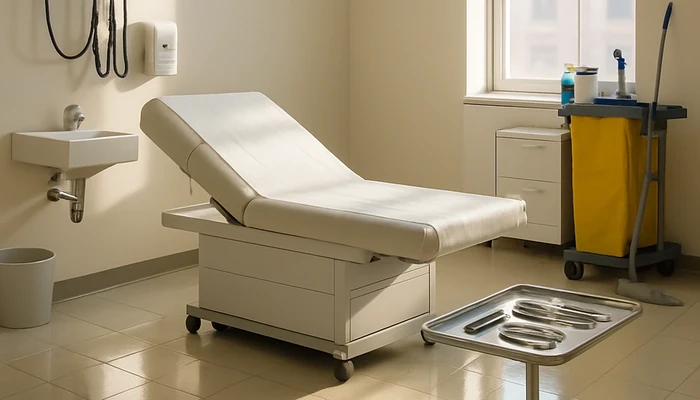
- Exam rooms: Tables must be disinfected, paper replaced, and all small equipment wiped down.
- Reception & high-traffic counters: Pens, keypads, and signature pads cleaned and sanitized.
- Supply closets & back offices: Ensure no chemical spills or unlocked storage, as staff safety is also at stake.
After-Hours Medical Office Cleaning Checklist: The Non-Negotiables
Medical cleaning checklists are granular and methodical. The table below organizes critical steps per area:
| Area | Essential Actions | Checks Before Leaving |
|---|---|---|
| Waiting Room |
|
|
| Restrooms |
|
|
| Exam Rooms |
|
|
| Reception Area |
|
|
Professional vs. DIY: What Sets Medical Office Cleaning Apart?
Professional cleaning teams are equipped with hospital-grade disinfectants, proven checklists, and a rigorous clock-in/clock-out process. By contrast, in-house or DIY cleaning often overlooks critical compliance points:
- Proper hand hygiene protocols before and after handling waste or supplies
- Zoning: Cleaning low-risk areas first, then high-risk (restrooms, exam tables, waste), using color-coded cloths/mops
- Documentation for audits or compliance reviews
- Certified safe use of chemical disinfectants—never mixing incompatible products
While in-house staff may be well-intentioned, only trained professionals deliver the repeatable, detail-oriented results medical spaces require.
Common Red Flags Signaling Subpar After-Hours Cleaning
If you notice any of these red flags, it’s time to revisit your cleaning protocols or speak to your vendor:
- Faded mop water lines, indicating a used or unclean mop and increased risk of spreading germs
- Overpowering scents covering up underlying odors (often a sign of rushed jobs)
- Filled trash bins at the start of the day, especially in restrooms and public areas
- Soap or sanitizer dispensers unopened or untouched, hinting they weren’t checked
- Sticky residue on accessible surfaces or supply carts
The Role of Cleaning Schedules and Log Sheets in Medical Office Hygiene
Consistent, documented cleaning is fundamental to medical office trust:
- Nightly log sheets: Completed by the cleaning team, checked by facility management each morning.
- Area-specific checklists: Custom for each space—what gets cleaned, in which order, with which products.
- Incident notations: Reporting spills, damages, or issues for maintenance follow-up.
- Contingency records: For unexpected events such as patient illness or bio-spill cleanup.
This documentation is crucial for compliance, liability protection, and continuous quality improvement.
Disinfection Protocols: Products, Contact Times, and Surfaces
True after-hours medical office cleaning uses EPA-registered, healthcare-grade disinfectants—not household cleaners. Factors include:
- Dwell time: Every disinfectant requires surfaces to remain wet for a prescribed period (usually 2–10 minutes) to ensure efficacy.
- No shortcuts: Wiping off product too soon or using dry wipes undermines all prior cleaning steps.
- Color-coded systems: Separate supplies for restrooms, general areas, exam rooms to avoid cross-contamination.
Special Considerations: Medical Waste and Sharps Disposal
Patients or inspectors should never see evidence of unsecured waste. After-hours checklists must include:
- Locking all sharps boxes and returning them to secure locations.
- Ensuring red biohazard bags are tied, labeled, and placed in proper bins outside of patient areas.
- Visual sweep for stray gloves, bandages, or packaging.
Touchpoint Mastery: The Most Missed Surfaces After Hours
Research (CDC) shows that some of the highest-risk surfaces are most often neglected:
- Light switches
- Chair arms and exam table levers
- Computer keyboards and mice
- Faucet handles, especially in staff-only sinks
- Clipboards and patient sign-in stations
These are critical to include in every after-hours cleaning checklist. Missing them can break the chain of infection prevention.
Patient Perspective: The Psychological Impact of First-Morning Impressions
It’s not just about germs. Patients judge the competence of care by what they see and smell. Even a fingerprint on a glass divider or a piece of paper under a chair can dent overall trust, sowing seeds of doubt about treatment standards.
- Expectation management: Most patients, especially in the age of heightened infection risk awareness, expect medical spaces to sparkle.
- First impressions are lasting: Studies show that cleanliness and order in healthcare environments directly inform patient loyalty and how they rate their experience, even before seeing a clinician.
What Sets a Reliable Cleaning Company Apart in Medical Environments?
The cleaning partner you choose will either enhance or undermine your medical office’s reputation. Look for professionals who:
- Follow medical-specific protocols demonstrated in detailed, written checklists
- Train staff in HIPAA and OSHA compliance; all cleaners know how to handle sensitive areas and documentation
- Use surface-appropriate products—no shortcuts or “one-size-fits-all” sprays
- Maintain unbroken communication and log reporting—including incident response abilities
CHI Cleaning Services, for example, applies flexible scheduling, hospital-grade systems, and transparent documentation tailored to medical clients’ needs. For other facility cleaning (like daycare or deep cleaning), see Daycare cleaning or Deep cleaning services.
The Fine Details Patients Often Notice (But Cleaning Staff Might Miss)
Beyond the “textbook” items, many details can undermine the impression of a spotless office:
- Tiny spit or streak marks near sinks
- Tight corners or under-furniture dust bunnies
- Old adhesive residue from previous postings or tape
- “Sticky buttons” on kiosks, keypads, or remote controls
- Scuffed door plates and kick guards
Systematic attention to these details is a hallmark of a premium after-hours cleaning job.
Sample End-of-Shift Supervisor Walkthrough for Quality Assurance
- Visual sweep of all patient areas: Ensure nothing detracts from first impressions.
- Touch-test: Run a finger across baseboards, ledges, and corners.
- Odor check: Step into each zone, pause, and register scents.
- Restock confirmation: Verify supplies match log sheet entries for soaps and sanitizers.
- Waste and sharps bins: Confirm external collection, no overflow, all locked.
This 5-step final check ensures nothing is left to chance before the office reopens.
How Medical Office Cleaning Differs from Dental, Spa, or Therapy Clinic Cleaning
Each facility has unique needs. For instance, dental clinics face additional risks with saliva contamination (Dental clinic cleaning best practices). Spas and therapy clinics, meanwhile, prioritize textiles and shared equipment. Yet, the core principle holds true: patients should never see evidence of prior use, spills, or suboptimal hygiene.
- Dental: Higher risk surfaces, more frequent disinfection, and specialized PPE for cleaning staff.
- Spa/Therapy: Attention to linens, scent control, and privacy barriers.
- General medical: Infection prevention, equipment-focused cleaning, and public perception emphasis.
Signs It’s Time to Audit or Change Your Medical Office Cleaning Provider
If you notice recurring lapses, it’s prudent to audit your provider:
- Multiple negative patient comments about cleanliness.
- Regulatory inspectors flagging missed procedures.
- Breakdown of cleaning logs or inconsistent completion.
- Missed supply restocking or product spill residue.
Switching to a provider specialized in healthcare cleaning, like CHI Cleaning Services, helps avoid compliance issues and improves patient satisfaction. If you need office-wide solutions, consider Office cleaning service.
Enhancing Staff and Patient Safety Between Professional Cleanings
Even with rigorous after-hours cleaning, daily staff habits matter:
- Encouraging hand hygiene with well-stocked sanitizer stations
- Spot clean spills immediately; report to cleaning team for proper disinfection
- Empower staff to call out/flag any missed areas or persistent issues
- Regular refresher training regarding infection prevention measures
For more on maintaining public health standards, see Expert cleaning frameworks for homes and facilities and Clinic environment checklists.
FAQ: After-Hours Medical Office Cleaning Standards and Expectations
- What makes after-hours cleaning in medical offices different from regular office cleaning?
Medical office cleaning requires infection prevention, high-frequency touchpoint disinfection, and strict compliance with healthcare regulations—more than typical office cleaning routines. - How often should high-touch surfaces be disinfected?
Ideally, every evening after closing and, in high-traffic offices, midday as well. Frequent cleaning is essential to minimize risk. - Can non-medical cleaning companies perform adequate after-hours cleaning?
While they may cover visual cleaning needs, only companies with medical cleaning experience understand and implement infection control and regulatory requirements. - What are the risks of missed cleaning tasks in healthcare environments?
Increased chance of infection outbreaks, compliance violations, negative patient perception, and possible legal ramifications. - How is quality control handled in after-hours cleaning?
Professional cleaners use checklists, supervisor walkthroughs, and log sheets signed nightly; managers review these each morning. - Are scented cleaners recommended in medical offices?
No. Only neutral or unscented products, as strong fragrances can irritate sensitive patients or mask underlying hygiene issues. - Should patient areas be restocked after every cleaning?
Absolutely. All hand sanitizer, tissues, gloves, and soap dispensers should be checked and refilled per protocol at the end of each cleaning shift. - What role does staff hygiene play between after-hours cleanings?
Staff are the first defense. Proper hand washing and prompt reporting of spills or issues support ongoing hygiene between professional cleanings. - Can the same cleaning protocols be used for dental or spa facilities?
Core principles are similar, but dental and spa facilities have unique touchpoints and disinfection routines. Always tailor checklists to the specific space. - How do I select the right medical office cleaning provider?
Look for transparent checklists, healthcare-compliant product use, staff training, and client testimonials focused on medical facilities.
Summary and Next Steps: Elevate Your Medical Office Cleaning Standards
After-hours medical office cleaning is an invisible but critical part of patient care. Every morning, what patients don’t see becomes the foundation for trust and safety. Use the principles and checklists above to audit or upgrade your cleaning routines. Ready to partner with a company that makes medical office hygiene worry-free? Book a medical cleaning solution with confidence.
About CHI Cleaning Services
CHI Cleaning Services specializes in residential and commercial cleaning, with a focus on recurring house cleaning, deep cleaning, move-out cleaning, office, and facility cleaning across Chicago, Illinois and nearby areas. Our professionally trained staff follow detailed checklists and quality standards, using the right products and protocols for every environment. We are committed to transparent communication, safety, and exceeding client expectations in every cleaning project. Discover CHI Cleaning Services at http://cleaningserviceschi.com/.
professional cleaning services, clinic cleaning Cleaning Services Chicago, medical office cleaning, medical office cleaning Lansing IL, doctor office cleaning Itasca, medical office cleaning in West Loop, medical office cleaning in Round Lake IL, medical building cleaning North Riverside, clinic cleaning Aurora IL, healthcare facility cleaning Palatine IL
