
HEPA Vacuums vs Standard Vacuums: What Changes After Remodeling
Remodeling your home or business can breathe new life into a space, but it also leaves behind a stubborn layer of dust and contaminants. Most people underestimate how sharply indoor air quality and cleanliness can be affected—right down to the choice of vacuum. In this guide, we demystify the differences between HEPA vacuums and standard vacuums after remodeling, analyze crucial air quality factors, and break down professional strategies for a truly clean, healthy environment. You’ll discover when and why HEPA filtration is vital after renovation, practical cleaning checklists, and how to select the right approach whether you’re a homeowner, landlord, property manager, or business owner. Trust CHI Cleaning Services to clarify what changes after remodeling when it comes to vacuuming—and keeping every surface safe and dust-free.
Understanding Renovation Debris: Hidden Dusts and Airborne Risks
After any renovation, what remains is more than just visible dirt. Microscopic dust, drywall silt, paint specks, insulation fibers, and construction residues settle deep into carpets, upholstery, vents, and tiny floor cracks. Unlike ordinary household dust, these particles often include toxins like silica, fine wood, plaster dust, and VOCs, all of which degrade indoor air quality and may irritate allergies or asthma.
- Common post-remodeling contaminants: drywall dust, fiberglass, adhesive residues, paint flakes, soot, and particulate matter smaller than 2.5 microns (PM2.5).
- These particles are stubborn—easily overlooked by standard vacuums and dangerous if recirculated back into your air.
- Proper cleanup requires specialized equipment and repeated steps to fully capture and remove fine dust.
Knowing what lingers after your renovation is the foundation for understanding why vacuum choice matters.
For more on post-construction dust risks, see EPA post-construction recommendations.
The Core Differences: HEPA vs Standard Vacuum Filtration Explained
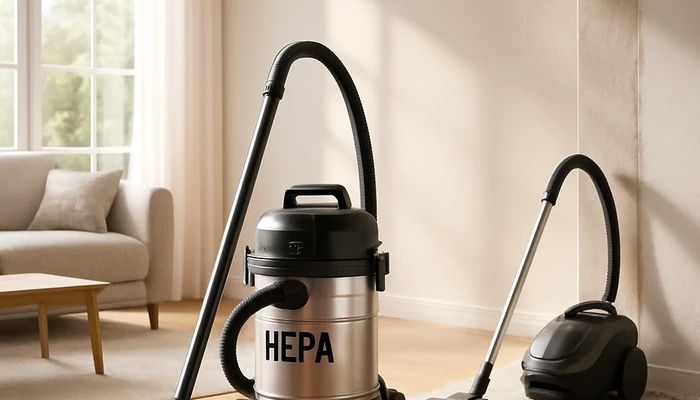
Standard (non-HEPA) vacuums rely on basic filters that capture larger debris, but often miss the finest dust—blowing it back into the air as you clean. HEPA (High Efficiency Particulate Air) vacuums, however, are certified to trap at least 99.97% of particles as small as 0.3 microns. This single difference has a massive impact on indoor air after remodeling.
- Standard vacuum filters: Suitable for routine cleaning, but ineffective for post-renovation dust and allergens.
- HEPA filtration systems: Create real containment, essential for spaces needing healthy, dust-free air (especially after major construction).
- HEPA vacuums often have sealed bodies and additional pre-filters or motor filters to prevent leakage of trapped particles.
For further details on HEPA filter requirements and testing, trusted industry resources like the HVI provide up-to-date standards.
Why Post-Renovation Cleaning Demands More: Scientific Evidence
Scientific studies confirm that after renovation, airborne particulates can remain elevated for days to weeks without targeted removal, particularly when standard vacuums are used. This can negatively affect respiratory health, especially in children, elderly residents, and those with sensitivities.
- PM2.5 and PM10 levels are often significantly higher after construction.
- HEPA vacuums have been proven to decrease relaunch of allergens and construction residues by up to 90% compared to non-HEPA models.
- Even multiple passes with a standard vacuum won’t extract deeply embedded micro-dust from corners or carpeting layers.
The difference is not cosmetic: it’s about air quality you can feel and proof you can measure.
Checklist: When Is a HEPA Vacuum Needed After Remodeling?
Should you always use a HEPA vacuum after a remodel? The answer depends on several factors:
- Was there significant drywall, sanding, painting, or demolition?
- Is anyone in the space prone to allergies or asthma?
- Are you cleaning carpets, upholstery, or HVAC vents?
- Is the renovation in a nursery, medical, or food-prep area?
- Do you notice visible fine dust or experience odors weeks afterward?
If you answer yes to any of the above, a HEPA vacuum is strongly recommended over a standard model. Post-renovation checklists used by pros—like those referenced in Mastering Post-Construction Cleaning: Best Practices—emphasize the critical role of filtration in overall air health.
Step-by-Step: Professional Vacuuming Sequence After Construction
Professional cleaners follow a systematic order to maximize dust removal with HEPA equipment:
- Start at the highest point (ceilings, vents, light fixtures) and work down.
- Use a HEPA vacuum to remove dust from walls, window sills, and trim before floors.
- Vacuum hard floors using soft brush attachments, then switch to specialized carpet tools for rugs and upholstery.
- Repeat vacuuming in high-traffic and high-settling zones at least twice.
- Check and change vacuum bags/filters frequently during heavy-duty cleaning.
Each step prevents cross-contamination and ensures no fine particulates are left behind. This sequence is detailed in guides like Effective Post-Renovation Cleaning Inspection.
Comparative Table: HEPA vs Standard Vacuums for Post-Remodeling
| Feature | Standard Vacuum | HEPA Vacuum |
|---|---|---|
| Particle capture size | 3–10 microns | 0.3 microns (99.97% capture) |
| Recommended use | Routine, non-construction cleaning | Post-construction/remodeling, allergen control |
| Allergy/asthma benefit | Minimal | Significant improvement |
| Cost/maintenance | Lower initial & replacement fees | Higher (due to specialized filters) |
| Performance in removing fine dust | Poor to moderate | Excellent |
| Often used by pros? | Rarely for post-construction | Industry standard |
Contaminant Hotspots: What Standard Vacuums Miss After Remodeling
After a renovation, certain zones in your home or business are especially prone to dust accumulation and require a focused approach.
- Carpets and area rugs: Deep fibers trap fine debris invisible to the naked eye.
- HVAC vents and returns: Unless professionally cleaned and vacuumed, ducts recirculate micro-particles.
- Window sills, trim, and light fixtures: Should be vacuumed before wiping to avoid spreading dust.
- Behind appliances and inside cabinetry: These hidden zones can become dust reservoirs.
Standard vacuums may offer a superficial clean but leave these hotspots unaddressed, putting family, tenants, or staff at risk. See techniques for these areas in Expert Recommendations For Cleaning Areas After Construction Work.
Room-by-Room Strategies: HEPA Versus Standard in Real-World Cleaning
Kitchens: Construction dust easily contaminates food prep surfaces and appliances. A HEPA vacuum ensures safe removal of fine particles around sinks, inside cabinets, and near vents.
Bathrooms: Grout haze, builder’s residue, and caulk fragments settle into corners and flooring. Only a HEPA vacuum with tight brush attachments fully captures these.
Bedrooms/nurseries: Sensitive occupants benefit most from HEPA filtration on carpets and mattresses.
Living rooms/workspaces: Use HEPA vacuums for upholstered furniture, electronics, and air filters to maintain healthy air.
- Always vacuum before any wet-mopping or wiping to prevent dust from being spread or embedded further.
- Re-vacuum 24–48 hours later to catch resettled particles.
Room-by-room cleaning steps can be cross-checked against the detailed frameworks in Revamp and Clean: Renovation Cleaning.
Protecting Indoor Air Quality: What Filtration Means for Health
The primary benefit of HEPA filtration after remodeling is improved air quality, which translates directly to better health and comfort for everyone using the space. Elevated dust exposure has been linked to:
- Persistent coughing and respiratory irritation
- Aggravation of allergies or asthma
- Reduced workplace productivity or sleep quality
- Potential long-term effects from exposure to fine wood, silica, or chemical residues
Investing in the right post-construction vacuuming—and confirming crews use HEPA equipment—creates safer environments for families, staff, and visitors alike. For a sustainable approach, see Removing Construction Dust In Environmentally Friendly Ways.
Special Facility and Commercial Needs: Why Standards Matter
In medical offices, daycares, commercial kitchens, and gyms, air cleanliness and surface hygiene are strictly regulated. After remodeling, these environments are especially vulnerable to dust-related complications and cannot be cleaned with low-grade equipment. HEPA vacuums have become the industry standard in Chicago and beyond for facility cleaning after construction—not just for appearance but for compliance and health codes.
- Ask your cleaning provider if their teams are trained in post-construction protocols and use HEPA systems.
- Request documentation of equipment maintenance or filter changes on request, especially for sensitive settings.
Professional Cleaning Company Checklist: What to Ask Before You Book
Finding the right cleaning provider means knowing what questions to ask:
- “Do you use commercial-grade HEPA vacuums for all post-renovation work?”
- “How do you control dust travel during and after cleaning?”
- “Do you follow a written or digital checklist to ensure every room and surface is covered?”
- “What is your process for cleaning carpets, ducts, and high-touch areas?”
- “Can you provide details on your cleaning staff’s training, products, and safety standards?”
CHI Cleaning Services prioritizes these standards, using trained staff and strict quality controls on every project. For tailored help, consider a post-construction cleaning appointment.
Long-Term Maintenance After Remodeling: Keeping Dust Away
Even after a thorough post-renovation clean, micro-dust can continue settling for days. Here’s how to maintain your space:
- Run a HEPA air purifier for 1–2 weeks after major construction.
- Re-vacuum carpets, rugs, and soft furniture 48 hours after the main cleaning.
- Dust shelves, electronics, and window sills with microfiber cloths frequently.
- Change HVAC or air purifier filters monthly in the first three months post-renovation.
Stay proactive to ensure your space stays as healthy as possible, especially in high-traffic areas or where pets are present.
Eco-Friendly and Safe Disposal: The Final Step
Disposal of vacuum contents after remodeling is not trivial—fine dust and debris can irritate sanitation workers or contaminate recycling streams if not handled properly. If you are clearing large amounts of dust, always:
- Double-bag vacuum bags or dust canisters before placing in regular trash.
- Never shake out bags or filters indoors.
- Wipe vacuum exteriors and change/clean all filters per manufacturer guidelines.
For detailed local compliance, refer to resources like EPA recommendations or consider professional disposal options as outlined in Guide to Disposal of All Construction Waste on Your Property.
Signs You Need Professional Help: When DIY Isn’t Enough
DIY vacuuming after a light paint touch-up may be sufficient. But you need professional services if:
- Renovation work included drywall, sanding, or heavy debris;
- You or your family experience respiratory symptoms post-renovation;
- You find persistent white or grey dust long after your own cleaning;
- You’re managing Airbnb, office, or tenant properties that require turn-key readiness and compliance;
- Special surfaces (e.g., stone, delicate floors) or sensitive electronics are involved.
Professionals not only bring HEPA vacuuming and multistep cleaning but handle all hidden nooks—leaving the space ready for use faster and safer.
Soft CTA: Explore Specialized Cleaning Services
If your space needs deeper cleaning after renovation, find the right solution for your property:
Rest assured CHI Cleaning Services brings professional-grade equipment and detail-oriented checklists to every job.
FAQs: HEPA Vacuums vs Standard Vacuums After Remodeling
- Can a standard vacuum remove post-construction dust?
- Standard vacuums struggle to pick up microscopic renovation debris and may recirculate it into the air. HEPA vacuums are specifically designed to trap these fine particles, making them the preferred option after any remodeling.
- Is HEPA vacuuming always required after renovation?
- HEPA vacuuming is strongly advised after any significant construction, especially where sanding, drywall, or painting was involved. For smaller, light cosmetic updates, standard vacuums may suffice if followed by frequent cleaning, but the deepest clean requires HEPA filtration.
- How can I tell if my cleaning company uses HEPA equipment?
- Ask directly and request details about their vacuum model and filtration certifications. Reputable providers, such as CHI Cleaning Services, reference HEPA standard usage in their services.
- Will HEPA vacuuming completely eliminate allergens and dust?
- HEPA filtration significantly reduces airborne contaminants and residue, but multiple passes and additional measures (like air purifiers) improve results even further.
- Should I run an air purifier in addition to vacuuming after remodeling?
- Yes, running a HEPA air purifier for several days after construction helps further reduce dust and maintain good air quality as particles continue to settle.
- Can I use a HEPA vacuum for daily cleaning?
- Absolutely—HEPA vacuums are effective and safe for ongoing cleaning, with the added benefit of improved air filtration, although filter replacements cost more than on standard units.
- How frequently should vacuum bags or filters be changed after remodeling?
- Change HEPA filters or bags more often than usual in the first weeks post-renovation, as fine dust quickly fills them and can strain vacuum motors.
- Does HEPA vacuuming make a difference in offices or commercial spaces?
- Yes—the benefits in occupant comfort, dust reduction, and regulatory compliance make HEPA cleaning the industry standard for office, school, medical, and hospitality settings.
Wrap-Up: Choosing the Right Vacuum After Your Remodel
Using the proper vacuum is more than a technicality—it’s about safeguarding your indoor environment after construction. For deep cleaning and air quality, HEPA vacuums clearly outperform standard models by capturing the microscopic debris left by remodels. Post-renovation, entrust your space to those who use commercial-grade HEPA equipment and understand the unique dust challenges. Whether you clean yourself or call in pros like CHI Cleaning Services, following this guide helps protect your investment, your health, and your peace of mind.
About CHI Cleaning Services
CHI Cleaning Services helps households and businesses in Chicago, Illinois and nearby areas keep their spaces clean and healthy. Our fully trained cleaning staff specialize in recurring home and apartment cleaning, deep cleaning, post-construction and move-out cleaning, as well as office and specialized facility cleaning. With a focus on consistent checklists, professional equipment (including commercial-grade HEPA vacuums), and a commitment to long-term client relationships, we deliver reliable, detail-oriented results. Choose CHI Cleaning Services for transparent communication, clear pricing, and a safer, more comfortable environment after remodeling or any cleaning challenge.
cleaning contractors, construction cleanup Chicago, dust removal cleaning Chicago, after construction cleaning Elgin, dust removal cleaning Algonquin IL, new construction cleaning Wheeling, builders cleaning Great Lakes IL, renovation cleaning Albany Park, construction cleanup Lake Bluff IL, after renovation cleaning Alsip IL