Terminal Cleaning vs Routine Cleaning in Chicago Medical Offices: When Each Is Needed
Maintaining a safe, hygienic, and compliant environment is paramount in Chicago medical offices. Yet knowing exactly when terminal cleaning is required versus routine cleaning can be confusing—even for diligent practice managers. This definitive guide will help you clarify the distinction, identify triggers for each approach, and implement proven cleaning protocols that prioritize patient well-being, staff safety, and regulatory compliance. With a blend of checklists, practical decision points, and essential guidance tailored for Chicago healthcare environments, you’ll walk away knowing when terminal cleaning is essential, when routine cleaning suffices, and how to get both right. Terminal Cleaning vs Routine Cleaning in Chicago Medical Offices: When Each Is Needed isn’t just an abstract comparison; it’s your step-by-step roadmap for infection control and peace of mind. Trust CHI Cleaning Services to clarify every key detail.
Clarifying Terminology: What Is Terminal Cleaning in Medical Offices?
“Terminal cleaning” refers to the procedure-intensive, top-to-bottom disinfection process performed after certain high-risk events within a medical facility. Unlike regular daily or periodic cleanings, terminal cleaning involves the complete removal of microbial threats from all surfaces—especially in patient care, treatment, or procedure rooms—after an infectious patient visit or at the end of a clinical day. The goal is simple: eradicate any potential pathogens and break the chain of infection, protecting subsequent patients and staff.
- Goal: Comprehensive disinfection after contamination or at end of usage cycle
- Components: Surface disinfection, floor and wall washing, cleaning behind and underneath equipment, disposal of infectious waste
- Triggers: Discharge of patients with contagious diseases, post-procedure, or after known contamination (e.g., blood, body fluids)
Defining Routine Cleaning in Medical Settings
Routine cleaning, sometimes called “daily cleaning,” is the regular maintenance process performed to keep medical offices visually tidy, dust-free, and safe for day-to-day use. Its focus is on general hygiene, touchpoint cleanliness, and demonstrating an ongoing commitment to health standards. While not as exhaustive as terminal cleaning, routine cleaning is still governed by strict protocols suited to healthcare spaces.
- Goal: Ongoing basic sanitation to prevent general buildup of dust, debris, and organisms
- Components: Wiping, vacuuming, trash removal, high-touch surface disinfection, restroom cleaning
- Frequency: Performed daily or multiple times per week—often after hours
Table: Side-by-Side Comparison—Terminal vs Routine Cleaning Tasks
| Task | Routine Cleaning | Terminal Cleaning |
|---|---|---|
| Dust removal from surfaces | ✔ | ✔ |
| Disinfection of high-touch points | ✔ | ✔ |
| Trash & infectious waste removal | ✔ (trash only) | ✔ (with infection controls) |
| Floors and baseboard cleaning | ✔ (surface cleaning) | ✔ (deep scrubbing/washing) |
| Cleaning behind furnishings/equipment | ✖ | ✔ |
| Ceiling/wall cleaning | ✖ | ✔ |
| Post-infectious incident decontamination | ✖ | ✔ |
| Antimicrobial product use on all surfaces | High-touch only | ✔ (all surfaces) |
| Documentation & compliance logs | Basic | Detailed, for regulatory review |
When Is Terminal Cleaning Required in Medical Offices?
Because terminal cleaning demands more time, resources, and trained staff, it’s triggered only by specific situations in Chicago medical offices. Recognizing these critical moments ensures your infection control protocol matches true risk—neither under- nor over-applying intensive procedures.
Common Triggers in Outpatient and Clinical Settings
- After a patient with a known infectious illness is discharged
- Following procedures with visible blood, bodily fluid, or biohazardous spills
- When transitioning between infectious disease cases (e.g., COVID-19, MRSA)
- After isolation room use
- Before reassigning multi-use procedure rooms between patient types
- At scheduled intervals in higher-acuity clinics (e.g., urgent care, specialty centers)
Who Decides?
Triggers for terminal cleaning are generally set by a combination of CDC guidelines, infection control best practices, and state/local public health regulations. In medical offices without on-site infection preventionists, responsibility often falls to medical office managers or outsourced cleaning supervisors to ensure compliance.
How Often Should Routine Cleaning Occur in Healthcare Environments?
Routine cleaning frequency is determined by risk, traffic, and the nature of medical services provided. In typical Chicago medical offices, this means:
- Daily: Reception areas, waiting rooms, restrooms, high-traffic corridors, nurse stations
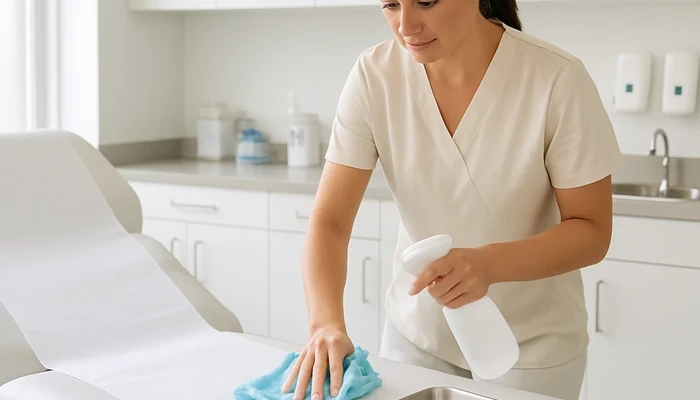
- After each patient encounter: Exam tables, counters, high-touch tools
- Weekly/Monthly: Less-frequently used treatment spaces, storage closets, seldom-touched surfaces
High-acuity spaces and specialty clinics may require enhanced protocols based on their exposure level. Tailoring your routine cleaning to your facility type is key.
Standard Operating Procedures: Routine Cleaning vs Terminal Cleaning
Effective infection control in Chicago’s medical offices demands written protocols for both cleaning types. These ensure staff and professional partners know exactly what’s expected—reducing cross-contamination risk and supporting regulatory audits.
Routine Cleaning SOP Essentials
- Start with “clean to dirty” workflow (least-to-most contaminated areas)
- Document daily/weekly task lists by room
- Identify designated cleaning agents per surface
- Focus on high-touch touchpoints and shared equipment
- Maintain basic cleaning logs
Terminal Cleaning SOP Essentials
- Includes all items from routine cleaning
- Mandates use of hospital-grade disinfectants on all vertical and horizontal surfaces (learn about evidence-based products)
- Requires PPE for cleaning staff
- Mandates systematic cleaning behind, under, and around all furnishings
- Addresses proper hazardous waste handling
- Requires final inspection and detailed documentation
Checklist: Preparing for Terminal Cleaning Events
Faced with a confirmed infectious case or other trigger event? Proper preparation ensures thorough, safe, and compliant terminal cleaning without disruption or risk:
- Secure and vacate the affected area (no patient or non-essential staff traffic)
- Compile outbreak or incident details (date/time, diagnosis, exposure sources)
- Gather appropriate disinfecting products and PPE
- Remove visible debris and general waste first
- Follow the protocol step-by-step, cleaning from high to low surfaces
- Pay extra attention to overlooked crevices and medical equipment
- Dispose of biohazard and regular waste per facility guidelines
- Log all completed actions and findings
- Complete a final supervisory inspection before space returns to use
Roles and Responsibilities: In-House vs Professional Cleaning Teams
The choice between using in-house custodial staff versus professional medical office cleaning providers can affect your risk, compliance, and operational efficiency.
In-House Staff
- Internal teams handle daily routine cleaning efficiently, provided they are well-trained
- Limitations in PPE, product selection, and regulatory knowledge are common
- May not meet thorough documentation or audit trail needs
Professional Cleaning Companies
- Bring specialized training for both routine and terminal cleaning protocols
- Use clinic-appropriate chemicals and equipment for deep sanitization
- Provide detailed compliance logs, MSDS, and clear communication to practice managers
- Enable flexible scaling for urgent terminal cleaning needs
If you manage a Chicago medical office, consider a medical office cleaning service with proven expertise in terminal and routine protocols for robust risk management.
Critical Areas: Identifying High-Risk Touchpoints
Both routine and terminal cleaning depend on recognizing the most contamination-prone surfaces. These high-touch areas drive cleaning priorities, frequency, and technique.
- Door handles and push plates
- Light switches, elevator buttons
- Handrails and waiting room armrests
- Reception counters and payment pads
- Exam tables, stethoscopes, and diagnostic tools
- Computer keyboards, tablets, telephones
- Restroom faucet handles and dispensers
While routine cleaning targets these daily, terminal cleaning escalates attention and expands to every exposed and less obvious surface in the affected area.
Compliance and Regulatory Requirements in Chicago Healthcare Spaces
Medical offices must comply with state, federal, and, in many cases, insurance-driven cleaning regulations. These often reference guidelines from the Centers for Disease Control and Prevention (CDC), Occupational Safety and Health Administration (OSHA), and Illinois Department of Public Health. Failure to document proper terminal or routine cleaning can jeopardize licensure and reimbursement.
- Maintain up-to-date written cleaning protocols
- Keep detailed cleaning and incident logs (especially for terminal cleaning)
- Ensure all chemicals are EPA-approved and suitable for healthcare environments
- Train staff in regulated techniques, PPE usage, and proper hand hygiene
Reputable providers reference authoritative infection prevention resources to ensure best practices.
Decision Framework: Choosing the Right Cleaning Level for Each Situation
Deciding whether terminal or routine cleaning is the right fit depends on several factors. Here’s a quick assessment process:
- Identify whether an infectious incident, procedure, or patient case recently occurred
- Assess upcoming room use (new patient, specialty or vulnerable populations?)
- Check your facility protocol and any recent updates from local public health authorities
- If in doubt, err on the side of safety with a terminal cleaning
- Routine cleaning maintains general standards
- Terminal cleaning addresses elevated or confirmed risks
For help creating a custom decision tree for your Chicago facility, see resources like Diversey’s healthcare cleaning solutions or consult with CHI Cleaning Services experts.
Real-World Scenarios: Routine vs Terminal Cleaning in Action
- Scenario 1 (Routine): Daily disinfection of lobby chairs, front desk, bathroom fixtures, and exam tables after each patient is routine—no known infectious threats.
- Scenario 2 (Terminal): After treating a patient with confirmed norovirus, a private procedure room is scheduled for terminal cleaning before any new use.
- Scenario 3 (Terminal): Blood spill following a minor procedure prompts an immediate terminal cleaning of the affected area and all nearby equipment.
- Scenario 4 (Routine): Weekly cleaning of office storage closets and conference rooms not used for patient care.
This approach reduces unnecessary costs and disruption, while always maintaining compliance and patient trust.
Choosing a Professional Cleaning Partner: Questions to Ask
When it’s time to outsource cleaning, ensure your provider understands the nuances of both terminal and routine protocols for medical offices. Critical questions include:
- “What infection control training do your staff complete annually?”
- “Which EPA-listed disinfectants do you use for each zone?”
- “How do you document terminal cleaning events for inspection?”
- “Are your teams familiar with OSHA, CDC, and state guidelines for healthcare cleaning?”
- “How do you minimize disruption to patient/client flow?”
Review our public health and safety framework and clinic environment strategies to learn what a professional partner should provide.
Best Practices: Staff Training, PPE, and Disinfectant Selection
Proper training and resources are the backbone of safe, effective cleaning in medical offices:
- Keep all staff updated on evolving cleaning protocols and compliance standards
- Use medical-grade disinfectants with known efficacy against common pathogens
- Require consistent PPE (gloves, masks, gowns as applicable) during terminal cleaning
- Institute checklists and audits for each cleaning shift
- Encourage staff to report incidents or obstacles immediately
The right provider delivers ongoing training, field supervision, and evidence-backed product choices for consistent quality.
Maintaining Long-Term Hygiene: Scheduling, Monitoring, and Improvement
Ongoing monitoring, flexible scheduling, and periodic review are crucial to uphold standards and adapt to new risks in Chicago medical offices.
- Develop an annual cleaning review schedule—assess both routine and terminal cleaning records for gaps
- Solicit feedback from clinical and administrative staff about cleaning performance
- Update protocols promptly after incident reviews or regulatory changes
- Partner with a service provider who issues periodic quality control reports
If offices experience elevated risks (pandemics, new infectious diseases), adapt cleaning frequency and type immediately.
Additional Resources and Checklists for Medical Office Managers
Supplement your understanding with evidence-based resources:
- Clorox Healthcare Infection Prevention Resources
- Diversey Healthcare Cleaning Solutions
- Dental clinic cleaning protocols
For a tailored public health approach, explore public health and cleaning frameworks for healthcare spaces.
Frequently Asked Questions: Terminal vs Routine Cleaning in Medical Offices
- What is the difference between terminal cleaning and routine cleaning?
- Terminal cleaning is a comprehensive, protocol-driven disinfection performed after infectious incidents or at key points. Routine cleaning is ongoing day-to-day maintenance for hygiene and appearance.
- When must terminal cleaning be performed in a clinic?
- After known or suspected infectious events, isolation room use, significant visible contamination, or at scheduled intervals depending on patient risk.
- Who is responsible for ensuring compliance with cleaning protocols?
- Medical office management oversees compliance, but training and quality depend on line staff and outside cleaning partners as well.
- Can regular cleaning staff perform terminal cleaning?
- Only if they are trained in infection control, proper PPE use, documentation, and medical-grade disinfectant product selection.
- How can I be sure my cleaning company uses the right protocols?
- Ask about staff training, chemical selection, documentation, and regulatory compliance specific to medical environments.
- What are the consequences of skipping terminal cleaning?
- Failure increases infection risks, raises liability, can result in regulatory penalties, and erodes patient trust.
- How often should routine cleaning occur in medical offices?
- Daily or after each use of key areas; certain spaces require more frequent disinfection based on risk.
- Are eco-friendly disinfectants accepted for medical offices?
- Only if EPA-approved as effective against relevant pathogens. Always check product labels, especially for terminal cleaning.
- Can I create my own checklist for cleaning routines?
- Yes—adapt from CDC, OSHA, or trusted cleaning partners, including detailed notes for each zone of your facility.
- Does insurance require specific cleaning records?
- Many payers do require proof of proper cleaning and disinfection, especially following high-risk events.
Wrap-Up: Ensuring Clean, Safe Chicago Medical Offices with the Right Cleaning Protocols
Understanding the difference between terminal and routine cleaning—and knowing exactly when each is required in your practice—supports infection prevention, patient safety, and regulatory compliance. Use the frameworks, checklists, and scenario guidance above to confirm your cleaning approach meets the highest Chicago medical office standards.
Professional support simplifies scheduling, documentation, and adapting to new risks. For flexible, compliant solutions, see office cleaning service options or consider expert recurring cleaning for your medical workspace.
About CHI Cleaning Services
CHI Cleaning Services helps households and businesses in Chicago, Illinois and nearby areas keep their spaces clean and healthy. Specializing in recurring house cleaning, deep cleaning, move out cleaning, office cleaning, and facility cleaning—including medical and specialized environments—our team is trained to follow strict cleaning protocols, use the right disinfectants for every surface, and support regulatory compliance in healthcare settings. We prioritize clear communication, transparent pricing, and long-term partnerships that support safer, more comfortable places to live and work. For more information about CHI Cleaning Services, contact us anytime.
best cleaning services chicago, medical office cleaning Cleaning Services Chicago il, clinic cleaning, medical cleaning West Loop, clinic cleaning Glenview IL, medical office cleaning Vernon Hills IL, medical office cleaning in Algonquin, medical office cleaning Brookfield, healthcare facility cleaning Wickert Park, medical office cleaning in Itasca