
Post-Construction Cleanup: Protecting HVAC from Drywall Dust During the Clean
Finishing a renovation or building project is thrilling, but the aftermath introduces a unique cleaning challenge: drywall dust, which can severely impact HVAC systems and indoor air quality if not properly managed. In this detailed guide, you’ll learn exactly how to prevent drywall dust from contaminating your HVAC during post-construction cleanup, why it matters, and how Chicago homeowners and businesses can safeguard their investment. You’ll find precise checklists, methods, and actionable strategies for a successful, stress-free experience—written by experienced cleaning professionals at CHI Cleaning Services.
Understanding Drywall Dust: What Makes It a Threat to HVAC Systems
Drywall dust, created during cutting, sanding, and finishing drywall, is a fine particulate matter composed of gypsum, silica, adhesives, and binders. It settles quickly, infiltrating nooks and airways, and—if left uncontrolled—can:
- Clog HVAC filters and components, reducing efficiency and risking breakdowns.
- Compromise indoor air quality, aggravating allergies and respiratory issues.
- Accelerate wear on motors, fans, and ductwork.
Due to its microscopic size, drywall dust easily bypasses basic air filtration, demanding a specialized approach for both cleaning and HVAC protection. According to industry standards published by ASTM, best practices require source control and sequential cleaning to prevent system contamination.
How Drywall Dust Damages HVAC Systems During Post-Construction Cleaning
Without targeted precautions during cleanup, drywall dust can:
- Accumulate on blower motors and coils, reducing efficiency and causing overheating.
- Clog or bypass standard HVAC filters, requiring deep cleaning and repairs.
- Spread throughout ductwork, distributing particles into all living and working spaces for weeks or months afterward.
- Trigger early wear and expensive maintenance calls.
This makes proactive protection strategies critical when cleaning up after construction—especially in Chicago’s variable climate, where HVAC systems are often in frequent use year-round.
Preparing for Post-Construction Cleaning: Initial HVAC Safeguards
- Power Down HVAC Systems. Shut down all heating, cooling, and ventilation before cleaning starts. This prevents dust movement through the system.
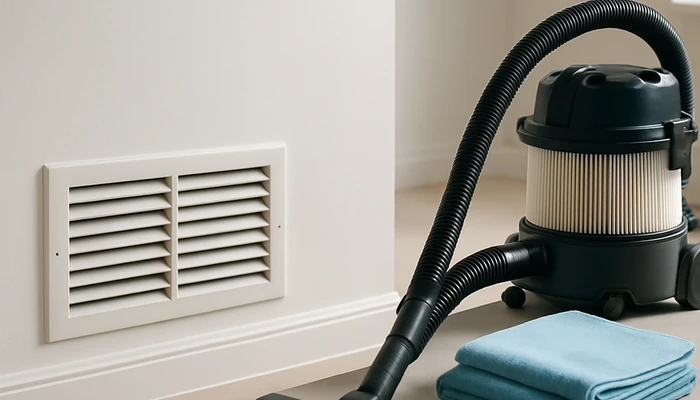
- Seal Registers and Returns. Use plastic sheeting and painter’s tape to seal all supply and return vents, as well as exposed ductwork openings.
- Install Temporary Filters. High-efficiency disposable filters (rated MERV 11–13+) can be placed behind vent covers if cleaning must occur with limited climate control.
- Contain the Work Area. Erect plastic barriers or zip walls around construction zones to minimize dust spread beyond the affected rooms.
- Remove Construction Debris First. Large debris should be cleared before any sweeping or vacuuming takes place, preventing airflow obstructions and reducing total dust load.
Step-by-Step Cleaning Process: Keeping Drywall Dust Out of HVAC
- Dry Dusting Surfaces. Start by wiping surfaces with dry microfiber cloths that capture fine dust without scattering it into the air.
- HEPA Vacuuming. Use vacuums equipped with HEPA filtration for floors, baseboards, and edges—these remove particulates without recirculating dust.
- Wet Cleaning. After dry dust removal, mop or wipe with damp cloths, starting from the highest surfaces downwards, to capture residual dust and avoid leaving streaky, gritty residues.
- Final Airborne Particle Removal. Run air scrubbers with HEPA filters to capture lingering particles before unsealing vents and reactivating the HVAC.
Throughout these steps, maintain zones by room or area, so that already-cleaned spaces aren’t re-contaminated by air movements or foot traffic from uncleared areas.
Table: HVAC Protection Checklist for Post-Construction Cleaning
| Task | Purpose | Timing |
|---|---|---|
| Shut down all HVAC units | Prevent dust circulation | Before cleaning starts |
| Seal all vents, registers, and returns | Block dust ingress | Before debris removal |
| Clear and bag construction debris | Reduce total dust sources | First step indoors |
| HEPA vacuum all surfaces | Remove settled particles | After debris removal |
| Wet clean horizontal surfaces | Remove remaining dust | After vacuuming |
| Install high-efficiency filter | Protect HVAC from remnant dust | Before system restart |
| Unseal and inspect all vents | Ensure dust-free airflow | After thorough cleaning |
| Optional: Professional duct cleaning | Remove internal duct dust | If heavy contamination suspected |
Critical Areas: Where Drywall Dust Hides and Threatens HVAC
Drywall dust settles in ways that can be deceptive. Key high-risk areas include:
- Inside vent openings and along duct seams
- Behind appliances, below radiators and baseboards
- Ceiling fan blades and light fixtures
- Inside closets or utility rooms near construction paths
A thorough inspection, using a flashlight along vent edges or specialty cameras for ductwork, helps spot invisible buildup before it reaches HVAC components. For more details on identifying hidden risks, consult Removing Construction Dust In Environmentally Friendly Ways.
Comparing Cleaning Approaches: DIY Precautions vs. Professional Protocols
- DIY Approach:
- May use common household vacuums, which lack HEPA filtration and can recirculate fine dust.
- Often skips vent sealing or fails to replace HVAC filters promptly.
- Relies on visible inspection, missing hidden dust in ducts or behind vent covers.
- Professional Protocol:
- Uses OSHA/ASTM-standard HEPA vacuums and advanced air scrubbing equipment.
- Follows a staged process: isolation, controlled cleaning, and staged HVAC filter changes.
- Performs post-cleaning HVAC inspections and, if needed, refers ductwork to certified specialists.
Professional post-construction cleaning services in Chicago bring equipment and standardized protocols that go beyond what’s feasible in-house. For details on the professional approach, see Professional Strategies for Post Construction Cleaning.
Sequencing Matters: When to Clean HVAC Components During the Cleanup
Proper sequencing ensures minimal dust cross-contamination. Recommended sequence:
- Clean non-HVAC areas first—walls, ceilings, windows, and floors—while all vents remain sealed.
- Remove coverings from a single vent; check for residual dust.
- HEPA vacuum inside vent opening; repeat for all.
- Only after whole-space cleaning should HVAC be restarted, with a clean MERV 13+ filter in place.
- Schedule a duct cleaning if dust dispersal continues or previous issues existed.
Post-Cleanup: Essential HVAC Inspection and Filter Replacement
Once post-construction cleaning is complete, take these final steps before resuming normal HVAC use:
- Replace all HVAC filters with new, high-efficiency models.
- Inspect the filter slots and adjacent ductwork for visible dust—wipe and vacuum as needed.
- Check registers and returns for residue or loose debris.
- Run the system on fan-only mode for 1–2 hours; check filters again for new accumulation. Replace if needed.
For severe contamination or signs of dust blowing from vents, consult a qualified HVAC technician for a duct inspection. Filter replacement guidelines and filter type recommendations are available via local public health resources.
Detailed Room-by-Room Strategies: Adapting HVAC Protection by Space
Living Rooms and Offices
- Seal up large return air vents, which can pull dust into system quickly.
- Clean above drop ceilings and behind tall furniture where dust accumulates unnoticed.
Bathrooms and Kitchens
- Seal exhaust fan intakes and associated ductwork in addition to standard HVAC vents.
- Wipe down cabinetry interiors before reopening air handling units.
Basements and Utility Spaces
- Watch for open mechanical chases and sump pit covers, which allow fine dust to move freely.
- Inspect and clean around water heater vents, furnace returns, and unfinished wall gaps.
More space-specific guidance can be found in Expert Recommendations For Cleaning Areas After Construction Work.
Checklist: Supplies and Tools for HVAC Protection During Drywall Dust Cleanup
- HEPA vacuums (upright and canister style)
- Microfiber dusters and electrostatic cloths
- Plastic sheeting and painter’s tape (for vent sealing)
- MERV 13+ air filters (cut to size for different vent sizes)
- Disposable gloves and N95 respiratory masks
- Spray bottles with mild, non-corrosive cleaners and clean water
- Large trash bags and dust-safe disposal bins
- (Optional) Negative air machines or portable air scrubbers with HEPA filters
Special Considerations: Protecting HVAC in Commercial vs. Residential Properties
- Commercial buildings may have centralized systems with multiple zones; each must be sealed and cleaned separately.
- In residential settings, forced-air systems and mini-split units both demand individual vent attention.
- Shared facilities (e.g., apartments, offices in high-rises) require coordination to avoid cross-building contamination.
If your construction project impacts a shared HVAC system, communicate and coordinate timing and protocols between units—a professional cleaning assessment may be required. For tailored strategies, consult Impeccable Preparation of Spaces After Construction.
Air Quality and Health: Why Proper HVAC Protection Matters After Construction
Drywall dust is not just unsightly—it’s a contributor to indoor air pollution. Particulate buildup can circulate long after construction ends, leading to:
- Allergy and asthma flare-ups, especially in children, the elderly, and sensitive groups
- Long-term wear on appliances and higher energy costs
- Potential microbial growth if dust mixes with moisture inside HVAC ducts
Referencing local government hygiene protocols is critical for property owners committed to effective, safe post-construction cleanup.
Industry Protocols: Standards and Guidance for Safe Cleanup
Professional cleaning companies follow established standards, such as ASTM E1971 and EPA post-renovation dust controls, that require:
- Isolated containment of construction areas
- Progressive cleaning (top-down, clean-to-dirty)
- Validated cleaning with visual and particulate tests
- Post-cleaning filter replacement and system run checks
Choosing a cleaning provider trained in industry protocols ensures protection for HVAC, building materials, and the health of all occupants. For more specialized guidance, CHI Cleaning Services staff can assist with both residential and commercial cleanup planning.
When Is Professional Duct Cleaning Necessary After Construction?
- If dust or debris continues to blow from vents after post-construction cleaning
- Visible dust buildup inside vent openings, grills, or just beyond the register
- Persistent odors or allergy symptoms after cleaning
- Previous HVAC issues or older ductwork with existing buildup
A professional duct cleaning can be scheduled after the rest of the debris has been removed—which is critical for long-term air quality. If deeper commercial or specialized cleaning is required, explore commercial cleaning options or office cleaning professionals.
What to Ask Your Cleaning Provider About HVAC Protection
- What steps will you take to seal and isolate HVAC components?
- Do you use HEPA vacuums and industry-approved filtration?
- Will you replace filters and check for dust after cleaning?
- Are you able to recommend or coordinate duct cleaning?
- Which products and tools are used to avoid air contamination?
For a complete, compliant cleaning, ask for a written plan or scope, and request documentation of all steps taken to prevent HVAC contamination—crucial in Chicago’s competitive property market where air quality is highly valued.
Integrating Eco-Friendly Methods into Drywall Dust and HVAC Protection
Environmentally responsible strategies include:
- Using reusable, washable microfiber pads instead of disposable dusters
- Choosing green-certified cleaners that leave no residue inside vents
- Bagging and disposing of debris according to local Chicago waste regulations
- Minimizing water run-off and airborne chemicals
For practical tips on sustainable methods, see Removing Construction Dust In Environmentally Friendly Ways.
Decision Matrix: DIY or Professional Post-Construction Cleaning for HVAC Safety?
- Choose DIY if: Small project, easy containment, and limited dust exposure. You have access to HEPA filtration and know how to seal vents.
- Go Professional if: Multiple rooms, open HVAC system, allergies are a concern, or thorough documentation is needed (rentals, property turnover).
Find more details on cleaning planning at Efficient Post-Construction Cleaning Tips.
For tailored cleaning or for specialized environments like gyms, medical facilities, or Airbnb properties, explore deep cleaning service options.
Frequently Asked Questions: HVAC and Drywall Dust After Construction
- How long does drywall dust remain in the air after construction?
- Without professional cleaning, fine particles can remain airborne or settle in ducts and surfaces for days or weeks, re-circulating whenever the HVAC runs.
- Can regular home vacuum cleaners capture drywall dust?
- Most household vacuums are not equipped with HEPA filtration and will spread dust rather than capture it.
- Do I need to replace my furnace filter immediately after cleaning?
- Yes—replace it as the final step before restarting your HVAC. In high-dust events, consider a second replacement after several days of running.
- Is it necessary to have ducts professionally cleaned?
- If you observe dust from vents, persistent symptoms, or if the HVAC system operated during construction, professional duct cleaning is advisable.
- What is the safest way to dispose of drywall dust and filters?
- Seal all debris in heavy-duty bags and dispose per Chicago municipal waste guidelines to prevent spread during transport.
- Can I clean my HVAC system myself?
- Filter replacement and register cleaning can be DIY, but internal duct cleaning should be left to trained professionals with specialized equipment.
- How do I know if my HVAC was affected by drywall dust?
- Reduced airflow, persistent dust emissions, or clogged filters are key symptoms—inspect filters and supply/return openings for visible buildup.
- What protective gear should I use?
- Wear N95 masks, gloves, and eye protection during cleanup to avoid respiratory and eye irritation.
- Will drywall dust void my HVAC warranty?
- If the system is damaged by improper maintenance or neglect, manufacturers may deny warranty claims. Always follow documented cleaning protocols.
- Can construction dust make my HVAC system noisy?
- Yes—debris inside fans or blowers may cause new noises or vibration.
Summary and Next Steps for Protecting HVAC After Construction
Drywall dust poses an insidious threat to your HVAC system during post-construction cleaning. By sealing vents, following a staged cleaning process, and replacing filters, you can prevent costly repairs and safeguard indoor air quality. In larger or high-risk projects, professional post-construction cleaning ensures every step is completed thoroughly and up to industry standards. If you need help with your property, consider scheduling house cleaning or move-out cleaning services to protect your HVAC investment.
About CHI Cleaning Services
CHI Cleaning Services is dedicated to providing expert residential and commercial cleaning solutions throughout Chicago, Illinois and nearby areas. Our trained teams specialize in recurring home cleaning, deep cleaning, move-out cleaning, office cleaning, and special facility services. By following professional checklists and using industry-approved products, we ensure every project—big or small—meets the highest standards of hygiene, safety, and long-term air quality. Trust CHI Cleaning Services to help you safeguard your property, health, and HVAC system after any construction or renovation project.
cleaning company in chicago, new construction cleaning, after construction cleaning Chicago, after renovation cleaning Matteson IL, new construction cleaning Franklin Park IL, after construction cleaning Glendale Heights, construction cleaning Waco TX, construction cleanup Wllowbrook IL, dust removal cleaning North Riverside IL, builders cleaning Elgin